


After months of strong gains, the Brazilian stock market is going through a period of sharp correction, leading many to reconsider their optimism regarding a recovery in the equity market in 2026.
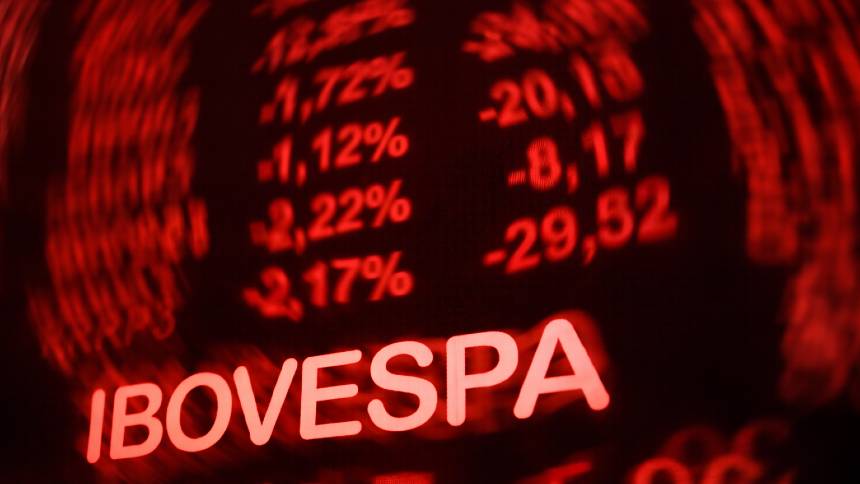
Since its all-time high in April, the Ibovespa has fallen 14.26%, dropping from a record high of 198,657.33 points on April 14th to 170,330.63 points on June 3rd – returning to the same level as January of this year.
This represents a loss of 28,326.70 points in just 50 days, according to a survey by the consulting firm Elos Ayta. During this period, a group of 305 companies on the Stock Exchange collectively lost R$ 778.1 billion in market value.
For the year, the Ibovespa is still in positive territory, accumulating a gain of 5.96%. But a confluence of negative factors, both internal and external, is causing pessimism to gain ground among analysts.
“It’s like the name of that movie, ‘The Sum of All Fears’,” says Flávio Conde, head of equities at Levante Investimentos , to NeoFeed . “Everything happened at the same time, and foreigners are selling.”
One of the main concerns stems from monetary policy. Amid the deteriorating inflationary outlook, economists have begun revising their projections for the Selic rate at the end of the year. The prospect of monetary easing had been helping to attract more investors to the stock market.
With projections for the IPCA (Brazilian consumer price index) rising for the 12th consecutive week in the Focus Bulletin, reaching 5.09% in the latest edition, the expectation is that the basic interest rate will not fall as much as initially expected.
The team of economists at XP Investimentos now forecasts only two 0.25 percentage point cuts in the Selic rate, from 14.5% to 14%, followed by a pause for evaluation. Previously, the expectation was for three reductions, to 13.75%. BTG Pactual revised its terminal Selic forecast from 13% to 14.25% in 2026, with a final 0.25 percentage point cut in June.
The issue of inflation is not just a local one. Conde points out that the world is experiencing a period of rising prices, with the war in Iran putting pressure on global energy prices, amidst the uncertainty surrounding an agreement between Washington and Tehran.
In the United States, inflation as measured by the CPI (Consumer Price Index) rose 0.6% in April compared to March. Over 12 months, the rate reached 3.8%, exceeding market expectations and raising questions about what the Federal Reserve (Fed, the US central bank) will do, given its role as a benchmark for global interest rates.
"The inflation aspect hurt all markets, including Brazil, because it caused all central banks—and we'll find out about ours in two weeks—to pivot their strategy, no longer cutting rates; at best, maintaining them, but even considering raising them," says Conde.
In the case of Brazil, one point that continues to weigh heavily is the fiscal issue and the elections. The spending of Luiz Inácio Lula da Silva's government and the electoral prospects, after Flávio Bolsonaro was hit by news about an alleged relationship with former banker Daniel Vorcaro , have negatively impacted investor sentiment.
These factors are draining resources from foreign investors in B3, the main driver of the Ibovespa's rise between the second half of 2025 and the beginning of this year.
The movement began in mid-April and gained momentum in May. According to a survey by Elos Ayta, based on data from B3, foreign investors withdrew R$ 14.9 billion from the stock exchange last month, considering only operations in the secondary market and excluding investments in IPOs and follow-ons.
This is the largest monthly outflow of funds since January 2022 and surpasses the previous record of R$ 13.2 billion registered in August 2023, according to Elos Ayta. International investors took advantage of the opportunity to realize profits after the rise that took the Ibovespa to an all-time high in April.
According to Conde, foreigners have been directing their resources towards Treasuries, which have been offering attractive rates. Ten-year bonds are yielding around 4.54%, while 30-year bonds pay 5.02%. "There has been a return of money to the United States, even hurting Bitcoin," he says.
To make matters worse, two new "fears" have recently joined forces to put pressure on the Ibovespa: the new tariffs imposed by Donald Trump 's government on Brazil and the decision to classify the PCC and Comando Vermelho as terrorist organizations.
On Monday, June 1st, the American government proposed a punitive tariff of 25% on a series of products imported from Brazil, alleging "unreasonable" Brazilian policies and practices that "burden or restrict" American trade. The following day, the country was included in a list of 60 countries, in addition to the European Union (EU), that have failed in combating forced labor and will receive an additional 12.5% tariff.
“The classification of terrorist groups weighs heavily on the decision to allocate more money to Brazil, because Brazil is not on the list of friends of the United States in Latin America; it is alongside Venezuela , Cuba , and Nicaragua, even though the country has never done anything to deserve being in that group. If you are an analyst or manager of US equity funds, you are not going to recommend to your client that they invest in the enemy of the United States,” says Conde.
Thinking about a reversal of this situation, under the current conditions, requires considerable optimism. The main relief could come from abroad, if Trump changes his mind about Brazil and reaches an agreement with Iran. However, the fiscal situation is an issue that will likely take some time to resolve.
“The stock market will continue to move sideways. And it's no use saying, 'oh, it's cheap, it's exaggerated.' As long as Brazil remains on the list of enemies and the tariffs aren't reversed, the money won't come,” he states. “And the fiscal situation has worsened considerably and could get even worse if current policies aren't reversed.”