


The new edition of the report “Mapping World Prices”, produced by Deutsche Bank , reveals a profoundly altered global cost of living landscape.
The combination of currency fluctuations, persistent inflation, and geopolitical tensions has reshaped the price hierarchy in 69 major cities surveyed, creating a map that bears little resemblance to the surveys from the beginning of the last decade.
Since 2012, when the study was released, the world has undergone a complete reversal of economic conditions. In that year, the yen was at its peak and the dollar was experiencing a period of historic weakness—the exact opposite of what we see today.
The pandemic, the energy crisis, the strengthening of the dollar in its most intense cycle in a generation, and the multiplication of regional conflicts have radically changed the perception of which urban centers are expensive and which have become unexpected opportunities.
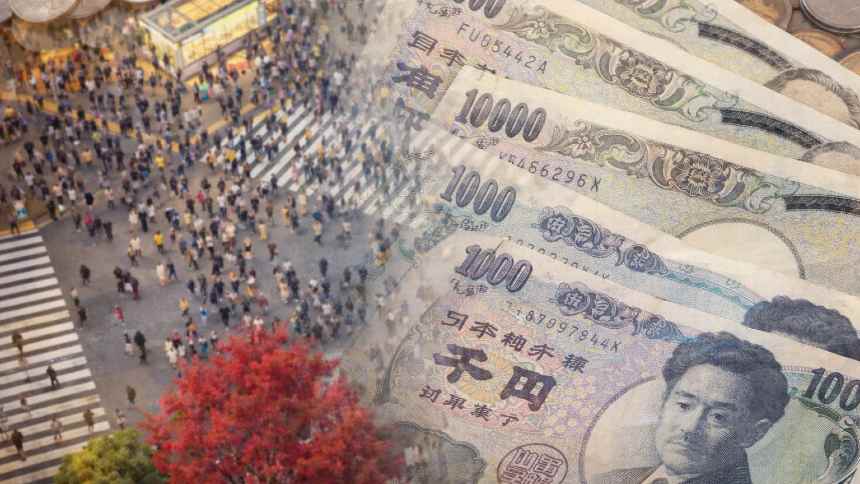
Research by Deutsche Bank transforms Tokyo into an inverted mirror of the global economy. In 2012, the Japanese capital was among the most expensive cities on the planet; today, it is the cheapest major metropolis in the world, thanks to the devaluation of the yen during that period.
WhileNew York charges US$8,900 for a three-bedroom rental in prime areas, Tokyo offers the same for US$2,400 – about a quarter of the price in Manhattan. Japan has also become the cheapest place in the world to buy an iPhone, with prices 5% lower than those in the United States.
To get an idea, just look at the drop in price levels using purchasing power parity in the Japanese capital: it fell from 173 in the mid-1990s to just 60 today – with an index above 100 meaning that local prices are higher than the global benchmark.
This explains why a cappuccino costs less in Tokyo than in 44 of the 69 cities analyzed, including emerging markets. A meal for a couple in the Japanese capital now costs less than in Warsaw or Prague. Even a "cheap date" in Tokyo costs half the price of London.
The contrast with the United States is even more striking. Since 2012, the yen has depreciated 51% against the dollar, while prices in Japan have risen by only 20%.
Meanwhile, the US, which that year was still recovering from the recession and had a weak dollar, became the most expensive developed economy in the world in relative terms. New York and San Francisco are among the five most expensive cities on the planet, while no American city appears among the top ten in quality of life—a ranking dominated by European cities such as Luxembourg, Copenhagen, Frankfurt, Geneva, and Zurich.
The drama of the yen
The question is how did Japan get to this point? And, more importantly, is there a way out for the yen? The answer lies in a monetary policy that, for more than a decade, kept the country in a sort of ultra-low interest rate bubble.
Since 2012, the Bank of Japan has practiced financial repression, keeping interest rates artificially close to zero while the rest of the world normalized its monetary policy.
The result was a currency increasingly used as a cheap financing instrument — the famous carry trade , whereby foreign investors borrow at minimal cost in yen and invest in currencies with higher interest rates, pocketing the difference. The size of this mechanism varies according to estimates: between US$500 billion and more than US$1 trillion.
With low inflation and a weak currency, Japan has become a global bargain. But the same mechanism that made Tokyo cheaper could, at some point, turn upside down. Deutsche Bank and the consulting firm Gavekal suggest that capital repatriation—the return of Japanese investments held abroad—could be the trigger for a reversal in the yen's value.
Japanese institutions hold between US$3.4 trillion and US$7 trillion in foreign assets, depending on the methodology. A coordinated move back into the domestic market could generate an inflow of between US$400 billion and US$450 billion, equivalent to 10% of Japan's GDP.
In recent weeks, political signals have reinforced this possibility. Finance Minister Satsuki Katayama indicated that the government pension fund may increase its exposure to domestic assets.
The proposal includes expanding the use of Japanese government bonds in popular, tax-exempt investment schemes — a change that, if supported by Prime Minister Sanae Takaichi 's government, could pressure financial institutions to rebalance their portfolios in favor of the local market.
There is also a structural factor that could redefine the future of the yen: artificial intelligence. Japan faces a profound demographic challenge—an aging population, a declining workforce, and stagnant productivity.
For Deutsche Bank, AI technologies represent a rare economic and political opportunity. The Japanese government openly declares its ambition to become the most AI-friendly country in the world, and the country's advanced industrial base offers a real advantage in building technological infrastructure.
If AI can compensate for some of the labor shortage and increase productivity, Japan could enter a growth cycle capable of sustaining higher interest rates — and therefore a stronger yen.
But the Deutsche Bank report makes it clear that the yen's story is at a turning point. Tokyo, once a symbol of prohibitive prices, is now the global showcase for an undervalued currency.
If capital repatriation gains momentum, if the Bank of Japan adjusts its policy, and if AI truly boosts productivity, carry trade could begin to unravel—slowly or abruptly.
The cheapest city among the major ones may, in a short time, revert to being just Tokyo: expensive, vibrant, complex. And the yen, after a decade of decline, may finally regain its weight in the world.