

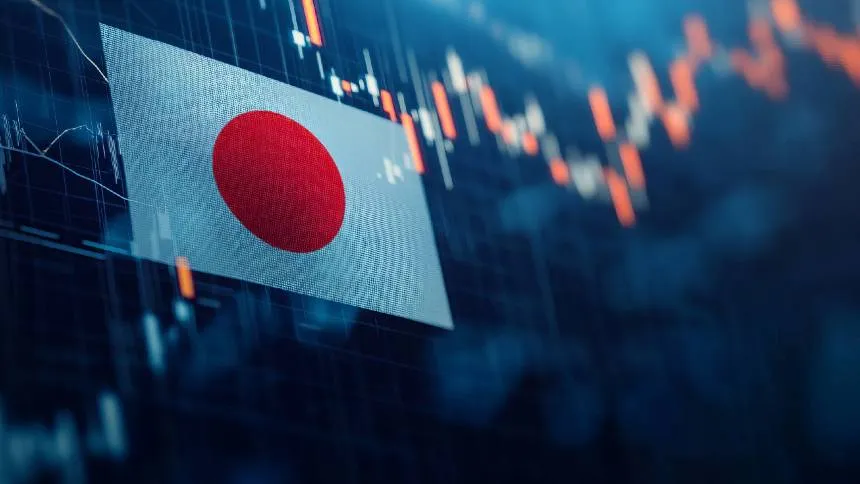
In a move that did not surprise the market, the Bank of Japan (BOJ), the Japanese central bank, raised its benchmark interest rate on Friday, December 19, to 0.75% per year, the highest rate in the country since 1995.
The measure signals the BOJ's intention to continue the monetary tightening initiated in March 2024, when the country experienced its first interest rate hike in 17 years, should the behavior of the Japanese economy—meaning increased inflation and government spending—so require.
The first impact of the interest rate hike was felt in Treasury bonds, known by the acronym JGBs . Yields on Japanese government bonds, considered the country's main bonds, reached their highest level since 1999. The benchmark 10-year bond rose 0.05 percentage points, exceeding 2%. Bond yields move inversely to prices.
The interest rate hike, a unanimous decision by the bank's Monetary Policy Committee, was the fourth under BOJ Governor Kazuo Ueda, consolidating the reversal of a decade of loose monetary policy to curb deflation, a period in which Japan lived with negative interest rates for eight years to stimulate the economy.
Initiated at the beginning of last year, the current movement, if it persists, tends to impact several economic indicators beyond government bonds, such as exchange rates, inflation, public debt, and Gross Domestic Product (GDP) growth.
Despite the prospect of further interest rate hikes, the yen depreciated against the dollar after the announcement, with the dollar rising to 157 yen, almost double its level in 2012 and close to its highest rate this year.
The large difference in exchange rates between Japan and other major economies is among the factors that have contributed to the sustained depreciation of the yen.
A weak yen, while boosting Japanese exports, increases import costs. This, in turn, exacerbates inflation, which has remained above the Bank of Japan's 2% target for 44 consecutive months, according to data released on Friday. In November, it was 3%, excluding volatile fresh food costs.
Financial agents said the interest rate hike reflected market concerns about Japan's fiscal situation under Prime Minister Sanae Takaichi, who took office in October and proposed expansive spending plans.
Takaichi, 64, has been trying to avoid the fate of his predecessor, Shigeru Ishiba , who was in power for just over a year before losing his post amid widespread public dissatisfaction with persistent inflation, among other problems.
Japan 's economy, the world's fourth largest, contracted in the third quarter – down 0.6% compared to the previous quarter – increasing the pressure on Takaichi. Last month, his government announced a massive spending package worth $135 billion to boost growth and help Japanese families.
The prime minister's spending plans also risk further burdening public finances. Japan already has the largest public debt among the world's most advanced economies, representing about 250% of its GDP.
This indicator, which would cause a crisis in several countries, does not shake Japanese stability, thanks to domestic financing, historically low interest rates, the actions of the Bank of Japan, and high domestic savings – about 90% of the bonds are held by Japanese investors, such as banks and pension funds, which reduces exposure to external shocks and exchange rate volatility.
Aware of this fiscal expansion, the Bank of Japan has been warning that the cycle of interest rate hikes is likely to continue. In a press conference, Ueda stated that the new interest rate level of 0.75% was still "very far from the lower limit" of the range estimated by the central bank for the "neutral rate"—the level at which monetary policy is neither expansionary nor contractionary.
The new interest rate will increase the costs of mortgages and other loans, but it will also boost savings account yields. "It is very likely that wages and prices will continue to rise moderately," said the head of the Bank of Japan. "The risks to the economy have diminished, but we must remain vigilant."
Bubble and deflation
The fact that Japan's interest rates are rising while those of other countries are already in a downward cycle after the global economic shock caused by the coronavirus pandemic reinforces some of the Asian country's unique economic characteristics.
When Japan's economic bubble burst in the early 1990s, causing real estate and stock prices to plummet, businesses and banks were weakened, and the economy plunged into stagnation with deflation —that is, falling prices due to weak demand.
The government responded with infrastructure spending and support for the financial system. The Bank of Japan, in turn, has kept borrowing costs low to encourage more spending by businesses and consumers and to help manage the country's enormous public debt.
Even with cheap credit, investment fell short of expectations, hindering economic growth. With the aging and beginning decline of the Japanese population, the country's economy has spent the last few years trying to escape a long cycle of slowdown.
In early 2013, the Bank of Japan launched a monetary easing program, cutting interest rates and buying government bonds and other securities to help inject more money into the economy. In January 2016, the BOJ adopted a negative interest rate policy, which lasted until March 2024.
It is in this context that the investment strategy known as carry trade has materialized in recent years. It consists of investors taking out cheap loans in yen – taking advantage of negative interest rates – and then using that money to invest in higher-yielding assets in other countries.
According to analysts, even small changes in interest rates – such as the increase from 0.5% to 0.75% announced on Friday – can have a large impact on carry trade.
Higher interest rates in Japan could also hurt demand for other assets, including cryptocurrencies. Last week, expectations of a rate hike caused the price of bitcoin, for example, to fall below $86,000. It had surged to record highs near $125,000 in early October. Bitcoin was trading at around $88,000 on Friday.
Assessing the timing and scale of changes in interest rates and other monetary policies is the biggest challenge not only for the BOJ but also for other central banks, given the time it takes for these measures to spread through the real economy and financial markets.
Like the Federal Reserve, the central bank of the United States, the BOJ faces difficulties in balancing the need to boost business activity and create jobs with the imperative to contain inflation.
The Bank of Japan had previously postponed raising interest rates due to uncertainties about how tariffs imposed by US President Donald Trump might affect automakers and other exporters. An agreement that set US tariffs on Japanese imports at 15%, down from the previously planned 25%, helped alleviate those concerns.
It remains to be seen what impact the fiscal stimulus announced by the Japanese Prime Minister will have on inflation and assets, in order for the BOJ to decide whether or not to proceed with the new monetary policy of raising interest rates.