

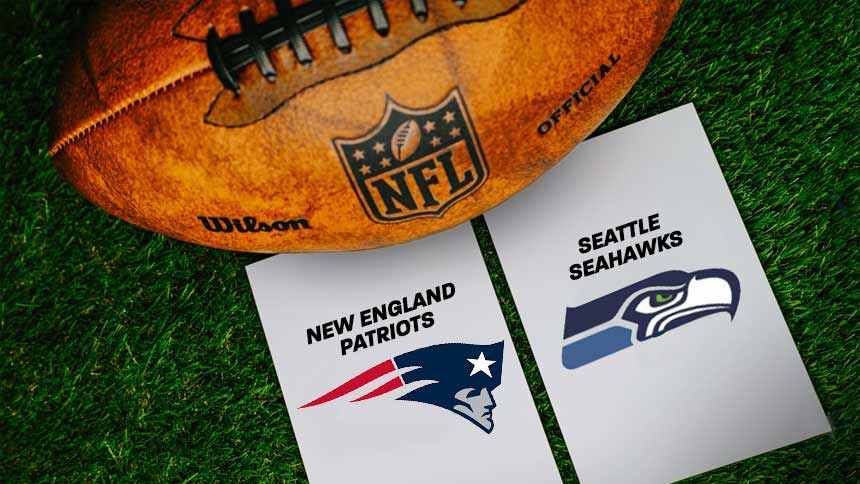
Brasilia - When the oval ball crosses the football field at Levi's Stadium in California, kicking off the final between the New England Patriots and the Seattle Seahawks, in one of the biggest sporting events on the planet, on Sunday, February 8th, Super Bowl 60 will already have made history.
Not only in terms of global sport, but also as an edition marked by pre-game political tensions, involving the American president, Donald Trump, the current Latin pop star Bad Bunny, and the controversial actions of ICE (the US immigration police), under a strong political symbolism.
The week leading up to the Vince Lombardi trophy competition began with a strong political charge, following the speech by Puerto Rican singer Bad Bunny upon winning an unprecedented Grammy for best album of the year, for the album "Debí Tirar Más Fotos" (2025): "Out with ICE!", he said, the current star of reggaeton and world pop.
Bunny will be the featured artist at the highly anticipated halftime show, even after Trump criticized the singer. The American president, for his part, said he will not attend the game, unlike last year when he was at Super Bowl 59 in New Orleans – a victory for the Philadelphia Eagles over the Kansas City Chiefs.
Trump and the Latin singer have been embroiled in a feud, exchanging barbs that began on September 28 of last year, when the artist was announced as the halftime show performer for Super Bowl 60.
The most listened-to artist in the world on digital platforms last year and an outspoken critic of Trump's policies, Bunny even excluded the United States from his world tour throughout last year, precisely out of fear of ICE action at his shows. This was even before the crisis erupted, with the deaths of people at the hands of American immigration police agents in Minneapolis in January 2026, triggering protests across the country against government violence.
In addition to Bunny, Green Day, the popular American punk band also known for its anti-Trump political stance, will perform at the Super Bowl stadium before the game begins. Asked about this a week before the Grammys, Trump harshly criticized the NFL's (American football league) choice of artists.
“I’m against them [Bunny and Green Day]. I think it’s a terrible choice. All it does is sow hatred. Terrible,” he told the New York Post .
Last October, Trump had already said that he had never heard of the Latino singer and that "the Super Bowl should celebrate artists who love our country, not people who criticize it." That same month, Bunny appeared on the legendary American comedy show, "Saturday Night Live," where he stated in Spanish at the opening: "If you didn't understand what I just said, you have four months to learn."
Furthermore, with Bunny's announcement for the halftime show, fears also grew that ICE agents might operate outside the stadium. The US Secretary of Homeland Security herself, Kristi Noem, told the American press in October that ICE would be present during the Super Bowl.
Faced with government threats, the NFL was pressured to respond regarding the potential presence of immigration agents outside the stadium, which could lead to confrontations and further violence, this time at the venue of the biggest sporting event in the U.S. On Tuesday, February 3rd, however, NFL security director Cathy L. Lanier sought to reassure the public and guaranteed that there would be no such danger.
Finally, there is yet another political symbolism: the game will take place at the home of the 49ers – one of the most popular teams in the US and which will host the Super Bowl on Sunday – in Santa Clara, near San Francisco, California. Therefore, in the state of Governor Gavin Newsom, Trump's main Democratic opponent and one of the current president's potential rivals in the race for the next US presidential election.
Newsom gained the spotlight at COP 30 in Belém, Brazil, last November, due to Trump's absence during the UN climate change conference.
Politics aside, business is going well.
After Trump indirectly criticized the NFL for choosing Bunny amidst the clashes with immigrants, the league was questioned about whether it would reverse course and announce another attraction. Roger Goodell, the NFL commissioner (a sort of CEO), however, has been defending the Puerto Rican star and said that this possibility was out of the question.
"It's carefully thought out. I'm not sure we've ever selected an artist without some kind of criticism or negative reaction. It's quite difficult when you have literally hundreds of millions of people watching," he says.
The NFL's decision to sponsor a musical act even amidst a political powder keg that could potentially affect the league's multi-billion dollar business – the Super Bowl halftime show is traditionally the most expensive advertising space on American TV – demonstrates a clear commercial strategy by the league to deepen its internationalization.
In 2026, the NFL broke another record: a 30-second commercial during a game was worth $10 million, compared to $5.5 million in 2020.
The NFL already hosts games in England, Mexico, Germany, Spain, and even Brazil (where there have already been two games at the Neo Química Arena in São Paulo, and the first will be at the Maracanã in 2026). These shows, which have featured Michael Jackson, Beyoncé, Prince, Lady Gaga, Bruce Springsteen, among others, tend to attract music fans who aren't connected to the sport.
The NFL's decision has caught the attention of André Pagliarini, a professor of History and International Studies at Louisiana State University and an American of Brazilian descent.
“I don’t think Bad Bunny was chosen with political symbolism in mind, but given the sensitive moment in the country, there’s no ignoring the sociocultural implications of this weekend’s halftime show. Perhaps the most interesting point is that the NFL’s top brass certainly knew about the political effect and made the choice anyway. That’s what’s revealed.”
Pagliarini further contextualizes that the Super Bowl occupies a central space in American culture beyond just sports. "That's why any vaguely political signal, even—and perhaps especially—when not explicit, is the subject of much debate."
Even without Trump, ICE, or potential conflicts surrounding current immigration policy, the academic believes there could still be political messages during the game. “I would be very surprised if both Green Day and Bad Bunny completely avoided any more or less overtly anti-Trump statements,” he says. “Again: the organizers certainly know this possibility and invited them anyway. I find that interesting.”
Pagliarini, however, analyzes that the political dispute that borrows the Super Bowl as a stage should remain only in the realm of rhetoric, without room for major damage to the image of the Super Bowl, any explosive reaction in the streets of Santa Clara, or transforming the game into a political-electoral platform, for or against Trump.
“More than anything, the politicization of the Super Bowl — I’m not saying it’s Bad Bunny’s “fault,” but the effect is there — will be seen as yet another example of the political polarization that helped Trump in 2024, but which today seems to be turning against him,” he adds.
Everything is marketing.
According to Marcelo Toledo, professor of sports management and marketing at the School of Administration of the Higher School of Advertising and Marketing (ESPM), even though the world lives in a constant state of polarization today, the Super Bowl has already established itself as a globally known mega-sporting event. And the NFL's strategy of keeping Bad Bunny's halftime show only reinforces the league's confidence in its business, which generates billions of dollars on game day.
“It’s very presumptuous to think that the league is concerned with doing something to polarize or offend anyone. It has a business that dictates trends worldwide,” he says. “On game day, many people turn on the TV just to watch the show. It’s a business decision, not a political one. Apple sponsors the halftime show, and they wouldn’t put themselves in a difficult situation.”
Toledo also points out that, despite possible negative reactions towards the singer Bad Bunny, he represents the Latino-Hispanic community residing in the United States, which totals approximately 70 million people, therefore potential viewers in the eyes of brands and businesses involved in the event. And for the Super Bowl alone, the league estimates that more than 150 million viewers worldwide will watch the game.
"It's the biggest sports league in the world. They've announced games for next year in London, Paris, Mexico City, Munich, Melbourne, Madrid, Rio, and São Paulo. And it's becoming an increasingly international league. It's very difficult to go against the magnitude of such an event," says Toledo.
He further emphasizes that in the ranking of the 10 most valuable sports teams in the world, nine are NFL franchises, something impressive when compared to the strength of soccer as the most popular sport in the world. "Everyone thinks Real Madrid is the most valuable brand, but it doesn't even come close to the NFL teams."