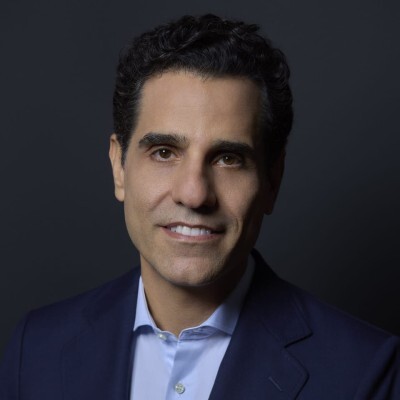


Oskar Metsavaht's trajectory deviated somewhat from what one might expect from a boy who enjoyed skateboarding and surfing, the son of a doctor and an art history teacher in Caxias do Sul (RS), in the 1960s.
From his work in medicine to his international recognition as a fashion designer and his title as a UNESCO Goodwill Ambassador for Sustainability, he is constantly reinventing himself.
Today, she leads a powerful network focused on sustainability and proves, with each collection, that true luxury lies in not harming nature.
Read below the main excerpts from the interview.
Oskar, you are a doctor, an artist, and you could be considered an athlete. Tell us a little about how art, sports, and medicine have always been intertwined in your life.
My father founded the Medical School of Caxias do Sul. My mother founded the Faculty of Philosophy and Art History. We are four siblings, and two went into the fields of visual arts and film. My brother and I became doctors. But I've always been an artist since I was young, making very abstract drawings and paintings. My father taught us to photograph and film with Super 8 and to sharpen our eye. When my mother taught art history, I photographed art books for her class slides. I like to see the world from a viewfinder [the camera's viewfinder]. My artistic education was in the family, but I also loved surfing and skateboarding, I went camping in Santa Catarina, surfed and fished with my brother and father. Later, I chose Rio to do my medical residency, to be close to the sea and be able to practice. I used to go to work at the hospital with my surfboard on top of the car back in the 1980s.
Besides all that hereditary baggage, the origin of your surname also has to do with who you are. Tell me more about it.
My name, Metsavaht, means "guardian of the forest." The Nordic countries are very connected to nature and the forest economy. This idea of sustainability is already cultural in Europe, and I always felt, from a young age, that I should protect nature, although I didn't yet have a connection with the Amazon at that time. But I read magazines like National Geographic, sought out books and documentaries on ecology, expeditions, and exploration. I was born in the 1960s, and the first documentaries I saw were by Jacques Cousteau—scientific and artistic films were rare at the time. That was innovative, it captivated me, and I began to see science through aesthetics. He, incidentally, designed his own diving suits, and that's also inspiring. A Renaissance spirit.
“Sustainability is innovation. And innovation takes time and is expensive. The new luxury isn't what shines the brightest, it's what has the greatest social impact. And if we, as a society, understand that, we will value it as we value other things.”
Yes, you followed a similar path in design when designing the snow jackets for an expedition to Aconcagua. It's curious that these jackets were created in a city as tropical as Rio…
Actually, I became a designer because of medicine. During my residency, a doctor friend, some mountaineers, and I planned an expedition to Aconcagua in the Andes. It was 1986. The university then proposed that I conduct research on high-altitude physical conditioning, where there is an oxygen deficit, which also led me to develop technical high-altitude clothing for extreme cold, because there was nothing similar in Brazil. Since I was already studying human body movement, anatomy, and ergonomics in college, I started researching isothermism, breathability, perspiration… Then I started designing, and it flowed. The jackets, besides working very well technically, turned out beautiful. As the expedition was successful in the national media, friends started ordering pieces.
Was Osklen born from this creative process and this demand?
Yes, but it took time. I was a young doctor and had no ambitions in fashion. However, when I returned from a climb of Mont Blanc in the Alps, during a sports medicine internship in Paris, I felt the urge to share what I had done on a scientific and creative expedition. I wanted to show my photographs of that adventure and that jacket I had created, proud to have been original and "Made in Brazil" at a time when everything was copied from abroad. I wanted to express my lifestyle through a brand.
So, in December 1989, I launched my brand Osklen, a tiny shop in Búzios, a combination of my name, my then-girlfriend Milene's, and my brother Leonardo's, who had helped me create the first jacket. A year later, I opened a store in the Fashion Mall, wanting to show that this lifestyle linked to outdoor sports was also a luxury. It was the beginning of the current trend of outdoor lines that many brands do today. Yes, I was one of the pioneers.
When did you realize you could no longer practice medicine?
My brother, an orthopedist, came to work with me at the clinic and began to dedicate himself intensely to research in biokinetics. I continued working as a doctor until 1997, with prestige and success. But one day, the phone rang at my studio at Osklen, and I found myself asking the secretary to say I couldn't answer. It was then that I realized I could no longer practice medicine like that, without total dedication to my patients. But Osklen was still an adventure. And my father asked me if I was going to trade an excellent academic background to make clothes. My brother supported me, saying that I would never stop being a doctor and, if things didn't work out in fashion, I could return to medicine. I felt a great relief. It was only then that I had time to look at Osklen as a business. In 1999, I managed to open the first store in São Paulo.
During this period, Brazil experienced an upward trend that sparked interest from the rest of the world. How did this affect your work at Osklen?
This rise lasted from 1992 to 2016. I witnessed the great movement of people who began to come to Brazil and look at the country and its symbols, from flip-flops to the Senhor do Bonfim ribbons, the culture, the festivities. I wanted to show that Brazil could have a luxury brand, have quality, originality, and the essence of our culture, but with an international aesthetic language. In the 1990s, with the beginning of globalization, the cultural "crossover" behavior began, and fashion became a universal aesthetic language.
It was with this vision that I built the cosmopolitan concept and style of Osklen. I then began working on international expansion. In 1996, I coined the expression "cool and Brazilian" as a way for us to look at ourselves, our culture, and see how "cool" we were, just like other countries and cultures. A manifesto of self-esteem for our own brands and creations. Osklen attracted very cool foreign people. There was no digital world, but the store was a space for communication, for perception, and I liked working with this scenography using our symbols; I would say it was a second Anthropophagic Manifesto in our history.
“Design is about creating a layer over the skin to protect the body. Fashion is about creating an imagistic, cultural layer over the human body. I do both.”
When did the concept of sustainability enter your life?
In the early 1990s, there were ecological preservation and environmental projects, but it was a time when I felt naive to be an activist. It was Maurice Strong, the president of Rio92, who brought the concept of sustainability to Brazil. It was there that it became clear that we could use natural resources if we kept them the same or better for future generations. When I understood this, we created a core group of thinkers who were concerned with the same thing. In 1994, I made my first expedition through the Amazon and saw the richness of our biodiversity and ancestral cultures, but at the same time the onslaught of illegal mining and logging. I thought that I couldn't come back from there without becoming an activist. I was beginning to see the world through a business lens, but returning from the Amazon I had a clear vision that I wanted to be one of the protagonists of the sustainable movement in the world. And I put my creativity and brand as an arrowhead for the 21st century that was beginning.
Indeed, you've become a reference point, even becoming a UNESCO ambassador on the subject…
The concept of sustainability in clothing production was pioneered by the Patagonia brand in 1992, which began recycling polyester. This inspired me, and I started the first sustainable fashion project in the Northeast of Brazil in 1998: an organic cotton farm in partnership with Embrapa and the NGO Social Espla. It was an environmental and social project aimed at removing children from farm labor, for which I won an award. Before, the language of ecology was distant from society, exclusive to academic circles, sociologists, and environmentalists, and my perception was that, through fashion, we could communicate with society in a more engaging way. Then, several projects began to emerge, and Osklen became a catalyst.
I imagine everything got so big that it wasn't possible to keep it all within the brand alone...
Yes, I created the “Instituto E,” which identifies materials, communities, and producers. The letter E stands for Earth, Energy, Education, Environmental, Empowerment, and Economics. In 2004, the RLC Fashion Summit in Milan invited me to speak about my vision and practices in sustainability in fashion and luxury. Madame Chanel was a feminist and revolutionized fashion… are we going to turn our noses up at the luxury she became? Fashion is a reflection of the times. I was repeating what she had done, but with an activism in sustainability.
I believe that true 21st-century luxury lies in the encounter between European craftsmanship, quality, and sophistication, combined with the creativity and sustainable raw materials sourced from Brazil. Our biodiversity and know-how, both technological and ancestral knowledge, coupled with original design, can lead us to become leaders of this movement worldwide. I was one of the founders of the "new luxury" concept because it was truly having a positive impact on both the national and international fashion industry, as well as the socio-environmental sector. In 2011, I became a UNESCO Goodwill Ambassador, and that gave me wings.
But even before these wings, you were already flying internationally. How was Osklen's expansion in the 2000s?
Well, starting in 2004, we opened four stores in Portugal and three Osklen stores in Japan. I opened a store in Greece, in Mykonos, a studio and stores in Milan and Rome, a showroom in Paris and Saint-Tropez in the summer. Then stores in Geneva, New York and Miami, Punta del Este, Buenos Aires. Being sold in multi-brand stores abroad is one thing; opening our own stores in other countries, with different cultures, starting from the Southern Hemisphere and without economic drive, is complicated. The most difficult thing in these 15 years was to bring a "Made in Brazil" concept and talk about our culture there. However, I succeeded through our concept and style.
The Ipanema store, especially at that time in the early 2000s, is truly a milestone for Osklen. How did that happen?
I say that Osklen's first international store was the one in Ipanema. Marc Jacobs and Calvin Klein were always there. Mick Jagger, Naomi Campbell, and Sting wore Osklen and embraced Brazilian culture. Mario Testino and Michael Robert liked the brand because they could bring a little bit of Brazil with them, along with the quality they were used to. I achieved recognition for originality, design, international quality, and a brand concept that represented the "Brazilian Soul." At that time, the internationally recognized Brazilian luxury brands were Fasano, Osklen, and H.Stern.
“We need a language that people understand is the new luxury and that they are willing to pay for it. Do we need to democratize sustainability? Yes. But that requires scale, volume, and culture. Otherwise, transformation is pointless.”
And your children, how involved were they in the business?
Caetana studied Fashion Design and worked with Osklen in NY. During the pandemic, I invited her to stay with me here, working at the Janeiro hotel [a hotel for which he created the concept and ended up being the controlling shareholder]. In 2012, Alpargatas acquired a significant stake in Osklen. When I decided to buy it back along with the Dass group, I regained control of the strategic direction and spoke with Thomas and Felipe, who studied Design and Communication, about whether they would come to work with me and our executives at Osklen. To continue, through their own lifestyles and culture, the brand's legacy.
You also move easily between the arts. Tell us a little about OM Art?
I had a studio inside Osklen for when I had spare time. Art, for me, is a necessary and visceral form of expression. I had an exhibition as an artist in 2010. Two years later, I did my artistic residency at Inhotim. In 2016, I had an exhibition at the Rio de Janeiro Historical Museum about the construction of Christ the Redeemer, which became one of the official exhibitions of the Olympics. I continued developing my work with photography, painting, and video installations, and I needed an exclusive space for my art studio, independent of my design studio at Osklen. It's my space to breathe art, science, and philosophy.
Finally, could you tell us about pirarucu leather? There's even a story about it involving the British monarchy…
It all started in 2006 with a friend of mine who owned a tannery. I had seen an accessory made of salmon leather and read that Eskimos used fish skin for their shoes and bags. But my project is about sustainability in the Amazon, and I came across a project on Marajó Island. I wanted to use pirarucu (arapaima) as the spearhead of the new luxury concept.
With these pieces, I won an award in Paris for sustainability in fashion, one of our bags is part of the V&A Museum in London as one of the icons of sustainable luxury fashion, I was invited by Anna Wintour to walk alongside major international luxury brands on the Vogue Green Carpet in NY, and Prince William took a bag, in 2025, for Princess Kate. In other words, on that expedition to the Amazon in 1994, I saw the richness of our biodiversity and realized that this was a true 21st-century luxury. More than 30 years later, this is confirmed and remains in the history of world fashion.
Christian Gebara is the president of Vivo and artistic director of Velvet magazine.