

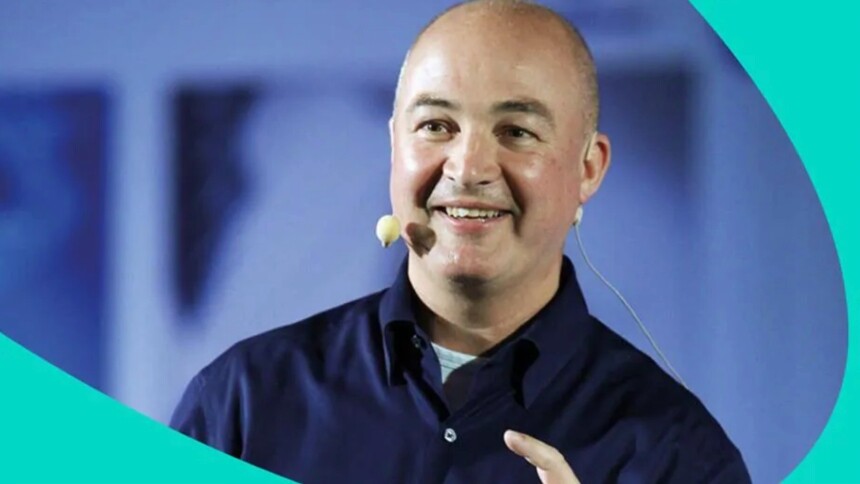
Las Vegas - While many executives set and benchmark their goals with numbers and figures, Alan Jope, CEO of Unilever since 2019, does so with inclusion policies. "I want Unilever to be a beacon of diversity and inclusion," said the leader of one of the largest conglomerates on the CES stage.
Sharing the spotlight with Marc Benioff, founder of Salesforce, Jope explained that Unilever's responsibilities are proportional to the size of the company. Valued at US$54 billion, the group controls 400 brands (Helmann's, Dove, Omo, Knorr, Rexona, among others), had a turnover of 50.9 billion euros, employs 155,000 people and serves 2.5 billion consumers worldwide.
One of Jope's main assets is knowing the company like no one else – he has been part of the group for over 30 years, and has worked in different brands, sectors and positions before sitting in the highest chair from a hierarchical point of view.
Since taking over as CEO of Unilever, Jope has prioritized gender equality and pay equity. "We now have identical numbers of men and women on the board – six of each. And in the UK, women earn slightly more," she said, drawing applause from the audience.
Rather than looking back at past accomplishments and boasting about them, the Scottish executive is more interested in what lies ahead, because he knows he is also part of the problem.
Food waste, for example, is an urgent issue for Jope. "If all the food wasted in the world were a country, Unilever would be the third most polluting nation in the world. And, speaking as a group that owns so many food brands, this is particularly sensitive for us," he says.
To try and present new solutions to this old problem, Unilever has been making use of available technologies, such as creating apps that help restaurants deal with "leftovers"; helping customers plan their meals; and new applications for commonly discarded items, such as bean water, for example, which can be used to make mayonnaise.
Having already addressed the problems "outside the door," Jope now wants to focus his energy on solving those "inside the door," the main one being the inclusion of people with disabilities.
"Our goal is to make the company the best place for a person with a disability to work, and we want 5% of our entire workforce to be self-declared disabled," he announces.
Far from being a "charitable" initiative, Jope makes it clear that he sees great potential in people with certain limitations because, with the right tools, they can do incredible – and profitable – things.
Jope illustrates his point with the case of Unilever in Egypt, which employed 52 people with some type of visual impairment in its telesales department. "Their performance was exemplary. Perhaps because they cannot see, these people become skilled listeners," he says.
With the right technology and leadership, Jope believes that more people with physical or motor challenges will have the same opportunity to perform incredible work that contributes to the company's growth – and to the evolution of society.
"And when I say the right tools, I don't mean elevators, crazy wheelchairs, and other things like that, which are also important. But I'm talking about tools that allow these people to perform constructive functions, nothing like just pressing elevator buttons," he points out.
Follow NeoFeed on social media. We're on Facebook ,LinkedIn , Twitter , and Instagram . Watch our videos on our YouTube channel and subscribe to our newsletter to receive daily news.