


The Brazilian national team arrived in the USA for the 2026 World Cup carrying the weight of being the only five-time champion of the tournament. But not as favorites. According to experts, France, Spain, Argentina, and England are ahead of the Brazilian team, currently ranked only sixth in the FIFA rankings.
However, while it's making its mark on American football, some believe that Brazilian soccer has the potential to advance much further in another area: the revenue generated by the Brazilian Championship, currently organized by the Brazilian Football Confederation ( CBF ).
This is the case with Sports Media . Responsible for raising and managing the resources of Futebol Forte União ( FFU ), a commercial bloc that brings together 33 Brazilian clubs, the company projects that the Brasileirão has the potential to grow from R$ 2.9 billion in 2025 to R$ 13 billion in the coming years.
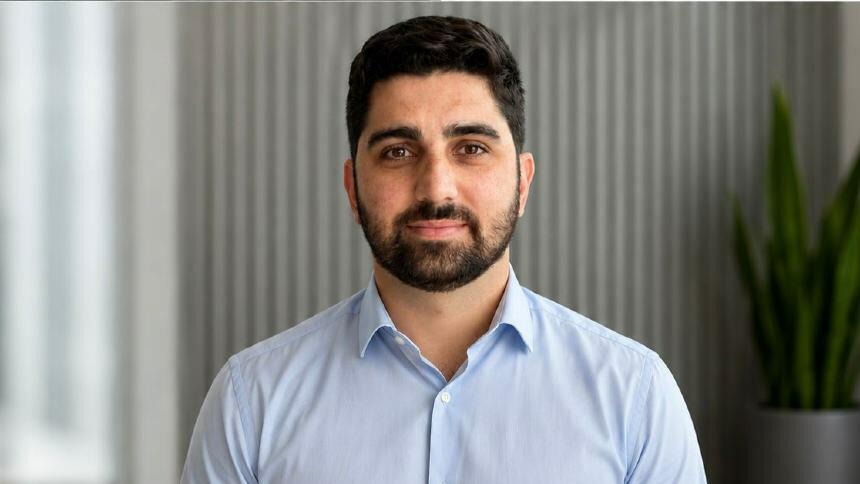
“We’ve already recovered a portion that we were leaving on the table, but it was only a fraction,” says Bruno Pimenta, CEO of Sports Media, to NeoFeed . “There’s still a very large gap between what happens here in Brazil and what happens abroad.”
Data compiled by Itaú BBA shows this gap to the elite group of football leagues. At the top is the Premier League in England, with €1.97 billion (R$11.6 billion). Followed by the Bundesliga in Germany, with €1.11 billion (R$6.5 billion), and the Spanish LaLiga, with €990 million (R$5.8 billion).
Other figures from the investment bank indicate how the Brazilian Championship has been boosting its cash flow. Considering the sale of broadcasting rights, the estimate is an increase from R$ 1.6 billion in 2019 to R$ 2.8 billion last year, very close to the benchmark used by Sports Media.
In both cases, the entity contributing an annual share of approximately R$ 1.2 billion to this total was the Brazilian Football League ( Libra ), a commercial bloc that currently holds the rights to 9 clubs in Série A, including Flamengo, São Paulo, Santos, and Grêmio – Palmeiras recently left the group.
According to Sports Media's internal studies, the sale of broadcasting rights in the domestic market will be the main driver of growth to reduce this gap. Of the projected R$13 billion, this segment is estimated to account for R$9 billion.
Pimenta argues that the company has already shown the most viable way to multiply these numbers - diversification. Of the R$ 2.9 billion generated by the Brazilian Championship in 2025, the group, whose roster includes teams like Corinthians, Vasco, Cruzeiro and Internacional, contributed R$ 1.7 billion.
This amount, valid per season, for the 2025-2029 cycle, came from agreements with Grupo Globo, Record, CazéTV/YouTube, and Amazon. Libra, on the other hand, negotiated a contract worth approximately R$ 1.2 billion with Grupo Globo alone.
“We showed that it was possible to sell outside of Globo, which, even so, remains our main partner,” he states. “Today, it’s clear that the Brazilian Championship will no longer be sold in a fragmented way, and this only became a consensus because, more than a PowerPoint presentation, we delivered.”
To reinforce this point, he cites the 55% increase in broadcast rights revenue for FFU clubs in 2025, the first year of the agreement in effect, in addition to the 110% expansion already contracted for the period up to 2029. And he predicts further leaps with the arrival of new players to this space.
“We haven’t yet brought Paramount, Apple, Netflix, and Mercado Libre into this mix,” he says. “These platforms are entering sports media, and this increased competition will further enhance the product’s value in the next cycle.”
Before negotiating with these new players, Sports Media is already preparing for negotiations regarding the broadcasting rights for Série B, whose cycle ends in 2027. Currently, the company and FFU maintain agreements with media outlets and platforms such as Disney/ESPN, Goat, and NSports.
New script
The new roadmap also includes a relatively unexplored avenue that is currently shared by FFU and Libra: the international market. In 2025, the blocs reached an agreement with 1190 Sports for the overseas broadcasting rights of the A and B series, including 39 teams – with the exception of Flamengo.
Currently, this revenue stream is practically nonexistent. So far, the strategy adopted by the duo has focused more on promoting, rather than monetizing, the Brazilian Championship in other countries. However, according to Sports Media's projections, this could reach a scale of R$ 1 billion in the coming years.
For this to happen, however, FFU and Libra will need to go beyond this joint sale. Pimenta says that creating a single league – uniting the two blocs – is essential for advancing internationally and in marketing – an area that completes Sports Media's projection with a R$ 3 billion share.
He explains that a single league would allow, among other initiatives, the establishment of rules such as the quality of the grass, stadium infrastructure, lighting, and other factors that decisively influence broadcasts.
In terms of international strategy, it would be possible to define, for example, one game per week or round with commentators, broadcasts, languages, and time zones adapted to those markets. This is without even mentioning the sale of new formats and properties, both in Brazil and abroad.
“The World Cup is a great example. You have an opening theme song, a protocol, a cooling break, pre- and post-game interviews,” says Pimenta. “If I have a league, I can actually work on the product and create a standard. It becomes much easier to replicate this model and attract sponsors.”
Given this scenario, he says that there has recently been a resumption of dialogue between FFU and Libra, who, in 2025, were close to signing a memorandum of understanding. Now, the CBF has also entered the fray, and seems willing to lead the conversation about the creation of the league.
Behind the scenes, although he didn't mention names, the confederation reportedly vetoed the participation of funds and other actors, such as Sports Media, in this process. While not confirming this information, Pimenta says that this debate is indeed restricted to the clubs.
“Whether it will be with or without the CBF (Brazilian Football Confederation), and regardless of the role of each actor in this process, the fact is that the creation of the league has already been decided,” Pimenta points out. “The only question is when and in what format.”
From praise from a rival to friendly fire.
Aside from this still tangled midfield, he emphasizes that Sports Media has been accustomed to facing barriers since its creation in late 2023 by the asset manager Life Capital Partners , as the FFU fund. The operation also includes Livemode , in addition to General Atlantic and XP , its investors.
“They said we would never be able to reach an agreement with the clubs, that we would never attract investors, sell the rights outside of Globo. And then, that we would sell those rights for peanuts,” he says. “And we overcame all of that.”
The very endorsement of the investors behind Sports Media's operation is cited as an argument to refute criticism and reinforce what the company helped to pioneer. This is also mentioned as the involvement of significant investors, such as Itaú, in a debenture fundraising of approximately R$ 800 million in 2025.
He presents other data on the evolution of broadcast rights sales to strengthen his argument. In 2025, the difference between Corinthians, the team that earned the most from the FFU (Federação Futsal de Futebol) revenue, and Sport, at the other end, was 1.97 times, compared to 6.25 times in 2024. In the Premier League, this ratio was 1.6 times.
"It's worth remembering that Sport had a revenue of R$ 96 million from broadcasting rights, even after being relegated. In 2024, Cuiabá was relegated with R$ 45 million," he states. "And that's because 55% of our resource distribution is variable and depends precisely on the team's performance in the championship and the audience."
Along the same lines, Pimenta cites the case of Fortaleza, another FFU club relegated last year, whose revenue from broadcasting rights was R$ 160 million. "Even after being relegated, they earned more than teams like Atlético Mineiro, Grêmio, and Santos," he points out.
This Sports model has been praised even by rivals. This was the case with Luiz Eduardo Baptista, Bap, president of Flamengo and a member of Libra. In a recent participation at São Paulo Innovation Week, he highlighted the results obtained by FFU.
“They had 40% of the audience and got 60% of the contract. They did an exceptional job and negotiated better. I understand that they have a vision of the future market that is closer to what I think,” the executive stated.
Conversely, Sports Media has suffered from friendly fire, particularly from clubs in the second and third divisions of the Brazilian Serie B. A recent episode involved Amazonas FC, which claimed it was pressured to withdraw lawsuits demanding more transparency in contracts, under threat of retaliation in the transfer of funds.
Regarding these and other controversies, Pimenta limits himself to saying that they are isolated cases. And that measures are already being taken in the judicial sphere, which will soon become public. He does not mince words, however, in defending the company's thesis and model.
“It’s a win-win situation, but the risk is 100% on our side,” he says. “There’s no commitment from the club regarding any return. If the team is relegated, there’s no penalty or price adjustment. They don’t owe me anything. If it goes wrong, the loss is mine.”
He emphasizes that, obviously, this is not a bad deal. And he draws a parallel with an infrastructure investment, in which intensive investment is made in the first 10 to 15 years, followed by long-term returns.
“Of course, we are facing the difficulties of growing, and growing fast. You start to bother people and, eventually, you have more opposition and criticism. But it's part of the process,” says Pimenta. “In time, everyone will understand that we are not the 'bad guys' of Faria Lima.”