

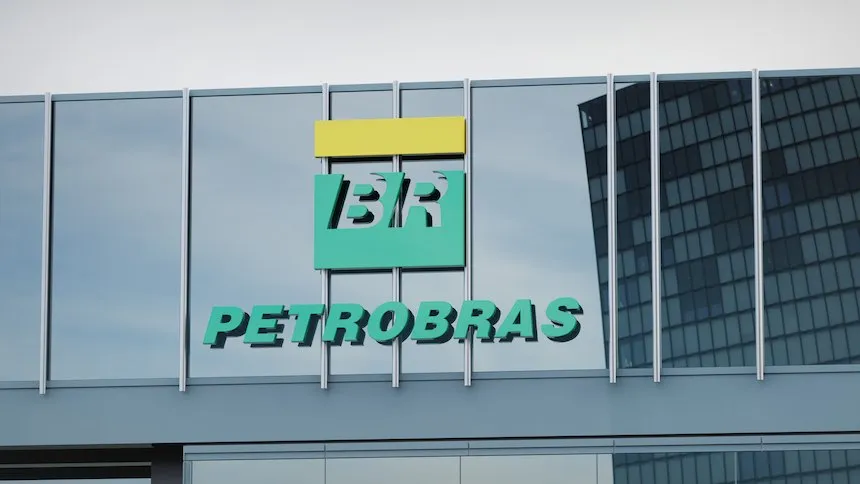
Petrobras posted exemplary results in the second quarter, with record net and gross profits, thanks to a combination of operational efficiency and high oil barrel prices. But this doesn't mean more will "drip" into investors' pockets.
The company announced on Thursday evening, August 6th, that it achieved the highest recurring quarterly net profit in dollars in its history, of US$11 billion. This represents a 2.7-fold increase compared to the same period last year.
In accounting terms, and in reais (Brazilian currency), net profit totaled R$ 52.4 billion, a 97% increase, the third highest nominal quarterly result in its history, according to a survey by the consulting firm Elos Ayta .
During the period, Petrobras' revenue grew 42.3% to R$169.5 billion, and adjusted EBITDA rose 79.6% to R$93.8 billion. Gross profit grew 73.4% to R$98.3 billion.
The results exceeded market expectations, some by a wide margin. The average of expectations gathered by Bloomberg pointed to a net profit of R$ 45.5 billion and revenue of R$ 161.6 billion.
In a conference call with analysts on Friday, the 7th, Magda Chambriard , president of Petrobras, highlighted that the result was obtained "without the sale of assets" and mainly reflects operational gains, and not just a favorable scenario for the price of oil.
Although she acknowledged that Brent crude above $100 a barrel contributed to financial performance, she stressed that Petrobras has operated in more than ten quarters with higher prices than the current ones without achieving such significant recurring results.
“Our differentiating factor is operational management,” he stated. “We produce more and more oil, more and more gas, and more and more refined products with safety, quality, efficiency, and capital discipline.”
Looking ahead, the company is not counting on Brent crude oil prices remaining at such high levels. Because of this, Fernando Melgarejo, Petrobras's CFO, dashed expectations of an extra payment at the end of the year.
"We find it very unlikely that we will see the possibility of an extraordinary payment this year," the CFO stated.
According to him, the internal assessment is that Brent crude should return, in the coming years, to levels closer to those considered in the projections that underpinned the 2026-2030 strategic plan, with the price per barrel around US$70. Therefore, management prefers to maintain a conservative stance in allocating the additional resources generated by the current market scenario.
The issue of extraordinary dividends is always a point of observation for analysts and investors. In May, when it raised its recommendation for Petrobras shares to "buy," Santander assessed that the current scenario opened up room for an extra payment .
In the call , Melgarejo said that surplus resources should first be directed towards profitable investments and adjusting the capital structure. Only if these needs are not met would the surplus cash be allocated to shareholders through additional dividends.
Part of the plan to adjust the capital structure is to accelerate the deleveraging process. According to Melgarejo, the company seeks to bring forward the convergence of gross debt to approximately US$65 billion, projected to occur in 2030, a level considered ideal for its capital structure.
According to the original timeline of the strategic plan, this goal would only be achieved between 2029 and 2030. "The idea is to bring this movement forward a little," he stated.
Petrobras ended the second quarter with gross debt of US$70.8 billion, after making prepayments and repurchasing bonds throughout the period. This figure is 4% higher than that recorded a year ago.
This doesn't mean that shareholders were left with nothing. Petrobras approved the payment of R$ 17.4 billion in dividends, as an advance on the 2026 remuneration, in line with its policy of distributing the equivalent of 45% of the company's free cash flow while gross debt remains below US$ 75 billion.
Operation in focus
In the teleconference, executives from the state-owned company emphasized that the company remains focused on advancing operational efficiency gains and delivering contracted projects ahead of schedule, the part that "we can control," according to Chambriard.
Petrobras produced 2.7 million barrels of oil per day during the period, a 15% increase year-on-year. Including natural gas, the volume exceeded 3 million barrels per day. This performance was above the target of 2.5 million barrels per day set for the quarter, a difference of approximately 200,000 barrels per day.
"We can't promise that we'll exceed our goals, but I guarantee that we always work to surpass them," said Chambriard.
The president also stated that the current strong cash generation will allow the company to finance the investments necessary to sustain its growth in the coming decades. In the second quarter, operating cash flow reached US$12.3 billion, an increase of almost 50% compared to the previous three months.
"The cash flow we are generating today will be the cash flow that enables Petrobras' growth. We are preparing the company to successfully face its next 72 years," he stated.
At around 2:46 PM, Petrobras' preferred shares were down 2.40%, at R$ 41.12. Year-to-date, the shares have risen 33.9%, bringing the market value to R$ 568 billion.