

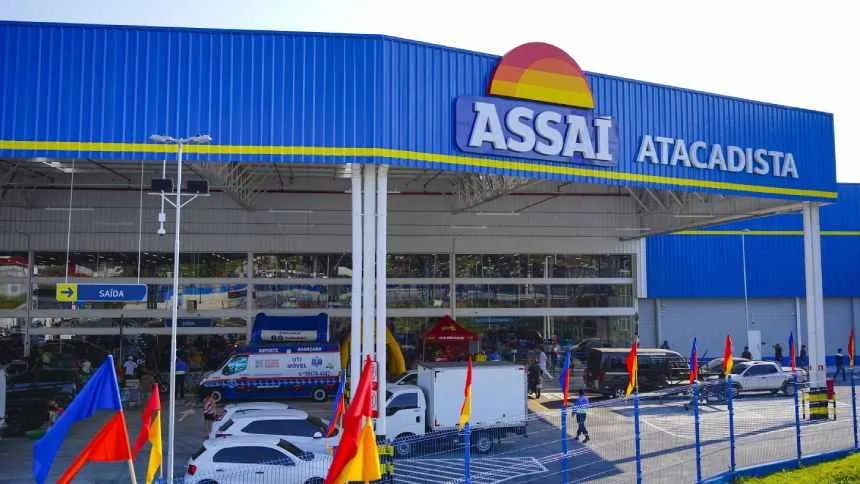
Pressed by increased expenses in the second quarter, the Assaí retail chain reported net revenue of R$ 19.1 billion, a 0.9% increase in the period. Adjusted EBITDA showed a 0.7% decrease, reaching R$ 1.07 billion. Recurring net profit for the period was R$ 344 million, a 93.6% increase over the same period last year.
During this period, the company gained 0.3 percentage points in market share compared to the second quarter of 2025, and increased its monthly customer traffic by 3.4%, reaching 40 million consumers in its stores.
But the challenging macroeconomic scenario directly impacted the most relevant segment of Assaí's customer base, which is precisely the audience most sensitive to price. This accelerated a trend that was already noticeable in shopping carts: the trade-down effect, where people switch products from the same category to lower-priced brands.
As a result, the company experienced a reduction in the average ticket price, even though sales volume increased in the second quarter. The issue is that, even so, it's necessary to maintain the level of service and product replenishment on the shelves. And this is costly for a company in the food sector.
This movement also contributed to increased expenses, which reached R$ 2.23 billion during the period, a 5.1% increase compared to the same period of the previous year.
“We have been increasing services in our stores, and consumer behavior demands it. But we are at the limit of these expenses. Most of these costs are in our stores, with our teams. Even with smaller purchases from customers, it is necessary to maintain these services,” says Rafael Sachete, CFO of Assaí, during the press conference.
According to the executive, the company's job in this regard is to avoid cutting costs, so as not to lose efficiency in customer service. However, in his assessment, if the macroeconomic scenario becomes even more critical, a more significant reduction in expenses may be necessary.
“We can’t cut much further, because we could lose our customers. But if the country gets worse, it might be necessary to squeeze more and slightly lower the quality. The company is agile and, if necessary, we will act,” says Sachete.
Part of the expenses is also related to the company's new growth avenues, such as private label brands, the digital channel, and in-store pharmacies . The first unit was inaugurated on July 16th, at the Marginal Tietê store. The second was opened in the Penha neighborhood, also in São Paulo.
By the end of the year, there will be 25 units, with the potential for 250 pharmacies inside supermarkets. The key to this business, according to the company, is the reduction of fixed costs such as rent, electricity, and security, which guarantees greater profitability to compete in the market with the main retailers in the pharmaceutical sector.
"After about a month of operation, our first pharmacy is experiencing a revenue growth rate very similar to that of the leading company in the drugstore segment [ RD Saúde ]. When they open a pharmacy, the average sales they achieve are similar to what we are achieving," explains the CFO.
Even so, the company managed to deliver robust cash flow for the period. Assaí closed the second quarter with operational cash generation of R$ 3.3 billion, accumulated over the last 12 months.
Leverage, which is declining, reached 2.37 times the debt-to-EBITDA ratio, compared to 3.17 times in the second quarter of 2025. The decrease over the period was 0.8 times.
During this period, Assaí also managed to reduce the volume of receivables discounted from credit cards by R$ 953 million.
"We are reinforcing our strategy of reducing net debt and leverage, and being much more secure during this more challenging time for retail, with interest rates under greater pressure on the consumer market," says the CFO.
In the accumulated period of 2026, ASAI3 shares on the B3 stock exchange registered an appreciation of 16.6%. Assaí has a market value of R$ 11.5 billion.