

Log Commercial Properties (LOGG3) reported a net profit of R$ 58.7 million in the second quarter of 2026, a decrease of 32.6% compared to the same period last year.
The result was impacted by a one-off accounting effect resulting from the largest asset sale in the company's history — a R$1 billion transaction closed with the Itaú Log CP FII fund (ILCP11), structured by Itaú Asset to acquire the company's portfolio.
Rafael Saliba, CFO of Log, explained to NeoFeed that the operation allowed the company to retain part of the management revenue from the fund created to house the assets, through a real estate consulting contract structured by Log Capital.
This generated future recurring revenue, but also brought operational structuring costs recognized all at once in the quarter. Expenses totaled R$ 157.4 million — compared to only R$ 465,000 in the same period last year —, accounted for in the "other operating expenses" line of the balance sheet. Without this effect, the profit for the period would have been R$ 178.2 million, a 104.7% increase compared to the same period last year.
The company's net revenue totaled R$ 66 million in the quarter, a 7.3% increase compared to the second quarter of 2025. EBITDA, however, reached R$ 79.8 million, a 43.2% decrease year-on-year—also affected by the same accounting effect of asset sales. Without this distortion, it would have totaled R$ 225.3 million, a 60.5% increase compared to the same period last year.
"We accounted for all expenses in this quarter, but the revenue comes in the background, over time," says Saliba. According to the executive, this arrangement should generate around R$ 5 million per year in recurring revenue, but it also required the immediate recognition of the structuring and distribution costs of the operation in the quarterly balance sheet. "But we recouped that quickly, in two to three years."
More than the direct gain from the deal, the CFO emphasizes that the operation opens a new line of business for the company, which, according to him, is the true strategic move behind the transaction. "We have many projects under development and, as a capital management strategy, we can bring in partners for development through Log Capital."
Focused exclusively on the real estate and logistics sector, the asset manager will concentrate on both the development of new projects and the management of already performing assets. Accreditation with the CVM (Brazilian Securities and Exchange Commission) is currently underway, with the expectation that the manager will begin full operations in 2026.
On track for record sales?
With the completion of the sale to the ILCP11 fund, added to the sale of the Recife 2 asset for R$ 210 million, Log CP accumulated R$ 1.3 billion in asset sales in the first half of 2026 — a volume that already exceeds the total recorded throughout the entire year of 2025, when the company received approximately R$ 941.5 million in asset sales .
According to Saliba, sales volume for the year should continue to grow. "We don't have any predetermined sales figure, but we could reach over R$ 500 million. It all depends on the circumstances," he said.
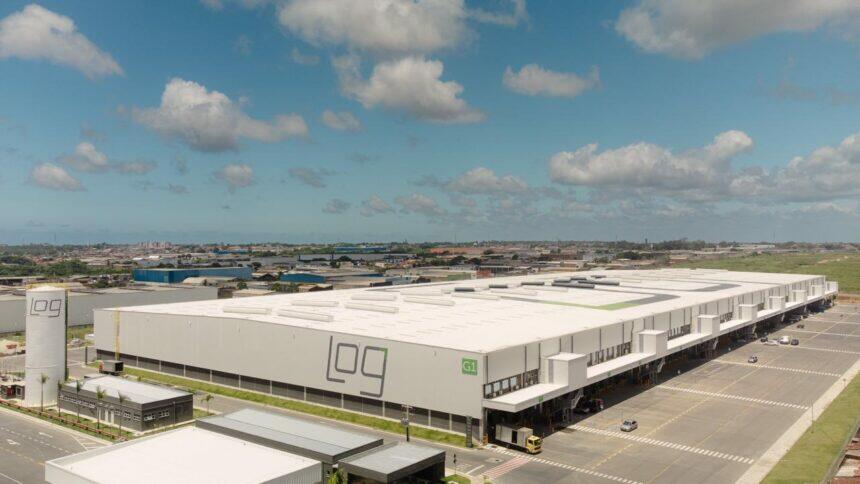
The sale of assets is part of the company's portfolio recycling strategy. Log sells mature and stabilized plants — generally already 100% leased and with long-term contracts — to real estate funds, using the capital raised to finance the development of new projects.
The focus of Log's new projects has been primarily on regions with less consolidated logistics infrastructure — especially the Northeast, which accounts for 40% to 50% of the company's development plan until 2028. The remainder is distributed between the South, Midwest, and Southeast regions outside the São Paulo-Rio axis, such as Minas Gerais and Espírito Santo.
"We have an advantage outside the Rio-São Paulo axis compared to the axis itself, because competition and supply are more present here," stated the CFO. Within the "Log 2 Million" plan — which foresees the delivery of 2 million m² by 2028 — the company still has 1.5 million m² between ongoing projects and land bank to be developed.
Development in full swing
Demand for new projects at Log continues to be driven primarily by e-commerce — a sector that now accounts for almost 50% of the company's client base, according to Saliba. "It's a natural consequence of the opportunity that exists in the market," commented the CFO. According to him, there is still room to double the segment's penetration in the country, and the increasingly strong arrival of Chinese players has boosted demand.
Log's expansion rate is at its highest level in the company's history. There are 17 simultaneous projects underway, totaling approximately 850,000 m² under development.
"The volume of deliveries this year is not expected to be very representative within this total, because we still have more projects in the initial stages." The plan's annual capex ranges between R$ 850 million and R$ 1 billion, financed mainly through asset recycling.
An additional advantage of targeting the plan towards the Northeast, according to Saliba, comes from access to financing lines with regional banks and development agencies — which are cheaper than the company's traditional fundraising, currently done through CRI (Real Estate Receivables Certificates).
"We are starting to access these lines of credit," stated the CFO. According to him, Log already has seven pre-approved projects under these conditions. The potential for raising capital in this area, he says, reaches R$ 1 billion, to be disbursed gradually over the next few years.
Services are growing in revenue.
Another expanding area for the company is services, which includes LOG Adm, REITs, and energy, and whose revenue totaled R$ 8.6 million in the second quarter of 2026 — 61.6% higher than the same period last year. In the quarter, the area represented 13.1% of total net revenue, compared to an 8.7% share in the same quarter of 2025.
Growth has been driven by Log's logistics park management platform, which grew 25% in managed area in the first half of the year, to approximately 3 million m², according to Saliba. Of this total, between 600,000 and 700,000 m² are assets that Log did not develop—that is, third-party parks that have started contracting the company's management services in the open market.
Furthermore, the company has sought to maintain the service even in assets sold as part of the recycling plan — according to Saliba, this occurs in more than 90% of transactions. "This growth of our service platform generates recurring revenue and grows without having capital employed. The company is executing this strategy very well to make the model more asset-light."