

Changes in the liquefied petroleum gas (LPG) market, the cooking gas, are already priced in. The trend is that, in a meeting this Friday, June 12th, the National Agency of Petroleum, Natural Gas and Biofuels (ANP) will approve the advancement of changes in the cylinder bottling model, contrary to what the large distributors and the Ministry of Mines and Energy (MME) want, NeoFeed has learned.
According to the proposal under study, ANP directors must approve the continuation of the drafts that indicate the possibility of remote filling, at an advanced base, completing the volume of the container until it reaches 13 kilograms.
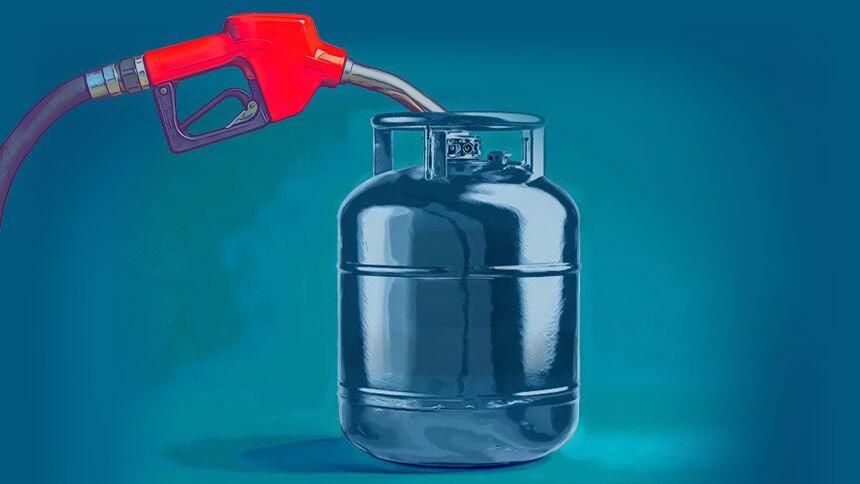
It would be a kind of "filling up" the gas cylinder, similar to what happens at gas stations with vehicles. Following this logic, if the cylinder, at the time of "refueling," for example, still has three kilos left, the customer will add another 10 kilos to top it up. And take it away sealed.
It's practically the same concept as a previous proposal, which lost traction internally at the ANP (National Agency of Petroleum, Natural Gas and Biofuels), and which allowed for fractional filling without any minimum volume. The customer could put one kilogram in the cylinder, if they wanted, and not leave with a full one. With the new format, it will be necessary to leave with a full cylinder.
The agency has not yet explained who will be held responsible in the event of an accident involving a gas cylinder. It also does not guarantee legal security for the companies, which are planning investments of over R$ 2 billion to purchase new cylinders, mainly to meet the new demand from the "People's Gas" social program.
Another point that will move forward is ending the exclusivity of gas cylinders, without requiring replacement with the same brand stamped on the steel. For major companies, this increases the risk of the cylinders becoming obsolete, as without an owner, there will be no one responsible for their maintenance.
The only argument presented is that the system would be traceable, with the agency monitoring these remote stations to check the volume that went into the cylinders and how much came out. This would be done with a kind of chip, a model that does not currently exist in the sector.
If the proposal is approved, public hearings will be held within 45 days, which should mean they will take place at the beginning of August. In practice, this will place the center of the debate on regulatory changes in the sector within the election period, which, in itself, could already contaminate the discussion.
“It’s impossible to understand the ANP’s insistence on these changes in a sector that is regulated and functioning in Brazil. These alterations will undermine the segment and make gas cylinders more expensive. Investments will not continue,” says an executive who is part of the management of a large LPG distribution company, to NeoFeed .
There is also concern that these changes could serve as an entry point for organized crime in the sector, due to the difficulty of oversight, as happened with the fuel sector, which became a police matter following Operation Hidden Carbon.
The changes were advocated by the ANP's Distribution and Logistics Superintendency, which presented a report at the last meeting of the board, on May 26, providing arguments to support the decision.
The expectation is that at least four of the five directors will vote in favor of the changes. However, contrary to the majority's position of immediate implementation, the chosen path will be the creation of a regulatory sandbox , with a testing phase for these technological changes. The cost would be borne by the companies that join the system.
According to information obtained by NeoFeed , ANP directors are concerned about the repercussions surrounding the proposed changes. Many directors have spoken in recent days with representatives from companies in the sector and the federal government to gauge the mood and understand how companies would react if the changes move forward.
The plan, behind the scenes, is to create a solution that, even if it lacks the support of the sector and the government, can at least be accepted without generating legal challenges. But there is already an intention within the sector to take legal action against the proposed changes as soon as they are approved.
Behind the scenes in the LPG market, some argue that, given the impasse, the directors might find an "honorable way out" to postpone Friday's vote, or even have the item removed from the agenda by rapporteur Daniel Maia Vieira. But this trend is currently the least likely.
Contrary to federal law
The issue is that these changes go against what is stipulated in Resolution No. 3 of the National Council for Energy Policy (CNPE) and the very law that created the "People's Gas" program, which only allows the sale of full and sealed cylinders, without the possibility of fractional filling.
But, according to José Luiz Rocha, president of the Brazilian Association of Class Entities of LPG Resellers (Abragás), which defends the interests of resellers, a possible new position from the ANP would be above these determinations.
“The ANP is sovereign over this matter. The decision it makes must be followed,” says Rocha. However, the very law that created the ANP in 1997 establishes that the agency's role is to regulate and oversee the implementation of national energy policy guidelines, not to override existing laws.
According to Sérgio Bandeira de Mello, president of the National Union of Liquefied Petroleum Gas Distribution Companies (Sindigás), the change could set a dangerous precedent for the sector and jeopardize consumer safety.
“We understand that more debate is still needed on this issue. There is a risk that these changes could pose a threat to the market, such as the entry of organized crime. Furthermore, there is great concern about the deterioration of conditions in Brazil's gas cylinder storage facilities,” says Mello.
In the union leader's view, the ANP, like other regulatory agencies in the country, suffers from a lack of resources and infrastructure to perform its functions. Adding new responsibilities would be a mistake.
“They can no longer inspect now, in a regulated sector. The question is how they will do it, in this model of advanced bases and without control over the ownership of the gas cylinder,” says the president of the union that represents LPG distributors.
In contrast, the president of Abragás says there is a "fear campaign" surrounding the possible changes, such as pressure from large companies in the sector to prevent market changes. He also states that, in his view, there is no chance of affecting the "People's Gas" program if the changes actually happen.
On Wednesday, June 10th, Sindigás filed a 13-page official letter with the ANP (National Agency of Petroleum, Natural Gas and Biofuels) recommending that, should doubts persist, the deliberation on the agenda be suspended by the board. It also requested that the agency formally consult the Ministry of Mines and Energy, incorporate the companies' statements into the minutes, and only then open a public consultation.
On May 25, the Ministry had already sent a letter to the agency's directors, criticizing the possibility of changes in the sector, and stating directly that this path puts the continuity of the "People's Gas" program at risk.
Data from Sindigás shows that Brazil is the sixth largest residential market in the world and the 11th in global consumption of LPG. 33.5 million cylinders are sold per month. There are 19 distributors, 60,000 resellers, and 182 distribution bases authorized by the ANP (National Agency of Petroleum, Natural Gas and Biofuels).
The total number of gas cylinders in circulation in the country is 134 million. According to Sindigás, to meet the demand of the federal government's social program, at least another 11 million cylinders would be needed, equivalent to 8% of the current volume. The "People's Gas" program will guarantee 65 million cylinders per year.
According to Rocha, from Abragás, new investments in gas cylinders are not necessary. He believes that current demand, after the implementation of remote filling, would be sufficient to meet the needs of the social program.
“If it weren’t necessary, why would all the companies be spending so much to buy new gas cylinders? Of course the sector needs more. Besides, we have a responsibility to the product and to people’s safety,” countered a businessman interviewed by NeoFeed , who has already invested hundreds of millions of reais in acquiring the cylinders. Now, he intends to stop the investments.
Fabiana Tito, a partner at Tendência Consultorias who led a recent study on the sector, says that the proposed changes will harm consumers and reduce incentives for investment.
“Furthermore, the gas cylinder will become more expensive due to market fragmentation and loss of economies of scale. ANP wants to implement chips and valves, which will mean an additional cost of at least 200%. If the regulator wants to bring in more players to reduce the price, it will have the opposite effect,” he says.
According to Tito, the consumer will ultimately foot the bill. "All this discussion about changing something that works makes no sense," says the partner at Tendências.
Approximately 90% of the LPG market today is served by Copa Energia (owner of Liquigás and Copagaz), Ultragaz, Supergasbras, and Nacional Gás. The sector generates around R$ 60 billion annually, with R$ 44 billion from distributors and R$ 16 billion from retailers.
NeoFeed contacted ANP, but they did not respond.