

With the consolidation of the "largest IPO" in the Brazilian real estate sector, based on the sale of R$ 5.2 billion in assets , JHSF recorded its best financial result since its founding 54 years ago in 2025.
The company closed the year with gross revenue of R$ 3.7 billion, a 112% increase over 2024. Adjusted EBITDA reached R$ 1.8 billion, a growth of 145%. Net profit was R$ 1.9 billion, a 117% increase over the previous year's result.
In this regard, all segments that make up the company's recurring revenue division – shopping malls, hospitality and gastronomy, airport, residences and clubs, and JHSF Capital – had record performance in 2025.
In recurring revenue, JHSF achieved gross revenue of R$ 1.4 billion, a 28% increase over the previous year. Adjusted EBITDA reached R$ 658 million, 33% higher than that recorded in 2024. And net profit was R$ 969 million, a growth of 45%.
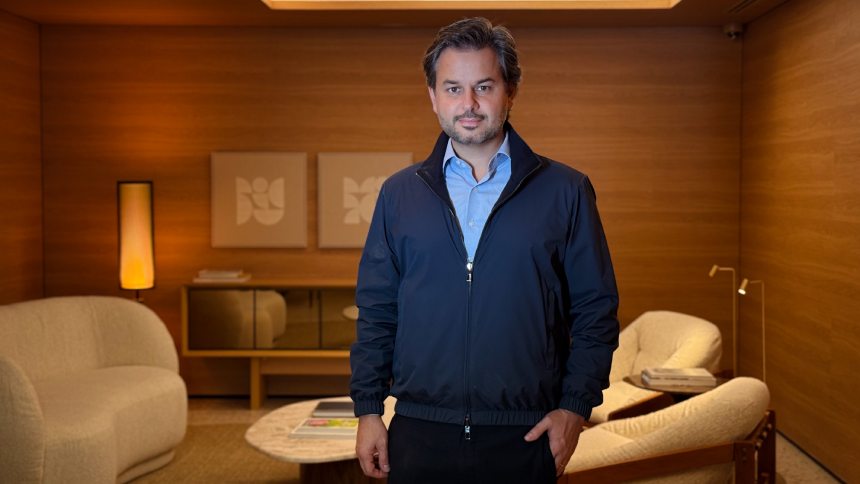
“We have been working to consolidate our culture and to ensure that JHSF is the successor to JHSF itself, in terms of business innovation. The company is increasingly seeking to innovate, with pioneering models, to continue leading the high-income market in Latin America,” says Augusto Martins, CEO of JHSF, to NeoFeed .
In the case of the IPO, which took place in December of last year, the company sold its inventory of completed and developing projects to a real estate fund anchored by Itaú BBA, Bradesco BBI, and XP.
And, according to the executive, just as important as the nominal value of the financial transaction itself is the outcome of this move, which will further help to unlock the company's value.
In addition to what has already been sold, the company still has a potential total sales value (VGV) of approximately R$ 30 billion in inventory to develop new projects in the coming years, which already guarantees the possibility of revenue growth.
“In practice, we are accumulating a wealth of future launches in our balance sheet over the years, and we are also reserving 78 units in this inventory, which remain with JHSF and will be allocated to our leasing business. This represents a sales value of R$ 2 billion for the company,” says the executive.
The sale of assets also directly reflected the strengthening of JHSF's capital structure. This move resulted in the company closing the year with a positive net cash position of R$ 2.3 billion and a negative leverage of 1.3 times the net debt to EBITDA ratio.
Before the consolidation of the operation, the company had accumulated gross debt of R$ 5.6 billion and negative net cash of R$ 2.2 billion. Leverage was 1.9 times.
“Now, the company is becoming less leveraged. We have more cash on hand than contracted debt. This is a transformation for the company, from the point of view of capital structure and its health and solidity,” says Martins.
With the IPO, JHSF now has a business model that can be replicated, according to the CEO, for sales of future launches. In practice, a similar move could be made in the coming years, given the volume of inventory still under JHSF's control.
With the 2025 results, JHSF will have achieved a growth of 199.1% in five years. In 2020, gross revenue was R$ 1.24 billion, compared to three times that amount last year, at R$ 3.7 billion.
During the same period, EBITDA grew by 168.6%. In 2020, the company reached R$ 687 million, bringing its current total to R$ 1.8 billion. Net profit growth over five years was 194%.
According to the CEO of JHSF, the company's growth last year was even more significant considering the challenging macroeconomic scenario in Brazil, with interest rates at 15% annually for most of the year.
Last year, the company invested over R$ 500 million in recurring revenue, with significant projects such as the Fasano Tennis Club, the Fasano Al Mare Beach Club, hangar expansion at Catarina Executive Airport, and the opening of the São Paulo Surf Club.
And with a robust cash flow, the company has more projects ahead. Among the upcoming projects to be delivered in 2026 are the largest expansion of the decade for the Cidade Jardim shopping mall, the opening of the Boa Vista Village Town Center shopping mall, with 14,000 square meters of gross leasable area (GLA) and more than 100 stores, and another phase of the Fasano Sardegna Hotel.
The Shops Faria Lima project, with over 10,000 m² of gross leasable area (GLA), is scheduled for completion by the end of 2027, at the corner of Avenida Brigadeiro Faria Lima and Rua Leopoldo Couto Magalhães Júnior.
Potential for appreciation
With this, JHSF aims to reach an EBITDA of R$ 1 billion in the next two years from recurring revenue alone. In 2025, the division reached R$ 658 million. For Martins, this shows that there is still great potential for the company's valuation.
"JHSF's valuation over the next few years should be between R$15 billion and R$20 billion. This is very possible in the medium term. This shows the growth potential that the company still has to ride in the coming years," he says.
In the shopping center segment, the company also achieved its best result in history, with R$ 4.7 billion in consolidated sales in 2025, a growth of 13% over the previous year.
With an occupancy rate of 99% and a waiting list, the unit reported a 34% growth in EBITDA (R$ 229 million) and a 12% increase in gross revenue (R$ 395 million).
At Shopping Cidade Jardim, the company is expanding its gross leasable area (GLA) by 3,500 m², bringing the shopping center's total GLA to over 52,000 m². This growth is due to the arrival of exclusive brands for the space.
One of them is the Italian brand Loro Piana, which wasn't in Brazil before, and will open in September. Also arriving at the mall are the American brand James Perse and the French brands Alaia and Fusalp. Chanel will have a 1,000 m² store, the third largest in the world and the first to offer a service called "les ateliers," providing personalized service to clients. It is expected to open by the end of the year.
"With this, Cidade Jardim consolidates itself as the headquarters of the main flagship stores of these brands in Latin America," says the CEO. Hermes and Tiffany will also expand their spaces in the mall.
In the hospitality and gastronomy sector, gross revenue surpassed the R$ 500 million mark for the first time – reaching R$ 501 million – with a growth of 17%. Adjusted EBITDA grew by 9%.
It is through this segment that JHSF began its international expansion. Last month, the company announced the acquisition of a palace in Milan's fashion district, which will become the Fasano Milano .
At the airport, revenue growth was 40%, reaching R$ 271 million in 2025, with EBITDA of R$ 158 million. In just five years, Catarina is now the executive aviation airport with the largest number of Fixed-Base Operators (FBOs), with approximately 200 hangared aircraft.
In residences and clubs, the company achieved R$ 228 million in gross revenue, a growth of 117%. Adjusted EBITDA, at R$ 170 million, was 102% higher than that recorded in 2024. The two clubs inaugurated in 2025 – the São Paulo Surf Club and the Fasano Tennis Club – are still in ramp-up, which should boost growth in 2026.
At JHSF Capital, the company has achieved R$103 billion in assets under management, placing it among the top ten asset managers in Brazil in alternative investments. "It plays a very important role in the company's financial structure and has been supporting us in international projects."
In the real estate development segment, gross revenue reached R$ 2.2 billion, a 279% increase over 2024. Adjusted EBITDA in this segment reached R$ 1.26 billion, a 278% increase. "It's a balance sheet where all results show the best performance in history."
“We have more than seven years of cash on hand to pay our commitments. We not only get through 2026 with great security, but we also have a very strong structure for the future,” Martins added.
Over the past 12 months, JHSF's shares on the B3 stock exchange have appreciated by 107.8%. The company is valued at R$ 5.9 billion.