


Gerdau , the largest steel producer and fifth-largest energy consumer in the country, continues to advance in its plan to decarbonize its operations and generate energy from renewable sources.
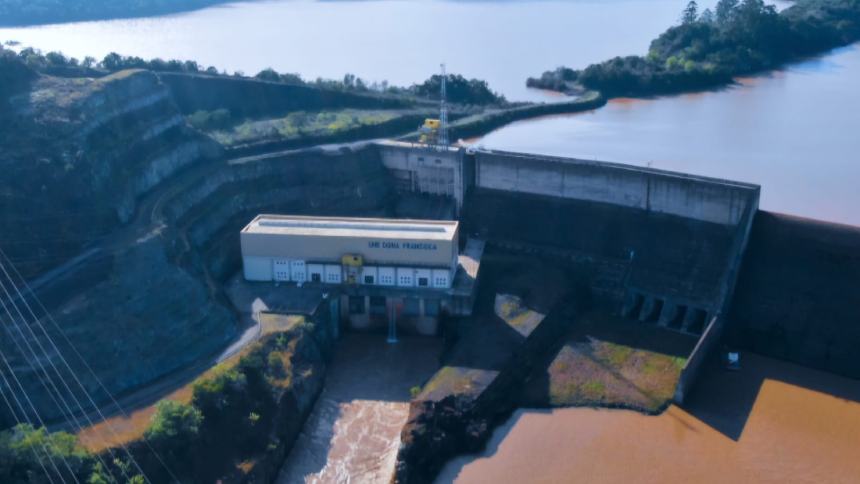
On Friday, April 17, the company announced the acquisition of a 23.03% stake, valued at R$ 150 million, in the Rio Grande do Sul hydroelectric plant Dona Francisca Energética (Dfesa), which belonged to Centrais Elétricas de Santa Catarina (Celesc).
Until now, Gerdau held a 53.94% stake in the hydroelectric plant, equivalent to an average of 35.6 MW (megawatts) of energy. With the acquisition, the company now holds a 76.97% stake in Dfesa, reaching a volume of 50 MW of guaranteed energy. The other shareholder is Companhia Paranaense de Energia (Copel).
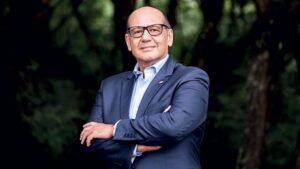
“We are increasing our stake in a hydroelectric plant in which we have been shareholders since the beginning of its operation, aiming to increase our renewable energy production. Furthermore, this marks another investment in Rio Grande do Sul, the state where Gerdau was founded 125 years ago,” says Gustavo Werneck , CEO of Gerdau.
The hydroelectric plant, located on the Jacuí River in the municipality of Nova Palma, Rio Grande do Sul, has an installed capacity of 125 MW, through two generating units. The volume of energy generated would be enough to supply a city with 350,000 inhabitants, such as Canoas, for example.
With this increased stake in Dona Francisca Energética, Gerdau is expanding its planned investments to own its own energy production and, indirectly, to market and make available energy produced from photovoltaic systems.
In 2025, the company invested approximately R$ 3 billion in the construction of two solar parks and the acquisition of small hydroelectric power plants (PCHs). And it will continue to advance with new acquisitions.
With these actions, the company now obtains 43% of its total energy consumption from renewable energy sources, including photovoltaic and hydroelectric power.
In March of this year, Newave Energia, a joint venture comprised of Newave Capital and Gerdau, inaugurated the Barro Alto solar park in Goiás , one of the largest of its kind in Brazil, with 731,000 solar panels covering an area of 841 hectares.
The volume generated at the Goiás park is equivalent to 5% of the total consumption of the state of Goiás, which corresponds to 365,000 homes. Of the total produced on site, 40% will be used to supply Gerdau's units and the remaining 60% will be sold on the free energy market.
The energy generated at the Barro Alto park is equivalent to 13% of Gerdau's total electricity consumption in Brazil. The investment in the Goiás project reached R$ 1.3 billion. The installed capacity is 452 megawatts-peak (MWp).
“Steel production is energy-intensive. And we want to reach 0.82 tons of CO² per ton of steel by 2031, less than half the world average,” said Marcos Prudente, general manager of energy and natural gas at Gerdau, to NeoFeed at the time.
In early 2025, Newave Energia delivered the Arinos solar park in Minas Gerais, which received investments of R$ 1.5 billion. Its production capacity is 420 MWp, and one-third of what is generated there is destined for Gerdau's factories.
In January of last year, Gerdau bought the companies Rio do Sangue and Paranatinga Energia, owners of two small hydroelectric plants in Mato Grosso, from Atiaia Energia for R$ 440 million.
These hydroelectric plants also began supplying energy to the steel mill's units, in a self-production system, in an amount equivalent to 8% of Gerdau's consumption in its Brazilian operations.
In addition to the sustainable component, with the supply of cleaner energy and a significant reduction in the use of fossil fuels, clean energy from self-generation is also more profitable. It is estimated that this self-generation is about 30% cheaper.
Also within the sustainability plan, Gerdau launched, at the beginning of April, the Gerdau NewCo product line, a low-carbon steel solution to meet the needs of customers planning to advance their decarbonization strategies.
The steels in this model are produced from ferrous scrap, in a movement linked to the circular economy and recycling. Today, 70% of the steel manufactured by Gerdau is based on scrap.
Currently, the company recycles around 11 million tons of scrap metal per year, making it one of the largest recyclers in Latin America.
In 2025, Gerdau recorded EBITDA of R$ 10.1 billion, a 7% decrease compared to the previous year. Net profit, at R$ 3.4 billion, was 21% lower. The main reason was the significant increase in imported steel in the Brazilian market, 24% in the case of flat steel.
At the time, Werneck stated that the lack of effective action on the part of the federal government is generating "unfair competition" in the national market. The company's first quarter 2026 financial results will be released on April 27th.
Over the past 12 months, Gerdau's shares on the B3 stock exchange have appreciated by 46.2%. The company has a market capitalization of R$ 41.43 billion.