



Created in 2013 as a spin-off from Abbott Laboratories, the American pharmaceutical company AbbVie will invest R$ 430 million in Brazil over four years in the development of new medicines, mainly in the areas of oncology and immunology.
The company's goal is to allocate resources, between 2026 and 2030, to approximately 100 clinical trials in over 200 laboratories accredited by the pharmaceutical company in Brazil. This amount represents a 65% increase over the volume allocated between 2022 and 2025.
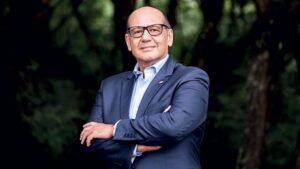
“It will be a continuous flow, during this period, to advance clinical research in Brazil. And we will develop this work not only in the main centers, such as São Paulo and Rio de Janeiro. We want to expand to other locations, such as the Northeast,” says Flávio Devoto, general manager of AbbVie in Brazil, to NeoFeed .
According to the executive, the idea is for the research to have a more "continental" impact in Brazil, encompassing a larger volume of population profiles to broaden the scope of the company's studies.
Currently, there are around 50 studies underway. This means that, in four years, the company plans to triple the volume of studies for new drugs developed in Brazil, reaching 150 clinical trials.
The plan comes amid a decision by the parent company to give more importance to the Brazilian market for AbbVie. Previously part of the Latin America division, Brazil will now be its own unit, precisely to have faster access to new investments.
“We now have a direct line of communication with the company. The relationship becomes more agile, facilitates communication, and allows us to advance even further in our growth plan in Brazil. This also involves securing more resources,” he explains.
The country is among the pharmaceutical company's top 10 markets in the world - the United States is the leader, and the company does not disclose revenue by country.
Today the company has a portfolio of approximately 60 products and indications approved in Brazil by the National Health Surveillance Agency (Anvisa).
Among the research projects to be carried out in Brazil is the development of molecules for the treatment of obesity. One of them is ABBV-295, an analogue of amylin, produced by pancreatic cells.
Although they both act as weight-loss drugs, amylin follows a different path than GLP-1 analogs, such as semaglutide (from Ozempic, developed by Novo Nordisk) and tirzepatide (from Mounjaro, created by the American company Eli Lilly ).
In practice, AbbVie plans to enter this billion-dollar race for slimming pens, but development is still in the early stages. There is no timeline yet for when the company will have the slimming product on the shelves, nor whether it will be a pen or a pill.
“We have this research in our pipeline and we understand that advancing the fight against obesity is very important. It is still under development and may be included among the tests carried out in Brazil,” says Devoto.
In the case of the slimming pens, the Danish pharmaceutical company attempted, through the courts, to extend its exclusivity period for semaglutide in the country. However, the patent expired on March 20th, which should lead to other pharmaceutical companies producing generic versions in the coming months.
According to the general manager of AbbVie, it is necessary to respect the patent term for medicines, which, in his assessment, guarantees the investments of the main global pharmaceutical companies in innovation and the development of new products.
“Intellectual production is a critical factor for innovation. Investment is only possible if this is guaranteed, both for Brazilian and international companies. When a patent expires, everyone can produce. Until then, it is necessary to strengthen this guarantee,” he states.
In the Brazilian market, approximately 20% of AbbVie's drug sales revenue comes from the public healthcare system. The remaining 80% is in the private sector, primarily from health insurance providers. And the trend is to continue expanding its participation in the private sector.
“It’s a market of about 55 million people, larger than the population of Spain. I see that there is still a lot of opportunity for growth for the company in the private sector. What we want is to serve the Brazilian patient,” says the Argentine executive, who took over the command of the Brazilian operation in January.
The company currently has a local production of approximately 18 million ophthalmic vials per year, manufactured in a third-party factory in Guarulhos, in the São Paulo Metropolitan Region. In addition to the domestic market, part of the production is exported to Latin America and South Africa.
In 2025, AbbVie achieved global revenue of US$61.16 billion, an increase of 8.6% over the previous year. Of the total, US$46.6 billion came from the United States market, and the remaining US$14.5 billion from other countries. Net income for the period was US$17.8 billion.
Over the past 12 months, AbbVie's shares have appreciated by 15.3% on the New York Stock Exchange. The pharmaceutical company is valued at US$364.8 billion.