

The increased presence of the informal market for slimming pens and the reduction in profit margins per product led Itaú BBA to lower the target price for shares of RD Saúde, the company that owns the Raia and Drogasil pharmacy chains.
According to a report released by the bank this Friday, July 3rd, the target price for the end of 2026 fell from R$ 27 to R$ 20, a reduction of 26%. Even so, analysts maintained their neutral recommendation.
According to the document, the impact of this scenario is already reflected in the stock's performance over the last few months. Itaú points to a 40% drop in the company's shares on the B3 stock exchange since February. The accumulated devaluation for 2026 is 27.5%.
Two factors regarding the slimming pen market underlie the conclusion of Itaú analysts. The first is that sales of Mounjaro, a pen based on tirrizepatide, produced by the American company Eli Lilly, have remained stable at a volume of R$ 900 million per month since November 2025.
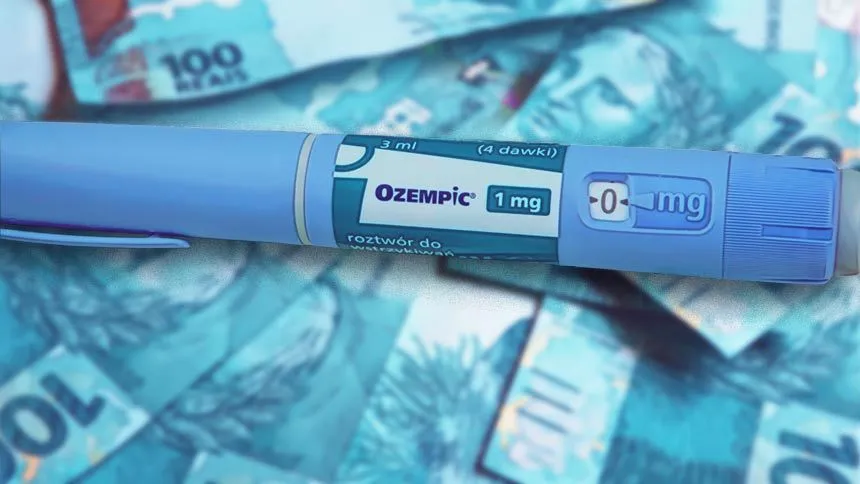
The second point lies precisely in the reduction of profits, mainly after the expiration of the patent for Ozempic and Wegovy, from the Danish company Novo Nordisk, in March of this year, and the arrival of cheaper semaglutide products on the Brazilian market.
"Gross profit per pen for similar and generic products fell short of expectations, with a margin of around 20%, compared to previous estimates above 30%," says the report signed by analysts Rodrigo Gastim, Victor Rogatis, and Vinicius Pretto.
"RADL3 is trading near levels prior to the growth of this LPG-1 market, with a price-to-earnings (P/E) multiple of 15 to 16 times estimated for 2026, a level that has historically served as a floor," the bank added.
According to analysts, Ozempic and Wegovy generate approximately R$150 to R$160 per case for the pharmaceutical retailer, with an average monthly ticket of R$900 and a margin of 17% to 18%.
On the other hand, cheaper medications, such as generic drugs, have an average monthly ticket price of R$ 300, a margin of around 20%, and generate approximately R$ 60 per box with the pen.
“This difference of 2.5 to 3 times has startled the market. Compensation may come via volume, but it is still unclear how much demand can grow with lower prices,” explains Itaú.
The report does not directly mention the competitors, but during this period, Ozivy, from EMS, the first semaglutide produced in the country, and Poviztra, a cheaper semaglutide from Novo Nordisk, but marketed by Eurofarma, arrived on the Brazilian market.
In any case, Itaú is already pricing in a gradual improvement in margins as a result of increased competition within the pharmaceutical industry and the increased bargaining power of pharmacies in selling these products.
In June, NeoFeed revealed that a second slimming pen is already in an advanced stage of development and should soon have its registration approved by the National Health Surveillance Agency.
The pen will be manufactured by Ávita Care, which will license semaglutide, produced by the European pharmaceutical company Adalvo, in Brazil. Sandoz will handle its commercialization.
According to analysts, RD Saúde's gross profit per store improved, rising 9.7% in the first quarter and 9.2% in the fourth quarter of 2025, on an annualized basis. Even excluding the effects of the LPG-1 market, the performance of the group's pharmacies also improved.
The bank believes that, although it represents a significant impact today, the informal market should lose ground over the years, falling from the current level of 50% to 43% by 2030.
The main reason for this resumption lies in the stricter oversight by Anvisa (Brazilian Health Regulatory Agency) of compounding pharmacies, which today represent an estimated market of R$ 12 billion by 2026. This means 40% of the total market share for tirrizepatide. "Any migration from the informal to the formal market can significantly benefit pharmacies."
According to Itaú's analysis, among retailers in the sector, the holding company of Raia and Drogasil should be the most benefited by the growth of this market, based on new approvals from Anvisa and the entry of new players into the market.
"For RD Saúde, GLP-1 should represent about 12% of revenue in 2026 and reach approximately 19% in 2030," he states.
"The company should continue to have an above-average market share in this segment, as it has greater exposure to higher-income consumers and greater financial capacity to sustain sales," the analysts added.
The expectation is that the market for slimming pens in Brazil, considering all available products, will reach R$ 15.6 billion in 2026, 50% higher than the result for retail chains last year.
Around noon this Friday, the 3rd, RD Saúde's shares on the B3 stock exchange were showing a 1.6% increase. Over the past 12 months, the increase is 15%, contrary to the trend projected for 2026.
RD Saúde's market value is R$ 30 billion.