


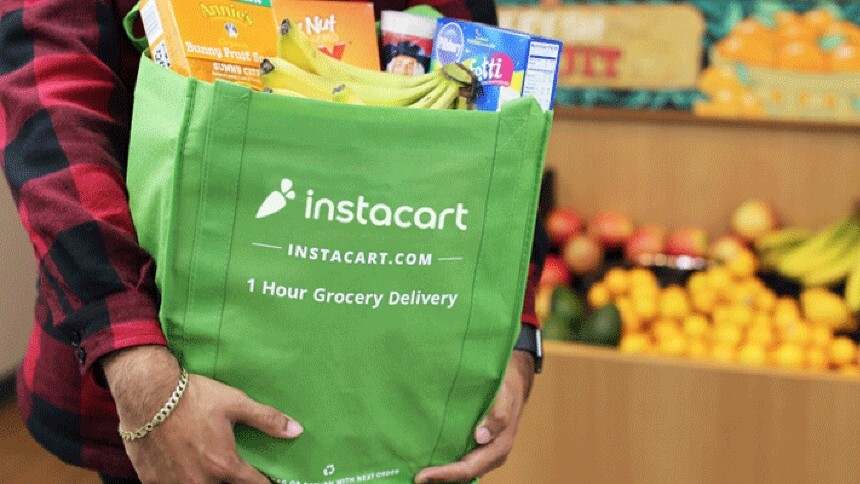

Owner of an online supermarket platform , the American company Instacart focused for many years on its domestic market and Canada. Now, however, the startup is taking its shopping cart to other borders. And the newest step in this direction indirectly marks its entry into Brazil.
The company announced on Tuesday, April 14th, the acquisition of the Colombian company Instaleap, which focuses on providing technologies for online supermarket operations and serves approximately 100 clients in the sector across nearly 30 countries in North America. In Brazil, this client base includes names such as GPA, Tenda, and Mambo.
The financial terms of the agreement were not disclosed. Instacart emphasized, however, that the acquisition reinforces its strategy of globally expanding its corporate offerings and supporting players in the segment in the evolution of their omnichannel operations, integrating physical stores, e-commerce, and logistics.
“With the technology, international expertise, and strong retail relationships of Instaleap, we can accelerate our international expansion and better serve retailers and consumers worldwide,” said Ryan Hamburger, chief commercial officer of Instacart, in a statement.
In this package, Instaleap adds a platform that covers everything from order management to product delivery. In addition to Brazil, its operational scope includes Europe, the Middle East, and Latin America, with clients such as Cencosud, Continente, SPAR, and the Portuguese company Jerónimo Martins.
Founded in Bogotá in 2019, and having processed over 100 million transactions since then, Instaleap has already attracted approximately US$11 million in investments from investors such as Redwood Capital Partners and Grupo Pegasus.
“We built our platform focusing on the real operational needs of retailers,” said Antonio dos Santos Nunes, co-founder and CEO of Instaleap. “By joining forces with Instacart, we amplify this impact with more investment and global reach.”
Initially, the startup will operate as a wholly owned subsidiary of Instacart. According to the American company, in a second phase, in addition to the services offered by Instaleap, the plan is to gradually expand the offering of its product portfolio to the Colombian company's customer base.
These offerings range from tools for managing perishable goods orders and smart shopping carts, powered by artificial intelligence, to a retail media platform currently used by more than 310 of the company's clients – the company's total customer base includes more than 2,200 retailers.
Founded in 2012, Instacart raised over US$2 billion from investors such as Sequoia Capital, Andreessen Horowitz, and General Catalyst. In September 2023, it went public on Nasdaq, raising approximately US$660 million and being valued at around US$9.9 billion.
In the most recent update on the operation, Instacar shares were up 0.65% around 9:45 AM on Nasdaq (local time). Year-to-date, the shares have fallen 10.5%, valuing the company at US$9.6 billion.
Instacart's arrival in Brazil, even if indirect, comes at a time when the online supermarket segment is experiencing increased competition, following a period in which "pure players" startups in this space, such as the Mexican company Justo and the Colombian company Frubana, left the country.
In other examples of companies that left the country or fell by the wayside, James Delivery, acquired by GPA in 2018, was internalized and discontinued in 2023. The Chilean company Cornershop, on the other hand, was absorbed by Uber and subsequently deactivated.
Now, in this recovery, the most recent name to invest in Brazil was Amazon . In early March, the retail giant announced the launch of Amazon Now, a grocery delivery service in up to 15 minutes, in the country, starting in cities like São Paulo, Rio de Janeiro, and Porto Alegre.
This platform also includes players like Daki and Shopper , which specialize in the sector, delivery companies like iFood and Rappi, and more generalist – yet also giant – names like Mercado Livre and Magazine Luiza .