

The investments that JHSF has made in recent years in its recurring income businesses have proven transformational for the company, turning it from just a real estate developer into a high-income ecosystem. In just one year, the strategy helped the company more than double the value of its shares, reaching a valuation of over R$ 8 billion.
And it was crucial for JHSF to achieve its best first quarter in history at the beginning of the year – net profit totaled R$ 371.6 million, a 9% increase year-on-year; revenue reached R$ 537.7 million, a 33% increase; and adjusted EBITDA reached R$ 250.6 million, a 27% growth, according to the balance sheet released this Friday, May 8th.
But Augusto Martins , CEO of JHSF, emphasizes that this is just the beginning. Considering the deliverables it intends to make in the coming years, the expectation is that recurring revenue will catapult JHSF to a new level in the medium and long term.
“With everything we are planning to do, we project cash generation of close to R$ 2 billion from recurring revenue businesses,” he tells NeoFeed . “Since these are recurring businesses with multiples of 15 to 20 times, if we project these R$ 2 billion in the medium and long term, we are talking about taking the valuation to between R$ 30 billion and R$ 40 billion.”
To reach these numbers, JHSF plans a series of deliveries across various recurring revenue streams, which will have effects both in the long term and, in some cases, as early as 2026.
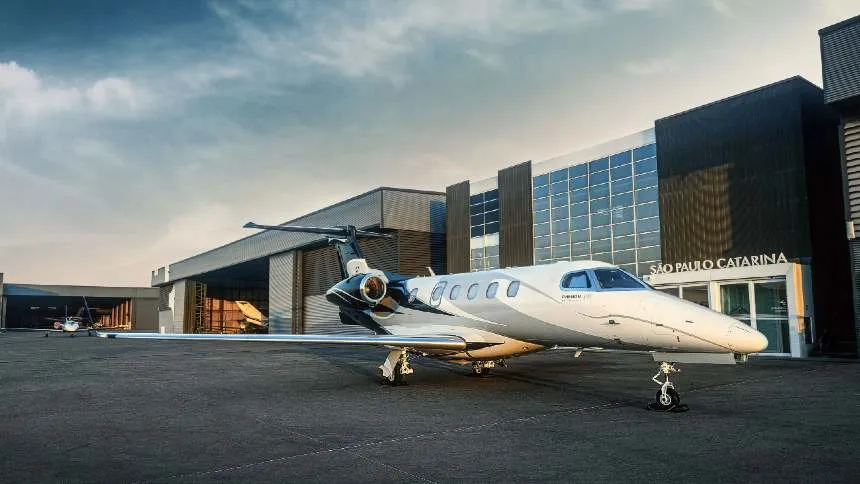
Among the projects planned for this year are the shopping mall located in Boa Vista Village and the expansion of Cidade Jardim; the opening of three new hangars at Catarina Airport ; the completion of the new phase of Usina São Paulo, a restaurant and office complex in Rio Pinheiros; and new units of JHSF Residences, in addition to the debut of operations in Sardinia, Italy.
In the coming years, JHSF's pipeline includes new operations such as the shopping mall on Faria Lima Avenue, planned for next year, as well as nine new hotels and 11 restaurants, further expansions at Catarina Airport, and new developments from JHSF Residence, which has 56 units in the final stages of construction and plans for new clubs.
These assets will be incorporated into operations that are already running strongly, causing the recurring revenue segment to also record the best result for a first quarter in the company's history in the first three months of the year, with adjusted EBITDA of R$ 176.6 million, up 20%, and gross revenue of R$ 389.8 million.
Internationalization and incorporation
In JHSF's plan to reach a valuation of up to R$40 billion, internationalization plays a significant role, with the company resorting to M&As to take advantage of opportunities that have arisen in the market and strengthen different fronts.
JHSF started the year strong, announcing three significant acquisitions: the Palazzo Taverna Medici del Vascello in Milan; the Enjoy Punta del Este complex (formerly Conrad) in Uruguay; and Embassair , an executive aviation operation located at Opa-Locka Executive Airport in Miami.
The movement, which began 15 years ago when it landed in Punta del Este, and later in New York, saw the company initially focus on expanding its hospitality business in an asset-light format, operating properties under the Fasano brand, given its strong international recognition.
But the idea is also to take other business fronts outside the country. This is already happening in Sardinia, where JHSF is bringing the complete ecosystem, with condominiums, a hotel, plots of land, and a golf course.
The company also plans to add new airports to its portfolio, such as Miami , creating an ecosystem that caters not only to Brazilians. JHSF's ambition is to be a high-income multinational.
“Internationalization is done to cater to a high-income international audience. Part of this high-income international club is the Brazilian client, but they represent a smaller portion compared to the sample we have. In New York, at our restaurant, more than 90% of the clientele is international,” says Martins.
Without disclosing specific figures, the executive says that the international side still has a minority stake in JHSF's results, but he believes there could be a balance between international and domestic cash generation in the medium and long term.
While working on delivering recurring revenue in Brazil and worldwide, in the real estate development sector, JHSF is already planning new launches, following the sale of R$ 5.2 billion worth of completed and under-development projects at the end of last year.
"We still have R$ 30 billion in VGV (Gross Sales Value) inventory to be launched in the future, which will strengthen the company's margin and results going forward," says Martins.
At a time when the local and global economy is experiencing turbulence , the CEO of JHSF says that the robustness of the capital structure allows them to proceed with their plans, without seeing risks of major setbacks.
The company closed the first quarter with positive net cash of R$1.8 billion, supported by the IPO of the real estate fund. This amount is lower than the R$2.3 billion recorded at the end of 2025. Financial leverage was negative 0.97 times, while in the previous three months it was negative 1.3 times.
“Today, 95% of our debt is distributed in the capital market, in a sophisticated and diversified manner, resulting in the lowest cost of capital structure we have ever had,” he says. “The balance sheet is robust, with more than R$ 18 billion in assets and equity of R$ 7.5 billion, which provides great solidity for us to continue investing in recurring income assets,” he says.
JHSF shares closed Thursday's trading session, May 7th, down 4.50% at R$ 12.11. Year-to-date, the shares have risen 54.4%, bringing the market capitalization to R$ 8.3 billion.