

In the balance between the strong title contenders and the usual underdogs, it's still difficult to predict who will be in the World Cup final, scheduled for July 19th at MetLife Stadium. But it wouldn't be an exaggeration to say who is already emerging as the big winner of the tournament in another field: sporting goods brands.
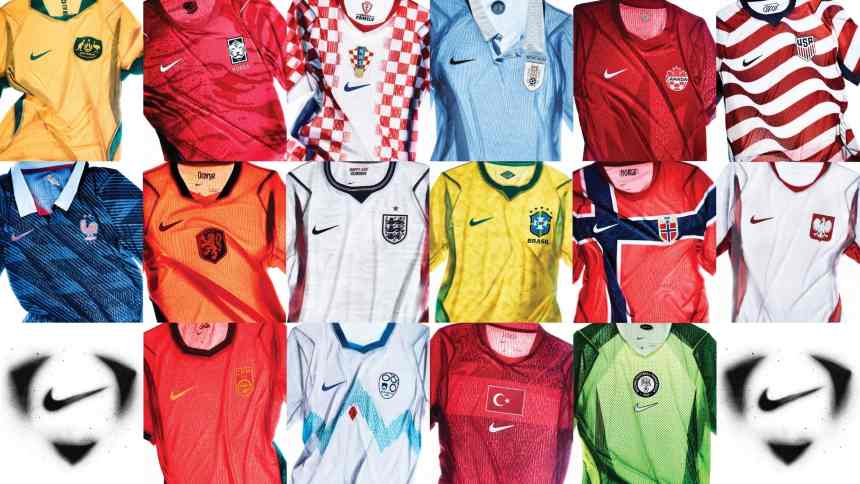
In this tournament, spanning almost three weeks of competition, Nike has been dominating, with its tournament-related business far exceeding that of its rivals, particularly its major competitor , Adidas .
This is shown by some statistics, highlighted by Barron's . According to the American publication, which cites a report from LSEG, official products from the American brand for the World Cup registered a 28% jump in sales from the start of the championship until June 22nd, surpassing Adidas' 7% increase during the same period.
Other data shows how Nike prepared for the tournament. The company launched 803 products for the World Cup, compared to 608 by its German rival. "Nike's product line is generating stronger immediate demand from consumers," highlights one section of the LSEG report.
At the same time, Nike didn't need to offer aggressive discounts on these items to reach the top of sales, suggesting that consumers are more willing to buy the uniforms of national teams sponsored by the brand than those of the competition.
Translating this perception into numbers, the company's t-shirts and shirts for the World Cup cost an average of US$135 each. Adidas products in the same category are being sold at an average price of US$95.
LSEG also points out that, in line with this strong demand, Nike has accumulated more than three times as many mentions in news and social media platforms compared to Adidas.
However, the report emphasizes that sales linked to the World Cup represent a small fraction of Nike's business. FactSet predicts that the brand's total revenue in North America should reach US$5.1 billion in the company's first fiscal quarter, which ended in August.
The period encompasses precisely the tournament's revenue, which will likely yield significantly lower earnings than the total projection for this fiscal year for the company, which, in a broader context, is experiencing a much more challenging time than Adidas.
Here again, statistics come into play. Nike's stock, for example, has lost more than three-quarters of its value since hitting its all-time high at the end of 2021. Since then, the company has faced competition from emerging brands such as On, Deckers, and Hoka.
On the other hand, Adidas, its best-known and most traditional rival, valued at €32 billion (approximately US$36 billion), saw its shares rise 36% from the historic low recorded at the end of March. During that period, Nike's shares, valued at US$60.9 billion, fell 20%.
According to analysts cited by FactSet, in this battle, Adidas' sales are expected to grow by almost 5% this year, reaching US$30.3 billion. For Nike, the estimate is for an increase of only 0.2%, to US$46.4 billion.
While this dispute is ongoing, Nike is undergoing constant changes in its top management team, reinforcing the idea that the company is truly not in its best shape. One of the areas that illustrates these movements is precisely the one in which the brand has always excelled: innovation.
In April of this year, Tony Bignell, who had held the position of chief innovation officer since June 2025, left the company and was replaced by Andy Caine, vice president and director of sportswear at the company, the third executive to assume this position in less than three years.