


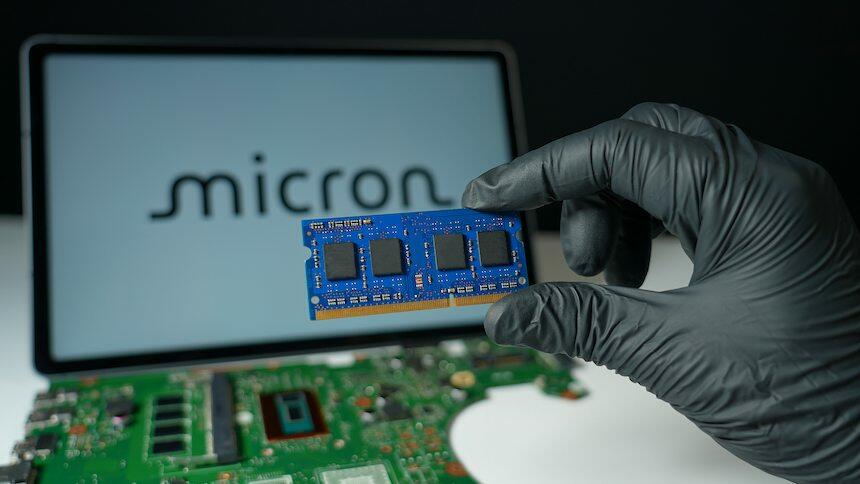
The artificial intelligence race has just added another hardware company to the trillion-dollar club. Micron Technology, one of the world's largest producers of memory chips, joined this select group after its stock soared 19.3% on Tuesday, May 26, closing at US$895.88, raising its market value to US$1.01 trillion.
Micron's shares have risen 213% this year. But UBS analysts believe there's room for more. On the same Tuesday, the 26th, the bank published a new report on the company, with an aggressive revision of the target price for the shares, from US$535 to US$1,625. The report, which addresses the expected memory shortage for data centers by 2028, gave even more fuel for the company to reach new heights on the stock exchange.
The move comes amid a second wave of the artificial intelligence race on Wall Street . After an initial phase dominated by Nvidia, investors have begun seeking companies that also benefit from the expansion of data centers , but which had fallen behind in the initial rally.
Micron is not alone in this second wave. Besides Micron and Nvidia, the list of semiconductor companies in the $1 trillion club includes TSMC, Broadcom, and Samsung Electronics, which also crossed that mark this month. Only 13 companies in the world have a market capitalization of over $1 trillion, according to real-time data from CompaniesMarketCap.
Next in line could be SK Hynix, one of the world's largest memory chip manufacturers. Valued at around US$966 billion, the South Korean company has seen its shares rise by nearly 200% this year on the Seoul stock exchange.
The thesis behind the rally is that the expansion of artificial intelligence has increased the demand not only for processors, but also for memory and storage capable of powering increasingly powerful servers.
Micron, which produces chips for storing and accessing data at high speeds and memory solutions for data centers, has felt these effects on its balance sheet.
In its second fiscal quarter 2026 figures, released in March, Micron's revenue nearly tripled compared to the same period of the previous year, with record figures in all business units.
For the third fiscal quarter, the company projects revenue of US$33.5 billion — a figure that, on its own, surpasses the annual revenue recorded by the company in every year through 2024.
According to Micron, the surge reflects a combination of AI-driven demand for memory, structural supply constraints, and improved operational execution.