

The shareholders' meeting to define the new board of directors of Usiminas, scheduled for this Thursday, April 23, should mark the debut of Latache Capital as an activist shareholder in the company.
Holding approximately 5% of the common shares, the asset manager nominated two candidates for the board —one of whom is its partner and legal director—and requested the adoption of multiple voting rights, a mechanism that allows for the concentration of votes and increases the chances of election.
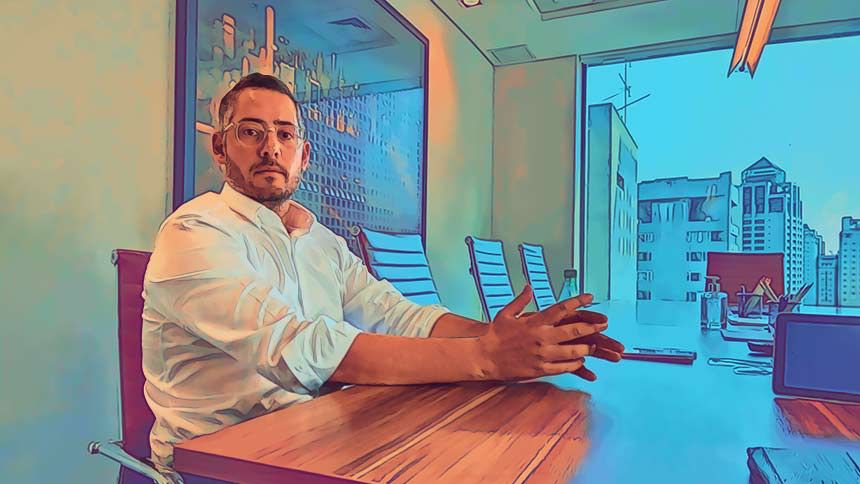
“If we can appoint two advisors, we'll appoint two. If we can appoint one, we'll appoint one,” says Renato Azevedo, founder and CEO of Latache Capital, in an exclusive interview with NeoFeed .
The position was established in September through the Vera Cruz fund, initially managed by Reag. However, it was only on April 6th that Latache formally assumed management of the vehicle. According to Azevedo, Latache was the beneficiary of the fund from the beginning, but preferred to remain anonymous to avoid "making a fuss."
“When our name is mentioned, people immediately think there’s going to be a fight. And that wasn’t the goal. That’s why we held off a bit before taking over the management of this fund,” says the company’s founder.
With R$4 billion under management, the special situations management firm was created in 2015 and has become popular for entering into deals considered complex and which almost always end in litigation. Its history includes lawsuits involving BodyTech, 2W, Rio Alto Energia, Marfrig , and Oncoclínicas . Now, the stage is set for a new dispute at Usiminas.
On the eve of the Extraordinary General Meeting (EGM), Azevedo preferred not to reveal the entire strategy at Usiminas, but was categorical in saying that, like all Latache investments, it is not a fundamentalist thesis.
“It’s not necessarily a dispute, but we’ve established this position. It’s difficult to talk about it now because, contrary to what many people think, we don’t just barge into cases,” he says. “But you can be sure that if we get involved, it’s because there’s something there. It will come to light eventually.”
At Oncoclínicas, Latache has been part of the restructuring plans that culminated in the departure of founder Bruno Ferrari from the company. But the argument, says Azevedo, is and always has been the takeover bid process involving the transfer of shares held by Goldman Sachs to the American asset manager Centaurus .
“I’m here because I believe in the claim , which is the takeover bid. It just so happens that the company needed help along the way. We are helping within our means. But it was never our intention to take over the company.”
Just a few months after securing a majority on the board of Oncoclínicas, the company will hold another shareholders' meeting on April 30th to decide on a board replacement at the request of Mak Capital , which seeks to increase its political power.
“If I wanted to have a majority on the Oncoclínicas board, I would be fighting today to present a firm and binding proposal for the long-term capital company the day before the 30th,” he comments. “That’s what I would do if I were interested in having a majority on the board. But, again, our primary interest there is the claim and that the company is well cared for.”
The takeover bid case has been handled by the CVM (Brazilian Securities and Exchange Commission) since last year, but remains unresolved. Azevedo, however, says he is "comfortable" with the situation and affirms that he will not sell the 14.6% stake that Latache holds in Oncoclínicas until the dispute is resolved.
Also still open since last year is the lawsuit that the asset manager filed in the B3 arbitration chamber against the exchange ratio established in the merger between BRF and Marfrig . "The door to negotiation is never closed to anyone. We are rational. We have our investment discipline and the objective of generating returns for shareholders."
Azevedo sees the area of corporate litigation as still largely unexplored in Brazil and says it has yielded opportunities disproportionate to the risks, but also enemies. According to the CEO of Latache, the "rude messages" are weekly and arrive via letters and emissaries sent by counterparts involved in the litigation.
“If you think that going into litigation against large companies will be a bed of roses, it won’t be. But it’s part of our business. That’s not the kind of thing that will stop us. We’re not afraid of litigation or pressure.”
Below are the main excerpts from the interview with the founder and CEO of Latache Capital:
Latache's position in Usiminas has recently become public. What opportunities did you see in the company?
It's not necessarily a dispute, but we've established this position. It's difficult to talk about it now because, contrary to what many people think, we don't enter a case forcefully. We enter trying to be constructive, to show, eventually, the weaknesses we've identified, what can be improved. Being very open, our primary objective there is not to create conflict with anyone. It's to maximize our return.
"By playing very openly, our primary objective there [Usiminas] is not to create conflict with anyone. It's to maximize our return."
Does it relate to the company's fundamentals?
We're not fundamentalist buyers of paper, period. That being said, we have our strategy. It's not the time to go into details yet, but you can be sure that—this is what I tell our investors who have been with us for a long time and have already learned—if we're buying, it's because there's something there. It will come to light eventually.
Usiminas' Extraordinary General Meeting will be held this Thursday, April 23rd. You requested multiple voting rights and nominated two board members. Why?
If we can appoint two advisors, we'll appoint two. If we can appoint one, we'll appoint one. We want to be closer to the company's day-to-day operations, especially regarding formalities and corporate matters. We don't understand anything about steel or mining, nothing at all. However, we do understand formalities, capital structure, and corporate issues.
The position was established by the Vera Cruz fund. I saw that you became fund managers on April 6th. How was that process?
Initially, we didn't want to make a fuss because, when our name is mentioned, people immediately assume there's going to be a fight. And that wasn't the goal. That's why we held off a bit before taking over the management of this fund, so as not to create that kind of unnecessary commotion.
Was Latache the ultimate beneficiary of the fund from the beginning?
From the beginning.
And why reveal the position now?
We will be appearing at the shareholders' meeting, and one of the nominated directors is a partner and legal director at Latache.
Another emblematic case you were involved in was that of Oncoclínicas. Is the idea to get the company back on track?
I'm not there to be a fundamentalist shareholder. I'm here because I believe in the claim , which is the takeover bid. It just so happens that the company needed help along the way. We are helping within our possibilities. But it was never our interest to run the company. We were never the largest shareholders, we are not, and we don't intend to be controlling shareholders of Oncoclínicas. Obviously, I want the company to survive. But, in terms of the thesis, here at Latache, it's treated as a legal claim .
"We have never been the largest shareholders, we are not, and we do not intend to be, the controlling shareholders of Oncoclínicas. Obviously, I want the company to survive."
Even if the stock price skyrockets, is the idea to maintain the position until the arbitration process is concluded?
Absolutely. We are very disciplined. So, we go all the way. There was a landmark case, involving arbitration, that we won against FUNCEF, and it took three years. That's because we bought the arbitration along the way. In Oncoclínicas, it's been a little over a year. So, we are very comfortable and confident with the case.
What is the plan for Oncoclínicas now?
The only thing we want for Oncoclínicas is the certainty that it will be in good hands. It was neglected and, because of that, made a series of misguided investment decisions. Anyone with a good project for Oncoclínicas is very welcome. Having the technical capacity, manpower, and financial resources, they should simply run the company.
On April 30th, there will be a new assembly to define the board of directors of Oncoclínicas, with Mak Capital seeking a larger number of seats. What to expect?
If I wanted to have a majority on the Oncoclínicas board, I would be fighting today to present a firm and binding long-term capital proposal to the company the day before the 30th. That would truly demonstrate that I'm putting skin in the game . That's what I would do if I were interested in having a majority on the board. But, again, our primary interest there is the claim and that the company is well managed.
Do you feel that the companies you invest in get scared when you establish a position?
We feel bad because it's very difficult for us to get involved without having thoroughly studied the case. We're not fundamentalists, nor a private equity fund; we're there seeking a legal claim . We have a high-yield fund that only invests in high-yield investments. But I would say that 80% of the capital is very flexible, which gives us the autonomy to invest in a range of different things.
How much is the capital today?
Approximately R$ 4 billion.
How long does Latache typically study a thesis before forming a position?
From 60 to 90 days, at a minimum, up to about eight months. In the case of Oncoclínicas, it was six months. But when I talk about building a position, it's about finding the best way to access the claim . I can simply buy the claim or start from scratch. I can buy shares of publicly traded companies to have the right and legitimacy to initiate this claim .
And how was the analysis of the Marfrig and BRF case?
I can say that this was one of the easiest, because it was just a matter of analyzing a proposed stock exchange ratio. There was an independent report, and both companies were publicly traded. We did the math, and in our humble opinion, there's an error in the exchange ratio. But ultimately, the B3 Arbitration Chamber decides.
"I can say that this [Marfrig and BRF merger] was one of the easiest, because it only involved analyzing a proposed share exchange ratio."
Is an agreement possibly the solution?
The door to negotiation is never closed to anyone. We are rational. We have our investment discipline and the goal of generating returns for our shareholders.
I imagine the other parties will exert some kind of pressure…
Rest assured, in every case we get involved in, there's an absurd level of pressure. High-level pressure and low-level, very low-level pressure. We receive rude messages weekly. They send letters, emissaries, plant rumors. You wake up already knowing about it. Anyone who doesn't have the stomach for that here at Latache should stay home.
If you think that going into litigation against large companies will be a bed of roses, it won't be. But it's part of our business. That's not the kind of thing that's going to stop us. We're not afraid of litigation or pressure.
And why did you enter this market?
This dates back to 2010, when I was a partner at Blackwood, which, along with Jive, was the first distressed debt player in Brazil. In 2015, I left to start Latache, which has always had an activist approach through debt. But we saw that this market would mature and that there were already many players who only dealt with court-ordered payments and a large majority who only bought overdue debt. However, in the United States, the major players were special situations funds, doing various other things, from mezzanine and equity to high yield and legal claims. It was a world of possibilities, and Brazil was still in its infancy.
What is a special situation according to Latache's perspective?
Special situations, for us, mean freedom of mandate and seeking a disarbitrage between risk and return. I have no problem taking risks, and eventually, high risks. But I want the potential return to be completely disproportionate to the risk I'm taking. It's very difficult to find opportunities. So, we look at a lot of things and do very little. That's our routine.
Has this competition in special situations increased?
Many players are emerging, and the best-known niches are becoming increasingly competitive. Therefore, we've been adapting. There was a time when we focused more on high-yield bonds, and another when we focused more on convertible debt, always seeking niches with less competition. In this process, somewhat by chance, we ended up in the litigation niche. In the end, whoever gets there first drinks clean water. But you have to pave the way, because if someone else paves the way, we'll die of thirst.
Is it where there is the least competition?
From Brazil's perspective, this is the least developed niche today. Many funds have been investing billions of reais in court-ordered payments for a long time. But, in our view, these are disputes against the public sector and are more passive disputes. No one is systematizing litigation against corporate clients. Today, basically, Latache is the only one doing it.
For us, it has been very good from a risk-return perspective. Now, like everything in life, there's a downside too. When you get into litigation, you gain the antipathy of many people and institutions. You have to take very good care of your reputation, because there will be people wanting to speak ill of you, plant rumors, and discredit you.
Why is this type of strategy viewed so negatively?
When a company enters litigation, it's not a personal matter; it's strictly professional. There was a communication failure, a reporting failure, or a corporate misconduct error, whatever it may be. If the company is publicly traded, it's subject to penalties. In Brazil, there's a tendency to take everything personally. It's a cultural issue. When I started buying distressed debt in 2010, the debtors also took it personally. We were greatly inspired by the American fund called Elliott, from former Treasury Secretary Paul Singer, which manages over US$100 billion doing essentially the same thing.
"We don't make passive investments. [...] We closely monitor all our cases, whether they are in litigation or not."
What activist stance does Latache take in these attacks?
We don't engage in passive investing. We monitor each of our cases 24 hours a day, whether it's lending money to someone or acquiring an equity stake. We meticulously follow all our cases, whether they involve litigation or not.
How many people are on the team?
Today we have 15, with three in-house lawyers. A large part of their work, along with the investment team, is to devise strategies and coordinate their execution with the law firms that work with us. Here, the strategy isn't just legal; it's about combining legal expertise with making money. We're always willing to pursue some litigation. So, the law firms end up liking it.
Does the issue of the Judiciary's human resources significantly impact this type of investment?
Honestly, it doesn't bother us that much. Obviously, the Judiciary has its idiosyncrasies. Some cases take longer than others, but that's how it is. It's factored in when we project the return.
So what is the advantage of this business compared to a traditional asset management firm?
Legal claims tend not to correlate with the economic environment. We don't have a political or economic ideology. We happen to have an economist—that's me—but we don't do economic forecasting. We are much more reactive than proactive. The business is more hermetic. Commodity prices may be fluctuating, but we are bound to specific theses. This, from the point of view of protecting capital, is very important for the investor.
Who are the biggest investors in Latache?
Of the capital from third parties, 80% comes from single-family offices and 20% from multi-family offices. Partner capital should represent a quarter of the capital here at Latache.
Has the demand for the firm's funds increased in recent years, given the popularity the asset manager has gained in large cases, such as that of Oncoclínicas?
The firm has never been very proactive from a fundraising standpoint. We don't like to join platforms and we don't like to join bank databases to distribute funds to private clients because, eventually, you get tied down. If a legal claim arises against a bank, it creates an awkward situation. For example, today we have an active claim against Banco do Brasil and against Caixa Econômica Federal, which is already in the Superior Court of Justice (STJ). We don't want to create a potential conflict of interest. Having the ability to directly access the capital owner provides spectacular liability flexibility. It's something we've always wanted to build.
On the other hand, it creates a limitation on growth.
It creates [a challenge], but this limitation isn't a bad thing for us. We may have made mistakes, but our stance, from the beginning, has been that we'll never be the biggest, but we want to be the best.