

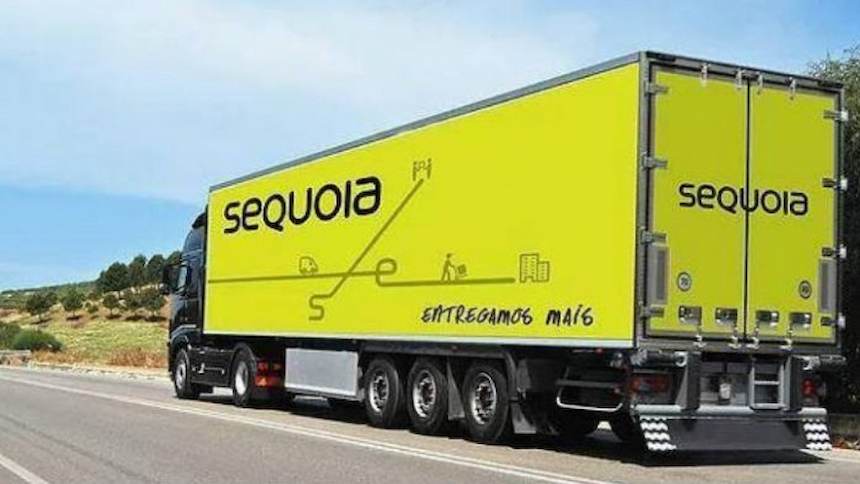
Sequoia Logística announced this Wednesday, April 22nd, the sale of its mega sorter to Mercado Livre for R$ 40 million, in a transaction that consolidates the company's already expected exit from the e-commerce (B2C) segment. The lease agreement for the warehouse in São Bernardo where the equipment is installed was also transferred to the marketplace.
The sorter, an automated conveyor belt-based parcel sorting system, had been incorporated into operations after the merger with Move3 in 2024, with the capacity to process up to 32,000 packages per hour. In practice, however, it operated at between 30% and 40% of that volume, becoming an idle asset and generating losses.
According to the company, this branch of the pipeline was consuming R$ 2.5 million per month in cash, considering expenses such as maintenance, warehouse rent, and labor.
“We had around 260 employees in that operation. We made a severance plan for those people. We recommended some of them to Mercado Livre. It's a demanding area, with other companies also interested in absorbing that workforce,” says Leopoldo Bruggen, CEO of Sequoia, to NeoFeed .
The equipment was designed in China and, according to Bruggen, would only make sense if there were sufficient scale. “But, from the pandemic onwards, there was a disruption in the e-commerce sector, with the largest marketplaces taking control of their own logistics. Independent companies that had been investing in their own infrastructure were caught off guard,” he admits.
“Move3 was a company focused on delivering small packages and also had a sorter that, at the time, seemed very interesting,” recalls Bruno Gomes, partner and head of the Distressed & Special Situations vertical at JiveMauá. The asset manager has been Sequoia's main shareholder since 2023, after converting part of the company's debt into shares , with approximately a 90% stake.
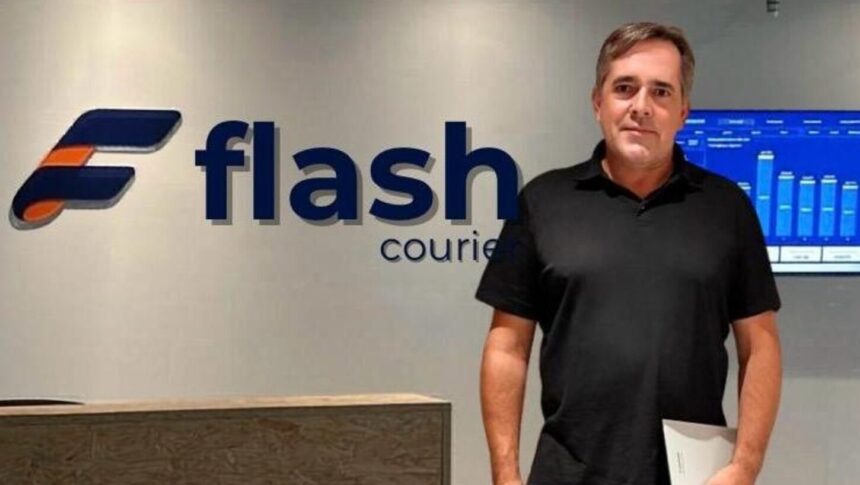
However, with the vertical integration of e-commerce logistics, Gomes states that it was necessary to "pivot" the company's restructuring, which is currently undergoing extrajudicial recovery. "As a manager, we have the ability to adapt and change strategy when the scenario changes significantly."
Without the mega sorter operation, Sequoia plans to maintain an "asset-light" operation, focused on areas that require low fixed infrastructure and predictable revenue. The focus will be on the delivery of banking products, such as cards and POS terminals, led by the Flash Courier brand.
The new Sequoia
“We want to be the preferred logistics provider for major Brazilian banks and fintechs. I would say that is our mission,” says Leopoldo Bruggen. According to the CEO, Flash Courier is already a leader in this market, with approximately 70% market share.
Bruggen expects to further increase this market share, now that the company has obtained a tax clearance certificate (CND) after concluding negotiations with the Attorney General's Office for the payment of federal debts.
“Now, we can participate in bidding processes where the CND (Certificate of No Debt) was previously required. I would very much like to enter the logistics sector of public banks, for example. Today, it is dominated by the Post Office. But we are more efficient and cheaper than the Post Office.”
According to the CEO, the small package operation — focused on the delivery of cards and payment terminals — already accounted for the majority of revenue and profit, and was also the group's most profitable vertical.
In the third-quarter balance sheet, the most recent released by the company, Flash Courier was responsible for more than 80% of the revenue, which totaled R$ 152.4 million. Given the decline in B2C sales, revenue was 30% lower than that recorded in the same period last year. But Bruggen states that this is not the company's biggest concern.
"The market needs to stop asking about revenue, because there are companies making billions and having cash flow deficits. I don't want to increase revenue, I want to generate cash."
Sequoia did not disclose the exact margin for Flash Courier, but one of the debt covenants requires the company to maintain a gross margin of 25% or more in the cards unit and only 11% in the consolidated result.
Although the increased use of digital cards poses a risk to the business, the group's assessment is that demand for physical cards is not expected to fall significantly in the short term.
“Physical cards don’t compete with digital cards. They are complementary. There’s the financial inclusion of social classes C and D, who didn’t have access to credit cards, and the growth of fintechs that see the card as an important marketing tool,” says the CEO. “We’ve also had a very large volume of POS terminal deliveries throughout Brazil, and for us, it’s an interesting market because it fits into the same card delivery network.”
In this operation, Sequoia has greater revenue predictability, given the service contracts already signed with financial institutions, without the need for a large infrastructure like the one it maintained in the B2C business.
In practice, the cards and payment terminals are separated by recipient in sorting centers and, from there, routed for final delivery. This last step is carried out by third-party partners, but under the management and monitoring of Sequoia itself, with real-time tracking and information sharing with clients.

Another area gaining more traction with the shift away from B2C is dedicated deliveries, known as full truckload. In this model, the company transports full truckloads for a single client, with a defined origin and destination, without the need for consolidation with other orders along the way. "It's a profitable and low-risk business because, whether the load is full or not, the amount received is basically the same," says Bruggen.
In this operation, the company also manages to have greater control over expenses, given that costs are only projected after the service is contracted. “Unlike B2C, where costs were anticipated to generate revenue, here revenue and costs are very closely aligned. Therefore, it is unlikely that B2B will have a loss-making operation,” explains Gomes, from JiveMauá.
According to Gomes, generating cash will be the only way for Sequoia to recover and gain the necessary attractiveness on the stock exchange to allow a transaction. Since 2023, when JiveMauá acquired a significant stake in the company, its shares have fallen by more than 99%, trading at R$ 0.17, even after share consolidations. Currently, Sequoia is worth R$ 1 billion, less than a third of the approximately R$ 3.5 billion it was worth at its peak in 2021.
“Since we made the investment, we have always sought financial restoration and an exit strategy via equity. But, over time, we have needed to adapt somewhat to what has happened with the company and the market.”
With the mission of managing the company's day-to-day operations since leaving his position as CFO and assuming the role of CEO of Sequoia at the end of 2025, Bruggen sees the exit from B2C as a milestone in the company's finances.
“We don’t want to and can’t work with loss-making segments. So, we’re refocusing on segments where we’re already market leaders, have good margins, and want to grow,” says the CEO.