

As part of a broader macroeconomic scenario, both domestic and international, that ranges from still-high interest rates to the war between the United States and Iran, many large Brazilian groups have reduced investments and prioritized the sale of assets in an attempt to reduce debt and rebalance their operations.
This is not the case for Votorantim . With assets such as Votorantim Cimentos, Motiva, Hypera, and Auren in its portfolio, the holding company of the Ermírio de Moraes clan does not minimize the effects in this context. But it also does not plan to put the brakes on in 2026.
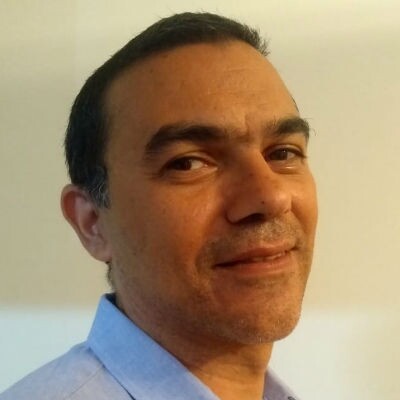
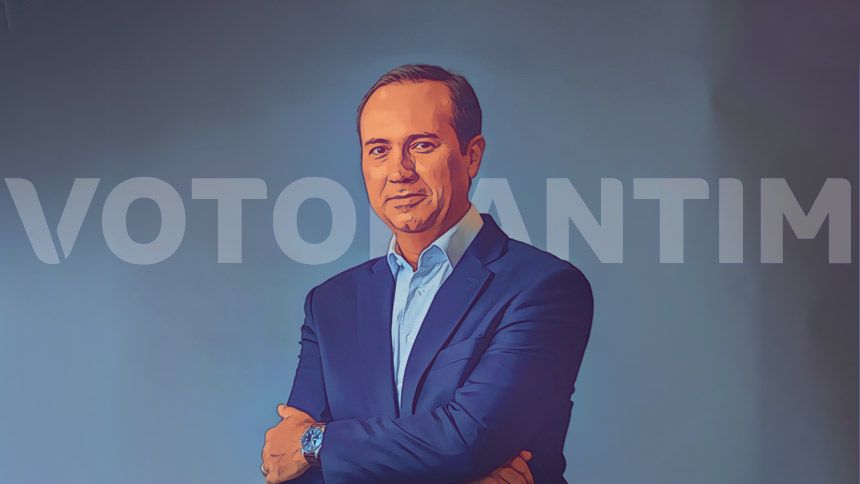
“We will end 2025 with almost R$ 8 billion in cash at the holding company and no debt. Our balance sheet is very strong,” says João Schmidt , CEO of Votorantim, to NeoFeed . “So, we have the flexibility to continue investing and supporting both the portfolio companies and to look for new opportunities.”
In addition to a leverage of 1.01 times, compared to 1.09 times a year earlier, the group closed the year with a record consolidated cash position – taking into account the sum of all operations under its umbrella – of R$ 15 billion. And a net profit of R$ 4.8 billion, a jump of 482% over 2024.
Two other figures from the balance sheet, however, are highlighted by Schmidt as the main indicators of how Votorantim is prepared to weather the likely turbulence of the year. And, in parallel, to continue moving its portfolio with new investments.
From an economic standpoint, which considers performance proportional to the stakes held in each company in the portfolio, net revenue of R$ 58.8 billion and EBITDA of R$ 13.8 billion were also record highs, with year-on-year growth of 11% and 10%, respectively.
Based on these indicators, Schmidt details how the holding company plans to balance its investments this year. And he indicates which aspect should, initially, have more weight in this strategy.
“Historically, we’ve looked quite a bit inward,” he says, referring to investments earmarked for companies already under the Votorantim umbrella. “So, most of the resources will go to our own portfolio, which already generates many investment opportunities for the group.”
He cites several figures to reinforce this argument. The first is the fact that, in the last four years, these companies have collectively invested R$ 53 billion. At the same time, the CEO draws attention to the range of opportunities in a portfolio that has undergone a series of transformations.
"In the last five years, we have added five new companies to our portfolio," he says, citing, in this package, Motiva , an infrastructure company; Auren, an energy company; Autren, a real estate asset company in Brazil and the US; 23S Capital, a management company resulting from a joint venture with Temasek; and Hypera Pharma .
As a result of diversification that led to its debut in the healthcare sector, the group began building a position in Hypera, for example, in 2023. And since then, it has expanded that stake, culminating in its participation in the R$1.5 billion capital increase approved by the pharmaceutical company's board this week.
On another front, which also opens a window for new injections of resources from the holding company, Schmidt highlighted Votorantim Cimentos , the largest asset in this portfolio, which has an investment plan of R$ 5 billion over five years. Of which, R$ 2.7 billion has already been invested.
He does not comment, however, on the rumors that Votorantim Cimentos is one of the companies interested in buying CSN Cimentos, following a debt reduction strategy for Benjamin Steinbruch's conglomerate. But, as NeoFeed has learned, the company is, in fact, in the running.
Schmidt doesn't hesitate, however, when questioned about the sectors on the holding company's radar for new investments. "We continue to be very fond of commodities and the infrastructure sector as a whole. And we are very excited about the topic of longevity and its implications for the healthcare sector," he says.
On the divestment front, the group has also been active. The most recent example in this direction was the sale, in January, of its stake in CBA to the Chinese company Chinalco and Rio Tinto for R$ 4.68 billion. Here, however, the appetite is not the same as in the investment sphere.
“Unlike other groups, we have no need to divest,” says Schmidt. “Here, our rationale isn’t financial, about paying off debt. We are very liquid. Rather, it’s strategic, thinking about what’s best for each business.”
An example that fits this thesis was the entry, in December, of PSP Investments into the shareholder structure of Citrosuco, another investment by the holding company. In the new arrangement, the Canadian pension fund came to hold a minority stake in the operation, as did Votorantim and the Fischer Group.
"For us, it's always a question of how to make moves that will make this portfolio, on the one hand, more resilient, and also more financially flexible, given that our ability to predict the future is low."
In this context, with regard to the components that are outside the holding company's control, he concludes by stating that, apart from a few elements, the current macroeconomic scenario is very similar to that of a year ago, when Donald Trump's tariff hikes began to show their claws. But he makes a reservation.
“This year we have oil prices, war dynamics, and many uncertainties that will certainly impact us,” he says. “But, just like a year ago, we need to be careful not to overinterpret what is happening right now. Only with the benefit of time will we know what the real impacts are.”