


Brasilia - Encouraged by the strong performance of the first four auctions of the main program focused on attracting foreign capital to finance the ecological transition, the government is preparing to hold the next Ecoinvest auction, which should take place in July, given the growing appetite of investors, without ruling out a sixth auction later this year.
The program involves the country's largest banks, which compete with each other for the right to offer credit focused on sustainability, with support from a portion of public funds.
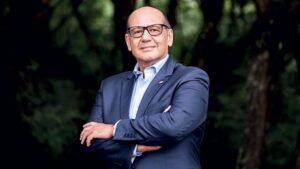
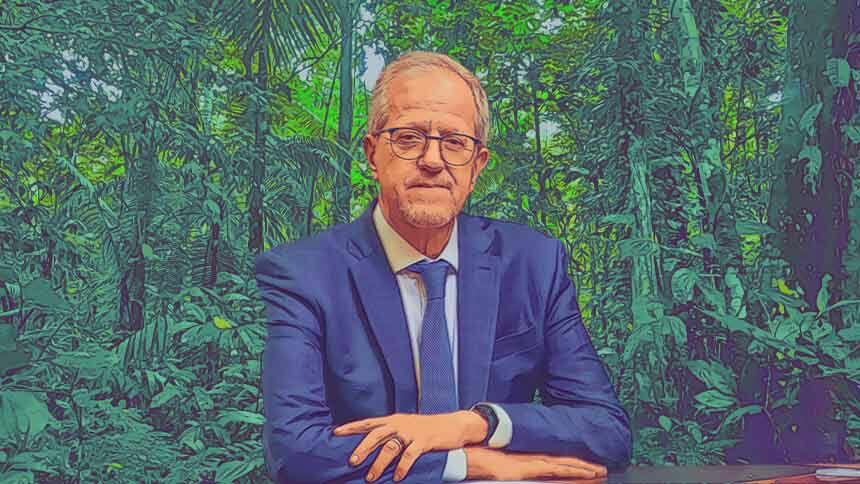
In an interview with NeoFeed , the Minister of the Environment, João Paulo Capobianco, who has been in charge of the ministry for just over two months and is a lifelong right-hand man of former minister Marina Silva, gave an assessment of the program.
Combined with the Climate Fund – another source of funding for climate-focused projects (decarbonization, restoration of degraded areas, and sustainable practices) – the Amazon Fund, and the National Environment Fund, Ecoinvest has already accumulated R$ 204 billion in private resources. A surprising amount, he says.
“We will wait for this fifth auction and see how it evolves. But just as there is no sixth auction planned yet, there is also no decision for now that there will not be one,” says Capobianco. “The better the response from financial institutions and the private sector, the greater the incentive for us to move forward.”
Among the 13 financial institutions that have already bid and secured the resources offered by the Ecoinvest auctions are: Itaú, Bradesco, Caixa, Banco do Brasil, BNDES, Santander, HSBC, BTG, Citibank, Safra, Rabobank, BV, and ABC. They are competing for the right to invest the resources within portfolios with pre-selected clients.
The great success of the auctions, according to Capobianco, lies in the offering of public resources at low interest rates, but with a leverage requirement for banks. For every R$1 of public money involved, institutions need to allocate R$3. In the fourth and most recent auction, however, this ratio was even higher: it reached 4.5 times.
In the next auction (the fifth), launched last month, the program will still have a strong focus on innovation, such as investing in projects related to critical minerals. When asked if Ecoinvest will help finance the rare earth sector in the country, he replies:
"Without a doubt, not only through Ecoinvest, but also with resources from the Climate Fund. In reality, this is our bet. Brazil can develop an industry that processes and adds value to the critical minerals it possesses, avoiding entering a phase of simply exporting."
Capobianco also reported that the government's ecological transition agenda still foresees more actions this year. President Luiz Inácio Lula da Silva (PT) is expected to soon issue a decree regulating payment for environmental services, which is already in the Civil House. And the TFFF (Tropical Forests Forever Fund), a major innovation from COP-30 in Belém (PA) last year, should be structured by the end of the year "for sure," with optimistic expectations for now of reaching US$ 10 billion in ongoing negotiations with countries - US$ 6 billion has already been agreed upon.
Finally, Capobianco also said that the government will not interrupt the environmental licensing process for the BR-319, a controversial highway in the Amazon region that has been awaiting improvement works for over 40 years – the middle section has not yet been fully paved and depends on ongoing licensing. “Now, DNIT will forward the information for the installation license. It's a process that should happen in the coming months. But we are not working to waive the license in any way.”
Below are the main excerpts from the interview:
The government has just announced the 5th Ecoinvest auction. What will its focus be and what is the estimated business volume?
Ecoinvest has been so successful that we are even exceeding expectations. The first four were extremely successful, with high leverage. It's difficult to say that this will be the last. Financial institutions are very interested, investing, making significant offers. This means that the private sector is very interested. The leverage is significant because they have companies in their portfolios interested in raising these funds. Ecoinvest also has resources from the Climate Fund, for investment by companies, and there too the private sector's appetite for projects in the line of ecological transformation is impressive, which aligns with the strategy we launched with the Treasury to stimulate a redirection of investments.
"Financial institutions are very interested [in Ecoinvest], investing and making significant offers."
What is the main bet?
We are betting both on innovation and on the priorities established by the Climate Fund. We are supporting initiatives from companies with their own national and international private capital, leveraging these projects significantly in the areas of ecological transformation, low-carbon economy, and investments in restoration, electrification, and conservation. We restructured the Climate Fund – something we hadn't done in Brazil for some time – we revised the NDC, and now we need to create more opportunities to attract substantial national and international capital.
How much "green" credit have these auctions generated for companies?
We launched Ecoinvest in October 2024 with R$ 45 billion, focusing on sanitation and biofuel production. The second auction was in April 2025 (R$ 30 billion), aimed at recovering degraded pastures, a very ambitious program that focused on areas converted in the past with very low utilization and productivity in livestock farming. The idea was to offer resources to stimulate agribusiness entrepreneurs to restore these areas and reduce the expansion of new agricultural frontiers. In October 2025 came the third auction, with another R$ 53 billion. With the first three auctions, we had R$ 127 billion: R$ 56 billion from foreign investments alone, involving 12 financial institutions. We are talking about cutting-edge resources, private investment in this new economy. Then we had the fourth bioeconomy auction, in which we leveraged R$ 13.2 billion.
Was there no room for more features?
We could have leveraged more, but we were more demanding and decided to prioritize banks with higher leverage. Those with lower leverage were not considered. But from the point of view of sustainable tourism, green infrastructure in the Amazon, these new areas that we are financing, higher leverage would be very significant. So, adding up these four auctions, we are talking about R$ 140 billion, but we also have the Climate Fund.
Including the Climate Fund, what are the results of these sustainable financing lines supported by the government?
The Climate Fund was created in 2009 and, until 2023, managed resources of around R$ 400 million, with support from BNDES (Brazilian Development Bank). In 2024, we made a bet on issuing sovereign bonds to leverage resources in the international market; we made an offer of US$ 2 billion and received demand for US$ 6 billion, with many doubts about whether companies would be interested in raising these funds, and whether BNDES would be able to operate quickly, but it was great. In 2025, we made a bet on increasing the bond offering; the process advanced, and in 2026 our budget is R$ 27 billion in the Climate Fund, in addition to Ecoinvest. The volume of resources is very positive. Combining the two with the Amazon Fund and the National Environment Fund, we are talking about R$ 204 billion made available by financial institutions for investments in these new opportunities.
"In 2024, we made a bet on issuing sovereign bonds to leverage resources in the international market; we made an offering of US$2 billion and received US$6 billion."
Is it a significant volume?
It's a surprising volume and truly a paradigm shift. Regarding the bioeconomy, the resources are also quite interesting: socio-bioeconomy; restoration and timber management; sustainable tourism; sanitation, energy, and river transport infrastructure for the Amazon; bioindustrialization. It's a set of very innovative initiatives involving private investment.
And what are the expectations for the 5th auction?
This auction will be heavily focused on accelerating innovation for competitiveness. It focuses heavily on technological development, innovative solutions, and climate investment initiatives. The priorities of the new auction are in the technological vanguard: green inputs, vehicle battery systems with critical minerals. The role of critical minerals is to support companies that process batteries and produce electric vehicles. And we are opening opportunities for advanced green fuels, such as SAF, biogas, and biomethane. There's also the green chemistry aspect, with sustainable packaging. And investment in automation and urban industrial and biological solid waste.
What will the characteristic be?
This fifth auction will have a stronger focus on stimulating and increasing the appetite for innovation, with the possibility of taking more risks. The government is offering conditions to overcome the barrier that often leads to the failure of innovation in Brazil. Innovation depends on venture capital, and the idea behind the new auction is to support the mitigation of what we call the "Technological Valley of Death"—the companies that cannot move from the innovative project stage to the market. So it's a very interesting bet.
Will there be more public resources to guarantee this increased risk?
Also. In reality, the idea is to create a mix where you have public resources at lower interest rates, but requiring leverage. The institution has to provide resources. In the case of the fifth auction, we indicate that at least 10% of the financial institution's portfolio should be used to contract academic institutions. Because another major challenge in Brazil is bringing academia closer to innovation initiatives, patents that don't translate into productive processes and don't reach the market. And we want at least 20% to be invested in low-tech development. This new auction is really focused on innovation, on investments in projects still in their early stages, for small startups. It's a bet on innovation so that Brazil has more patents.
"This new auction is really focused on innovation, on investments in projects still in their early stages, on small startups."
Given the high appetite from businesses that you've been noticing, does the government plan to launch more auctions this year?
This is an ongoing issue with the Treasury Department because the response has been very positive. It's impossible to say for sure that there will be more auctions. We'll wait for this fifth auction and see how it progresses. But just as there isn't a sixth auction planned yet, there's also no decision yet that there won't be one. The better the response from financial institutions and the private sector, the greater the incentive for us to move forward.
Could the winning banks play a role as financiers of critical minerals through this auction?
Without a doubt, not only through Ecoinvest, but also with resources from the Climate Fund. In reality, this is our bet. Brazil is a very rich country in critical minerals, it has one of the largest deposits, and the idea is that it acquires the capacity in the shortest possible time to dominate the processing chain and the production of batteries, magnets, and all this more sophisticated material made from critical minerals.
Is this a market that the country should invest in?
Brazil can develop an industry that processes and adds value to the critical minerals it possesses, avoiding a phase of simply exporting. President Lula and we ministers have repeatedly stated that the essential minerals for all technological transformation in the country, which are low-carbon intensive, will require solutions that utilize critical minerals in our processes. That is precisely the idea. But of course, there will also be investments in extraction.
Did the Ministry of the Environment negotiate environmental offsets or safeguards in the critical minerals project? What is your assessment of the text being voted on in the Senate?
The text aligns with our [government's] approach of stimulating processing and industrialization in the country, and having an organized approach to exploration in a more strategic way. There will be a committee that will work on this, and all environmental issues are being considered. It's a project aimed at organizing how this new opportunity will be leveraged and developed in Brazil.
"Brazil can develop a [critical minerals] industry that processes and adds value to the critical minerals it possesses, avoiding entering an export-oriented phase."
The Critical Minerals Committee has been the target of criticism from companies. Do you support it?
Yes. I think the text is good, it turned out interesting.
Ecoinvest is part of a larger economic agenda of the government. What other programs are planned for this year?
We are working on a perspective of economic instruments that stimulate the recovery of degraded areas and on a very intensive program for financing environmental restoration, with regulation of the carbon market that will bring opportunities for companies that will enter it. There is also a strong perception in the private sector that there are great opportunities in this field. And we want to advance on this point: working with the carbon market so that it gives a "plus" to this process. We will also regulate the law on payment for environmental services this year; we are working on a decree, which may require adjustments, but it is already with the Civil House.
And will the Environmental Reserve Quotas (CRA) finally take off?
We are also making progress with the CRAs (Environmental Reserve Quotas), which are going very well, always in line with rewarding those who do more than the minimum required by law (those with surplus vegetation can certify their quota, offer it to compensate other properties that do not have it, and this generates remuneration). And we have the prospect of creating, soon, new incentives for rural properties, in discussion with the Treasury, to have some improvement in interest rates for rural landowners who have surplus legal reserve on their properties.
Would this be part of the new Harvest Plan that the government plans to launch for the next agricultural year (2026/27)?
This is within the scope of the Harvest Plan. In 2023, we already created a 0.50% reduction for those who implement low-carbon practices and use bio-inputs, aiming at productive improvement. And we also had a 0.5% reduction in interest rates for properties with CAR [Rural Environmental Registry]. And now we want to have this line with a differential for those who have a legal surplus. Those who preserve more will have an economic advantage.
But did the Farm agree?
We are working on it, and it still depends on some calculations. The debate is evolving positively. Perhaps the most unprecedented thing in Brazil is this strategic partnership between the Ministries of Environment and Finance, which has even served as an example for some countries, who are surprised. Generally, these ministries have quite controversial positions, but we have examples like the TFFF [Tropical Forests Forever Fund], which was an original idea of the Ministry of the Environment, but the entire structuring of the Fund was the responsibility of the Ministry of Finance. What we are doing is bringing the environmental agenda closer to the economic one, building incentives that redirect towards a low-carbon and environmentally responsible economy.
How are the negotiations regarding the TFFF going? Is the government in talks with other countries seeking accession?
It's progressing, it's moving forward at the World Bank, which will manage the Fund. We are working on structuring the Fund, creating a board to oversee its management. Several processes are quite advanced, and this provides the security to move forward with new partnerships. We are already in discussions with several countries. By the end of the year, we want to reach US$10 billion so that the Fund can take off, and we already have US$6 billion committed. By the end of the year, it will certainly be structured. We are quite optimistic because this restructuring is very important.
How is the change in environmental licensing legislation, so heavily criticized by the Ministry of the Environment, progressing? Is the Government Council, which is supposed to expedite licenses for strategic projects, already functioning?
The law is being implemented. We haven't yet established the Council, and initially we are following regular procedures. An example is the BR-319 highway: the government will not interrupt the licensing process there. The preliminary license was taken to court. Now, the DNIT (National Department of Transport Infrastructure) will forward the information for the installation license. This is a process that should take place in the coming months. But we are not working to waive licensing in any way, although there is also litigation involved.
What is the timeline for the government to present its proposals for a roadmap to eliminate Brazil's dependence on fossil fuels?
We are making progress in adjusting the four ministries (Mines and Energy, Finance, MMA, and Civil House). The expectation is that we will forward it to the CNPE [National Council for Energy Policy] soon to begin the process. We will propose criteria, principles, and guidelines to start the process. This requires analysis of complex economic and social scenarios, which will demand intense work. There will also be intense social participation. What we are doing now is submitting the guidelines and the workflow to the CNPE. We are in the final stages. The challenge is to reach an agreement, provide guidelines, set up the entire workflow, and move on to the drafting process.