

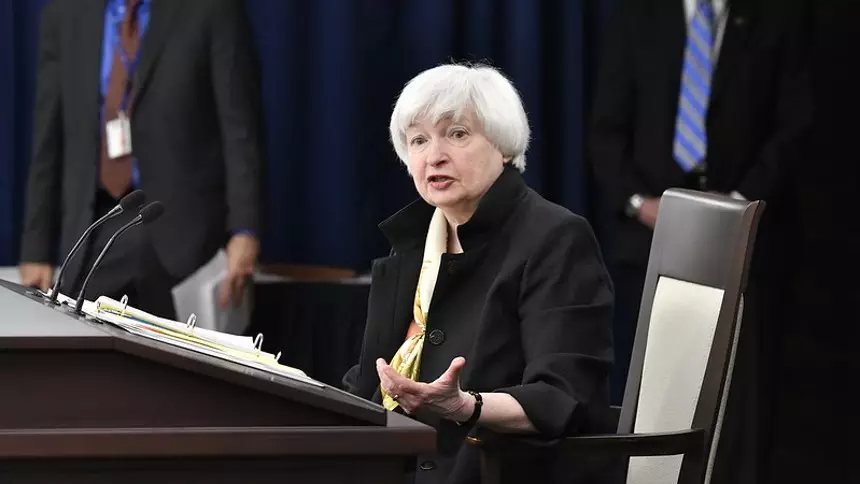

While the market consensus is that artificial intelligence will increase productivity and allow for greater production with fewer resources, former US Treasury Secretary and former Federal Reserve Chair Janet Yellen raises questions. In a panel at Expert XP, she stated that AI is, in practice, driving inflation more than reducing it.
“We are not seeing evidence of any relevant improvement in aggregate productivity, although AI is clearly having an effect in some sectors. And we are not seeing evidence of disinflationary pressures,” Yellen stated.
"Now, I think AI is demonstrably driving up inflation, rather than the other way around," he added.
The former Fed chair argues that this inflationary impact stems from "huge investments" in AI and that this increased spending is driving up semiconductor and electricity prices, as well as boosting demand and keeping the labor market hot.
"Then, we have a huge boost in consumer spending [in the United States] coming from the stock market, which is booming, mainly because of expectations of future profits," he said.
With US inflation struggling to reach its 2% target since the pandemic, Yellen sees the Fed as "ready to raise interest rates." In the market, the majority of bets are on at least two 0.25 percentage point increases by the end of the year, rising from the current rate of 3.5% to 3.75%.
"If this latest round of turbulence in the Middle East continues or intensifies, if I were a gambler, I would bet that we would see at least some interest rate hikes aimed at curbing inflation," he stated.
According to Yellen, tightening monetary policy even further would "probably" harm the labor market. But, in the opposite scenario, she said she would be "very concerned about the risk of rising inflation."
Trump effect
Part of the difficulty in controlling inflation, according to Yellen, stems from the White House's tariff policies and the impact of wars in the Middle East on oil prices .
"Just as the shocks of the pandemic began to dissipate and it seemed that inflation would fall, President Trump imposed enormous tariffs that caused inflation to skyrocket," he said.
The effect, he says, would be temporary and should last between one and two years to be reflected in prices and for inflation to return to normal. "And just when that was perhaps starting to happen, with the impact of the tariffs dissipating, we had all the disruptions in the Middle East."
In 2025, the 12-month US inflation rate consistently hovered at or below 3%, but it has risen sharply again this year, reaching 4.2% in May and falling back to 3.5% the following month.
The need to keep inflation higher for longer — and even to raise interest rates further — comes at a time of increasing pressure on American public finances.
The United States' federal debt as a percentage of GDP is currently around 100% — a level of leverage that "has caused problems for many, many economies in the past," pointed out the former US Treasury Secretary.
The American fiscal deficit, in turn, stands at 6% of GDP, even with the economy out of recession.
"This is very unusual, and we have underlying problems that will continue to expand the deficit if nothing is done," he said.
The problem, he says, is structural and related to the aging of the American population, which increases the ratio of retirees to workers and expands spending on pensions and healthcare. "There is no painless solution. This needs to involve some combination of higher taxes, lower pensions, and less support for medical expenses," he said.
She also drew attention to a shift in the composition of holders of American debt: foreign central banks are reducing their holdings of Treasuries while increasing their gold reserves.
Yellen points out that this movement originates from the freezing of Russian assets by the G7 in 2022, a decision in which she directly participated as Secretary of the Treasury, following the invasion of Ukraine.
“It became clear that countries would be concerned about holding dollars in reserves, that one of the risks is that if they were on the wrong side of the United States, they could face a similar threat,” he said. “And I think the rise in gold reflects, in part, a willingness to depend less on dollars, where the United States can impose sanctions.”
Still, Yellen doesn't see a currency on the horizon capable of taking the dollar's place as a global reserve currency.