


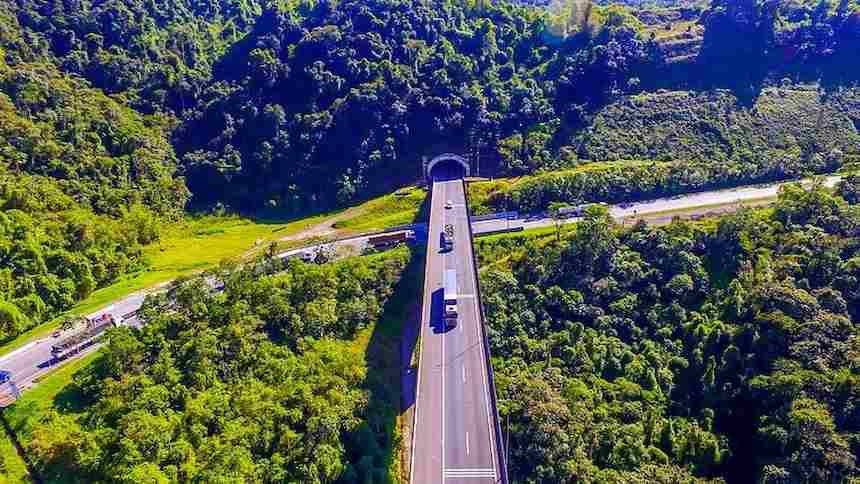

The bidding for the concession of the 383 kilometers between São Paulo and Curitiba on the BR-116, the Régis Bittencourt Highway , held at B3 on Thursday, July 23, confirmed what the market had already been noticing in recent years: EPR has ceased to be a promise and has begun to occupy space among the major highway operators in the country.
The company - controlled by the Equipav and Perfin groups - won the auction by presenting the largest discount among the competitors, a 22.53% discount on the basic toll rate, surpassing Motiva , which offered 12.10%, and Arteris, the current concessionaire, which entered the bidding with a symbolic proposal of 0.01%.
Since the tender already included an 11.8% discount on the current toll price, the fare for traveling between São Paulo and Curitiba will be reduced by 32%, dropping from R$ 25.80 to R$ 17.55.
The outcome has strategic weight not only because of the contract value, but also because of the symbolism of the dispute. Motiva was seen by part of the market as the favorite and had in the Régis highway the chance to assume national leadership in the length of toll roads, a position now disputed with EcoRodovias by a few kilometers – 5,040 km versus 5,060 km. The defeat, therefore, is not only financial, but also symbolic.
For EPR, this achievement reinforces the expansion trajectory that began in 2022 and consolidates the company as one of the main private players in the sector, with a growing presence in the South-Southeast region.
The concession covers one of the most important logistics corridors in the country. The highway connects the largest consumer center in Brazil to the Port of Paranaguá, the gateway for agribusiness and industrial cargo.
It is also a stretch known for its operational complexity due to problems with its route in the mountainous region, which led to the Régis highway being closed for 52 days last year. For the federal government, the change of concessionaire should improve the highway's performance and reduce the history of problems.
The new contract will last 15 years and provides for R$ 7.2 billion in investments for the expansion, modernization, and adaptation of the infrastructure. Another R$ 4.06 billion will be allocated to operation and maintenance throughout the contract period.
EPR will also have to pay R$ 120 million to Arteris for the concession transition. Among the planned works are 70 kilometers of additional lanes, 33 kilometers of service roads, 14 bus stops, 33 kilometers of bike paths, 18 pedestrian overpasses, 19 wildlife crossings, 91.4 kilometers of lighting in mountainous sections, 13 intersection improvements, two access improvements, four macro-drainage works, and 27 alignment corrections.
The package also includes interventions aimed at increasing road safety and traffic flow, in addition to the duplication of 69 kilometers of roadway.
According to analysts, the Régis highway is a premium asset. BTG Pactual highlighted that the highway has had EBITDA margins exceeding 70% in recent years, reaching 77.5%, in addition to its strategic location and consolidated demand.
The renegotiation of the contract, a mechanism adopted by the government to update mature concessions, was seen as an opportunity to unlock investments and correct historical bottlenecks.
Expansion
EPR already manages three highway sections in Paraná, including stretches that connect to the Port of Paranaguá. It also operates the BR-040 highway section between Belo Horizonte and Juiz de Fora.
Combined, their contracts represent approximately R$ 47 billion in planned investments over the next few decades. With Régis, this value exceeds R$ 50 billion, expanding the company's presence in strategic corridors and reinforcing its position among the leading private operators in the country.
For EPR's CEO, José Carlos Cassaniga, winning the auction is more than just a portfolio expansion. "Our commitment is to execute the contract with capital discipline, operational excellence, and a constant focus on preserving lives," the executive stated after the bidding process.
Motiva, for its part, leaves the bidding process with a bitter taste. The company had been growing rapidly and saw in the Régis highway concession the opportunity to assume national leadership in toll roads. The defeat keeps the competition fierce with EcoRodovias and delays its plan to consolidate a dominant position in the sector.
The Régis Bittencourt concession is the fifth to be re-tendered within the optimization program conducted by the National Land Transport Agency (ANTT), which seeks to renew old contracts and accelerate investments considered essential for Brazilian logistics.