


New York – The common thread running through the Brazilian Regional Markets (BRM) event, organized by Apex Partners, is that Brazil is being mispriced. And those who realize this first will have a rare window of opportunity.
Amid the release of the study on regional jaguars, which NeoFeed had first-hand access to, this conviction emerged in the presentations of managers who decided to reinvest capital in Brazil and of entrepreneurs who are far from the country's main centers.
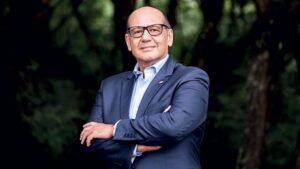
"When everyone gave up on Brazil, I started investing again," said Cristiano Souza, founder of Zeno Equity Partners and co-founder of the asset management firm Dynamo, who has lived in London for over a decade and whose firm has US$300 million under management.
Like him, other BRM participants sought to discuss macroeconomic asymmetry, the geopolitics of energy and Brazil's advantages in natural resources, the democratization of the capital market, and the scientific frontier. "There's no denying it: Brazil is a cradle of opportunity. It's the icing on the cake," he says. "When everyone else gave up on Brazil, I started investing again."
After spending 11 years without investing in Brazil, Souza decided to change his position just when pessimism about the country seemed to be reaching its peak.
The founder of Zeno Equity Partners said that he resumed allocating capital to Latin America in late 2024 and early 2025, a period marked by the dollar above R$6, a pressured stock market, and negative speeches about Brazil from major investors.
"When Stuhlberger spoke ill of Brazil, Rogério Xavier spoke ill of Brazil, Márcio Appel spoke ill of Brazil, I stopped and thought: 'It's time to look at Brazil again'," the investor stated.
According to him, the move resulted in a significant reallocation of the global fund he manages. Today, about 25% of the portfolio is in Latin America, mostly in Brazil, in addition to a smaller position in Argentina.
According to Souza, the decision stemmed from the perception that the Brazilian market had entered a rare period of asymmetry: excessive pessimism about risks and little appreciation for opportunities.
"The risks are overestimated and the returns are underestimated."
To complement his thesis on the current situation in Brazil, the founder of Zeno Equity Partners stated that one of the most attractive combinations for a long-term investor is the combination of overestimated risks and underestimated returns.
"What I look for as an investor are situations where the risks are overestimated and the returns are underestimated," said Souza.
In his view, this is happening in the Brazilian market today. Souza cited as an example the time he bought Localiza shares at R$ 27. "It was obvious that there were overestimated risks and underestimated returns," he stated, opening one of his positions.
The investor contrasted this with the United States, particularly with the global enthusiasm surrounding artificial intelligence. He believes that while the technological revolution is real, there is currently an imbalance in expectations.
"No one will deny that artificial intelligence is an incredible revolution. But clearly, the risks are underestimated and the returns are overestimated."
"The world is short on energy; Brazil is long."
Given this argument, Brazil is currently experiencing a significant misalignment between perception and economic reality, creating substantial opportunities for investors.
The geopolitical thesis, for example, is at the heart of these opportunities. For the founder of Zeno, the world is currently experiencing a structural energy shortage (especially in Asia and Europe), while Latin America occupies the opposite position.
"The world is increasingly short on energy," Souza stated. "All of Asia is short on energy. Europe is short on energy."
On the other hand, he argued, is Latin America, especially Brazil and Argentina, with excess capacity, untapped resources, and greater institutional stability.
"Where can I access energy in a geopolitically stable environment? There's only one place in the world," he said.
"Interest rates in Brazil are wrong"
Souza stated that foreign investors see a clear misalignment between inflation and interest rates in Brazil. "The consensus abroad is that interest rates in Brazil are wrong," he said.
The founder of Zeno Equity Partners compared the Brazilian scenario to the American one. According to him, Brazilian inflation is around 4%, while in the United States it is around 3%. "There's only a 1 percentage point difference. And interest rates in one place are 4%; in the other, 14%. That's wrong," he said.
In his view, this exaggerated differential helps explain why Brazilian assets have been excessively discounted in recent years. And also why Brazil has once again come onto the radar of global investors.
"No one gets rich investing in CDI"
The debate about the excessive conservatism of Brazilian investors emerged in a provocative tone during BRM.
The founder and CEO of Apex Partners, Fernando Cinelli, called for a cultural shift in the Brazilian capital market, criticizing the national obsession with the CDI (Interbank Deposit Certificate) and government bonds. "Brazilians need to stop comparing themselves to the CDI," he stated.
According to him, the country will remain trapped by high interest rates as long as most domestic savings continue to finance the government instead of businesses and productive projects.
"The CDI will remain at its current level as long as we continue lending money to the government. Nobody gets rich investing in the CDI. CDI is for those who are already rich," Cinelli stated.
According to the founder of Apex, Brazil needs to shift towards an investment logic more similar to that of developed economies, with a long-term horizon and a focus on building productive assets.
"Europeans, Asians, and Americans think about returns in decades or centuries. We need to break this short-term mentality," he added.