

The ball hasn't even started rolling at the World Cup yet, but the biggest sporting event on the planet has already moved the needle at Grupo SBF . The biggest effect, so far, has been on Fisia , the unit responsible for distributing Nike products in Brazil, whose net wholesale revenue grew 48.7% in the first quarter, to R$ 386.9 million. Fisia's total revenue advanced 26.1% in the period, to R$ 1 billion.
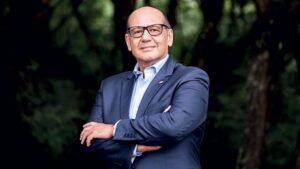
“Wholesalers always end up capturing a World Cup sale early because they need to deliver to their customers, who will be able to stock their stores in time for the launch,” says Gustavo Furtado, CEO of Grupo SBF, to NeoFeed .
Another factor that, according to Furtado, contributed to Fisia's growth was the work of building closer relationships with retailers, with the opening of a Nike showroom in Pinheiros, São Paulo, more frequent events with clients, and changes in the segmentation of its product offerings.
In retail, however, the World Cup effect has been limited so far. Since the Brazilian national team jerseys, sponsored by Nike, were only launched in March, the expectation is that sales to the end consumer will gain more momentum in the second quarter .
“Sales for the Copa [jersey] mainly happen in the second quarter, but we consider it to have been a good launch,” says Furtado. According to the executive, initial demand was positive, especially for the blue jersey, which for the first time featured the Jordan brand.
In the first quarter, Grupo SBF's total net revenue grew 14.9% to R$1.8 billion. The Centauro chain accounted for R$931 million, a 13.3% increase. At the bottom line, adjusted net profit was R$79 million, 6.1% higher than in the same period last year.
On the other hand, the company's net margin fell 0.4 percentage points to 4.4%, while adjusted EBITDA remained virtually stable at R$144 million.
According to the group, EBITDA was pressured by increased royalty expenses, a higher volume of merchandise received since the second half of 2025, and a greater number of clubs sponsored by Fisia, such as Vasco and Atlético Mineiro.
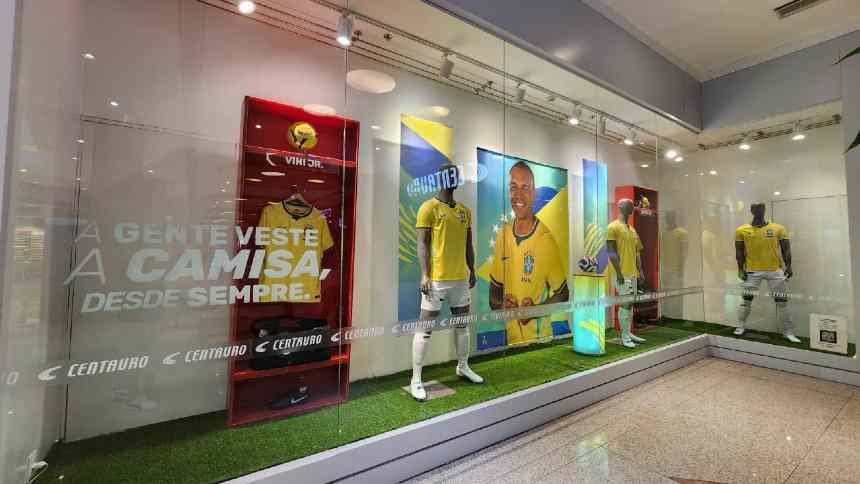
For the second quarter, the company implemented a specific plan to try to capture the demand for the World Cup in retail. The strategy involves marketing campaigns, in-store activations, strengthening the portfolio of licensed products, and special furniture to highlight shirts and items related to the tournament in Centauro stores.
“I am quite confident that this World Cup will be Centauro’s best-executed World Cup,” says Furtado. “The idea is that, in each and every store, the consumer will be able to feel the World Cup atmosphere.”
According to Furtado, the company purchased special furniture for the period last year, launched the national team's jerseys and licensed product line throughout its network, and will feature Denílson as the main face of Centauro's campaign during the World Cup. "When any consumer thinks about the World Cup, Centauro has to be an obvious destination," he states.
Centauro also accelerated store renovations. In the first quarter, the group began revitalizing 23 units, 12 of which were reopened during the same period. Adding to the renovations completed in 2025, the chain reached a total of 21 revitalized stores.
According to Furtado, the renovated units continue to outperform other comparable stores in the same regions. By the end of 2025, these stores were selling 12.9 percentage points more than their comparable stores. In the first quarter, the executive says, this difference remained around 11 percentage points.
For Furtado, the effect of the World Cup goes beyond shirt sales. “Once we bring the traffic to the store, we do a very intentional job of cross-selling with other categories,” he says. “So, I think that, in general, this increase in traffic also increases the traffic of other categories.”
Outside the world of soccer, the company has also captured growth in the running category. At Centauro, footwear—especially running shoes—grew 48% in the first quarter, while Fisia was also boosted by Nike's main running franchises.