


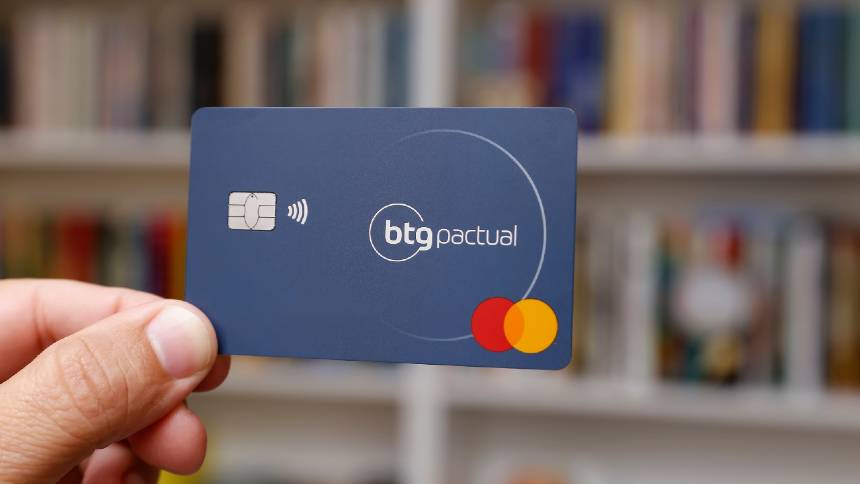
BTG Pactual , the largest investment bank in Latin America, is looking to strengthen its presence in an area where it is not usually synonymous: retail banking.
After acquiring the remaining shares of Banco PAN , BTG Pactual began to fully consolidate the results of the bank and Too Seguros, the insurance company it controlled with Caixa, into its management results, creating the consumer finance & banking area.
With these assets, the bank expects this vertical to become another avenue for growth in BTG Pactual's results in the medium and long term.
“We are quite confident; this is a very important area for the development and growth of BTG Pactual,” said Renato Cohn, the bank's CFO , on Monday, May 11, in a press conference. “We have invested in this area in the past, we continue to invest, and we expect it to become a more significant part of the bank's revenue composition.”
In the first quarter of 2026, the consumer finance area accounted for 11% of BTG Pactual's revenue. The expectation is that, in the long term, the unit could account for 15% to 20% of the bank's revenue, noting that this is not a fixed target.
“Reaching 20% will take time, at least five years, as a percentage of total revenue,” said Cohn. “That’s the direction we’re heading, to make the consumer finance area more relevant within BTG’s overall revenue.”
As part of the consumer finance strategy, Banco PAN aims to expand its profitability to a level similar to that of the bank itself by 2028 – in the third quarter, the last balance sheet in which it was an autonomous institution, PAN presented a ROE of 12.1%.
To that end, Cohn stated that BTG Pactual plans a series of measures to improve efficiency , including the use of a single core banking system , as well as actions to ensure higher quality credit origination, reducing default rates and credit costs.
“We believe that in the medium term, once we migrate the banking system to a single one, we can significantly improve the customer experience,” said the CFO. “Obviously, this takes time, but by improving the customer experience, we can build better loyalty and better originate the loan portfolio.”
With the entry into the consumer credit market, Cohn said that the expectation is to see an increase in provisions, even more so at a time when high interest rates are weighing on bank defaults.
But he stated that there was no relevant change in the bank's credit provisioning, highlighting that the asset-to-portfolio ratio remained practically the same in stages two and three, which take into account the expected loss risk. The bank has gained experience over almost a decade, since it began including PAN.
“When you get into personal credit, there’s a higher volume of provisions and also of defaults . But that hasn’t changed that much,” he said. “Obviously, we expect to increase our exposure in the consumer finance area a little more, but marginally.”
He further stated that the portfolio is almost entirely secured, at a level of nearly 95%, primarily supported by vehicle loans and payroll loans.
The bank recorded revenue of R$ 10 billion in the first three months of the year, a 34.3% increase compared to the same period of the previous year, a record for this line of credit.
BTG Pactual's adjusted net profit was R$ 4.8 billion in the first quarter, a 42.3% increase year-on-year, another record, with adjusted return on equity (ROAE) reaching 26.6%, above the 23.2% recorded in the first quarter of 2025.
At around 5:15 PM, BTG Pactual's units were down 2.75%, at R$ 57.04. Year-to-date, the assets have accumulated a gain of 9.29%, bringing the market value to R$ 228.6 billion.