

The frenzy surrounding slimming pens , based on the principle of semaglutide (GLP-1), has fueled not only investments in the pharmaceutical industry, but also the strategies of sectors such as retail, across its various outlets – from pharmacies to supermarket chains and wholesale stores.
This is the case with Track&Field . Contrary to most retailers, the apparel and sporting goods group has managed to stay afloat in a more turbulent macro environment. And this category provides another boost of energy for the company to continue on this path.
“The LPG-1 phenomenon also has a very large impact on the number of people who start practicing sports,” says Fred Wagner , vice president of strategy and new business at Track&Field, to NeoFeed . “And with the expiration of patents in Brazil, this trend should intensify.”
To reinforce the positive outlook for the wellness market, Wagner, who is also CEO of TFSports, the events and experiences platform of the sports retail company, goes further and refers to another whirlwind that has been driving investments in various sectors of the economy.
“We also see an important shift with artificial intelligence,” he says. “We understand that as people become more productive using these tools, they may somehow have more time to take care of themselves, which also connects with sports.”
While conducting these exercises on future prospects, Track&Field continues to maintain momentum in its current operations. This is shown by the data from its first quarter 2026 balance sheet , released on the evening of Monday, May 11.
Between January and March, adjusted net profit was R$ 41.5 million, a 6.3% year-on-year increase. On the same basis of comparison, net revenue grew 18% to R$ 251.2 million. Adjusted EBITDA reached R$ 61.6 million, a 12.6% increase.
During this period, the network recorded a sell-out of R$ 442.9 million, an expansion of 16.4%. With a jump of 28.5%, sales captured via e-commerce represented 12.6% of this total. Sales in the same stores, on the other hand, advanced by 12.1%.
“The main point is that, in addition to our zero-debt history, we have maintained robust growth on a very strong foundation,” says Fernando Tracanella , CEO of Track&Field. “We are doing our part, growing organically, controlling expenses, and generating cash.”
Fernando Tracanella, CEO of Track&Field (left), and Fred Wagner, VP of strategy and new business for the brand, and CEO of TFSports.
As part of this discipline, Tracanella emphasizes that the plan for 2026 is to maintain the average number of store openings of approximately 40 registered in recent years. According to the executive, this is the ideal number for the group to ensure the quality of these new units plugged into the network.
In the first quarter, the company completed six store openings, bringing its total to 441 stores, including 385 franchises and 56 company-owned stores, which in turn include 14 outlets. During this period, the group also modernized three other units.
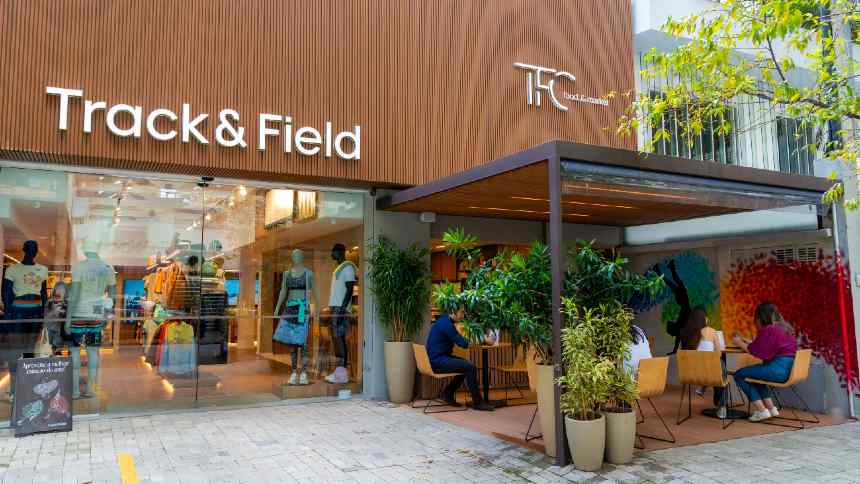
One of these projects received the operation of TFC Food & Market, a group of cafes and mini-markets integrated into the chain's stores. Today, there are 16 units in this format, which recorded a 40.3% growth in the number of customers served in the first quarter.
“This format generates more repeat business,” says Tracanella. “Stores that have been renovated and enhanced with TFC grow, on average, 15 percentage points compared to units that were modernized without this operation.”
In addition to expanding these units, TFC is also beginning to conquer other frontiers. In particular, in the digital realm. Whether it's through its inclusion, about two weeks ago, on platforms like iFood, Rappi, and 99Food. Or on the group's own app, through TFSports.
One of the first moves in Track&Field's strategy to go beyond its core business and consolidate a sports and wellness ecosystem, TFSports closed the quarter with 1.3 million users, a 37.6% year-on-year increase, and 1,091 events held, with more than 130,000 registered participants.
“This ecosystem is really gaining traction,” says Wagner. “We are creating more and more points of contact with consumers and a greater connection with the addressable wellness market, which is estimated to generate around US$224 billion in Brazil alone by 2034.”
This also includes initiatives such as tfmall, a marketplace for sporting goods that currently brings together 28 brands, 12 of which were added in the last 12 months. As well as the international operation, which began to take shape two years ago with its first unit in Portugal.
In the first quarter of 2026, the chain reached its third franchise in Portugal, with the opening of a unit in Cascais Shopping. And, for the year, the plan is to add two more stores to this base in the country.
“We have organized many events in Portugal to generate brand awareness and increase our customer base there,” says Tracanella. “This year, we are more focused there and in Brazil. But we have already started looking at other geographies within this international expansion.”
Track&Field's shares closed today's trading session on the B3 stock exchange down 1.96%, at R$ 15.50. Year-to-date, the shares have fallen 4.9%, valuing the company at R$ 2.34 billion.