


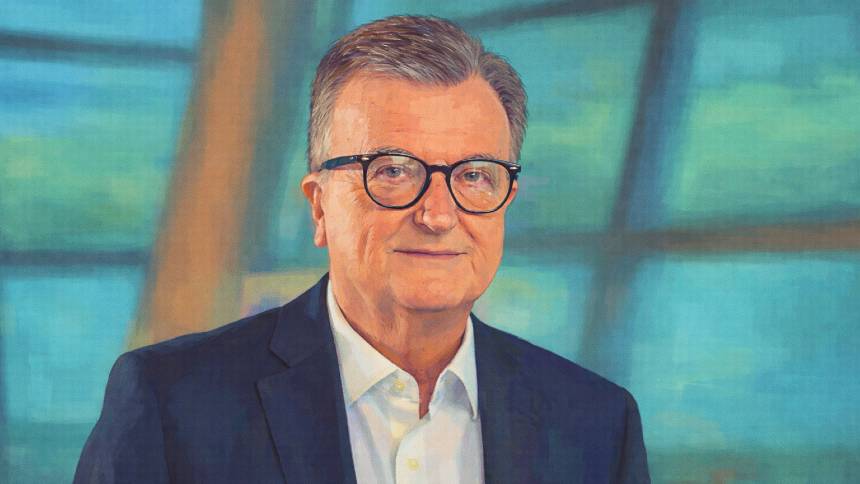
José Galló is distressed. Not so much about the situation in the retail sector, where he worked for over 30 years, 27 of them as CEO of Renner , a period in which he transformed the Rio Grande do Sul-based chain into one of the biggest names in fashion in the country, currently valued at R$ 15 billion.
Their concerns are focused on the macro level. Specifically, the direction the country is taking, politically and economically, due to the short-term vision of the political class.
“What really worries me is the country we are building,” says Galló, in an interview with NeoFeed . “Today, everyone is thinking about the election.”
Galló, 74, believes that politicians have stopped thinking about the country, adopting agendas that are harmful to the economy, which, in turn, will have disastrous consequences for society.
One of his main criticisms concerns productivity . Or rather, the loss of productivity. For him, issues such as ending the 6x1 work schedule and low investments in education demonstrate a disconnect between politicians and Brazilian reality, leaving a country unprepared to compete in the world.
"Many politicians have never worked in the private sector and have no idea of the consequences that certain decisions have on the economy and on people's lives," says Galló.
This lack of vision has repercussions for the retail sector. In addition to the effects of ending the 6x1 scale, the executive highlights the consequences of ending the "blouse tax," reducing competitive equality for smaller retailers, and the bets, which harm the purchasing power of the population.
"You see people trying to solve their own debt by gambling, believing they'll get money to pay installments. How is such a thing possible?" he asks.
According to Galló, business leaders need to reorganize and hold Brasília accountable for decisions that are detrimental to Brazil, but he emphasizes that the political landscape is very different now.
"Congress, both in the House and the Senate, has become much more individualized, with each parliamentarian thinking more about themselves. As a consequence, it has become much more difficult to bring people together, discuss, and find solutions that are good for the country," he states.
Since leaving Renner in 2024, Galló has dedicated himself to investing in a series of companies and startups through Quartz , an asset management firm he founded in partnership with his son, Christiano, and other associates. The portfolio includes approximately 16 investments in areas such as cosmetics, financial services, supplements, and healthcare.
In addition to advising on some of Quartz's ventures, Galló is a member of the editorial board of RBS and the board of directors of the Rio Grande do Sul Development Agency (Invest/RS).
Read below the main excerpts from the interview:
We are experiencing a very unusual moment in retail, with impacts from bets, interest rates, and the price of blouses. How do you see the segment and its situation?
Traditional, analog retail began to coexist with the emergence of digital tools. This made transformation mandatory, because the internet and smartphones changed everything. Companies had to adapt, allowing customers to buy wherever they want. But fashion doesn't just sell products; it sells experiences. It's a sector that's a mix of retail and leisure. Going to the point of sale has become a form of entertainment. Online remains important, but large fashion companies are also doing well. The days of growing 15% annually are over, but it's still possible to grow 2%, 3%, or 4% above inflation.
So you understand that it is precisely this experience model that allows us to compete with Asian platforms, which are often accused of practicing prices far below the market? Is this the way forward for retail?
I think some Asian platforms don't practice fair competition. In the clothing sector, specifically, just remember the so-called "blouse tax." It's absurd to allow products to enter the country with practically no tax burden, while retailers bear between 80% and 90% of the cost to put a product on the market. Large national companies are able to offer higher quality. Those who suffer are the small, medium, and informal businesses. In fact, many informal businesses have been replaced by platforms that, in many cases, operate informally.
And in the case of betting, how do you see its impact on fashion retail? The food sector is already reporting a decline in consumption.
Gambling affects all sectors, including clothing. Terrible things happen. You see people trying to solve their debt problems by betting on gambling, believing they'll get money to pay installments. How is such a thing possible? What kind of country are we building? This is a much more serious problem than a specific retail issue. What really worries me is the kind of country we are building. When you add gambling, incentives for informal platforms—and I'm not saying all of them are informal—and all this permissiveness, often motivated by electoral interests, the concern increases significantly.
Taking advantage of this reflection on the country, I wanted to talk a little about economic policy. We are in an election period. Have you been following the candidates' discussions? What do you expect to see regarding the country's main problems?
Before even discussing the candidates, I would like to address a problem that I consider fundamental: illiteracy. We usually think of people who cannot read or write. But there is another type of illiteracy, which is functional illiteracy. In my perception, it affects an even larger portion of the population. This functional illiteracy is terrible for the country. It harms people, who enter the job market with enormous difficulties. This reduces productivity. This is one of the reasons why we have such low productivity in Brazil.
"We are increasing our debt while competing with countries that have much higher productivity than ours."
Looking at the economy and retail, how do you assess the discussions? Are the main problems being addressed in the political debate? What are, in your opinion, the priorities?
Today there's the issue of interest rates, which are truly unbearable. But why do we have such high interest rates? Because there's a Central Bank trying to moderate consumption to control inflation. We have a permanent expansion of social benefits and income transfer programs linked to the electoral calendar. This harms the country. Our biggest problem continues to be productivity, but we're discussing reducing working hours when we still have a low educational level in the workforce. Without education, we won't be able to increase productivity. And without productivity, Brazil will continue to be the country of the future that never arrives.
Regarding the issue of productivity, how do you evaluate the proposal to end the 6x1 work schedule?
Many politicians have never worked in the private sector and have no idea of the consequences that certain decisions have on the economy and people's lives. And once the change is approved, there's often no going back. There are other ways to discuss productivity, the labor market, and economic freedom. Today we discuss shorter working hours, while countries like China practice more intense routines. I see many projects being approved without considering who will pay the price in the future. We are increasing our debt while competing with countries that have much higher productivity than ours.
What is the main issue involving the political sector?
Today, everyone is thinking about the election. I have the impression that party leaders no longer control their own parties. Congress, both in the House and the Senate, has become much more individualized, with each parliamentarian thinking more about themselves. As a consequence, it has become much more difficult to bring people together, discuss, and find solutions that are good for the country.
How do you see the position of the business class in this scenario of polarization?
I think that now, given some of the outrageous things being proposed, the situation is starting to become more troubling. In recent years, there has been a disarticulation of various business movements. I participated in several representative entities. Years ago, when proposals arose that could significantly harm the country, businesspeople would meet, go to Brasília, and talk to politicians. There was much more room for discussion and negotiation.
What is your opinion regarding AI? Is it truly transformational?
AI is inevitable. It's a technology and, like all technologies, it's a means, not an end. It was the same with computers and the internet. There's no point in being afraid. Research with executives shows that one of the biggest concerns today is precisely how AI will transform their companies. But there's only one way to address this concern: start understanding the technology, get to know it, involve the team, implement solutions, and make the transformation happen. In five years, we probably won't be talking about AI anymore, because it will already be incorporated into the daily operations of companies.
What are the effects of AI on retail?
Almost all companies are looking to do something in this area. For now, most are addressing more basic issues, not structural changes. This is natural. Companies are experimenting. The big challenge is to get new technologies incorporated throughout the organization. It's no use implementing them only in one department. The areas function in an integrated way. The great challenge for leadership is to ensure that all of them participate in this process. Otherwise, you create isolated islands, fiefdoms, and the technology loses much of its effectiveness.