


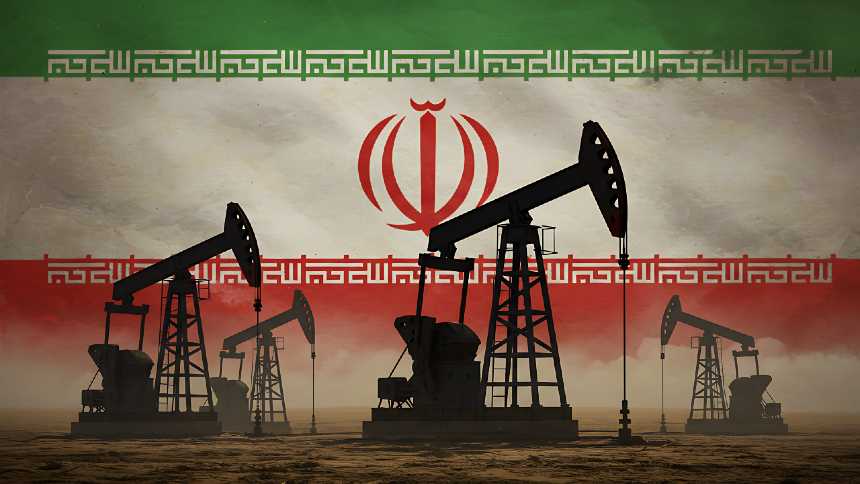

The roughly $10 increase in the price of a barrel of oil since the beginning of the year is a stark reminder of how highly sensitive the global energy market remains to any threat involving Iran.
Even after years of sanctions imposed by the United States, which significantly reduced its formal presence in the international oil trade, Tehran remains at the center of the radar for investors, governments, and large companies in the sector.
This is because Iran's importance to the global energy system goes far beyond the volume it exports today. The country holds the world's fourth-largest proven oil reserves, a strategic asset that structurally places it among the major players in the market, regardless of the trade restrictions in place.
Currently, Iran produces about 3.45 million barrels per day, less than 3% of global supply. This number alone would not be enough to cause a supply shock. But the market knows that the Iranian risk lies not only in the available barrels, but also in the country's ability to influence the energy stability of a region vital to the world.
Almost all Iranian oil exports are destined for China, primarily to independent refineries that accept discounts to purchase the product. This flow helps sustain the Iranian economy while simultaneously providing a competitive advantage for Chinese refiners. Any disruption to this channel would have indirect effects on costs, margins, and energy inflation, especially in Asia.
The main cause for concern, however, lies in geography. Iran exerts direct influence over the Strait of Hormuz , through which approximately 21 million barrels of oil pass daily, including exports from giants such as Saudi Arabia, Iraq, Kuwait, and the United Arab Emirates. This is the most sensitive bottleneck in the global energy infrastructure.
Furthermore, the country maintains a presence and support for armed militias in various parts of the Middle East, which increases the risk of attacks on facilities, pipelines, and logistics routes. It is this combination (gigantic reserves and strategic position) that causes Iran to continue to be treated as a systemic risk by the market.
Even if the loss of Iranian oil, in isolation, could be absorbed in the short term, a regional escalation would have the potential to disrupt flows, raise risk premiums, and put pressure on prices globally. This is why, despite sanctions and isolation, Iran remains too large to be ignored when it comes to the world's oil supply.