



With the war between the United States and Iran increasing the risks for navigation in the Strait of Hormuz , Dubai intends to invest in creating an alternative route to reduce its dependence on one of the most sensitive points in world geopolitics.
DP World , Dubai's state-owned port operator, plans to build a new port and container terminal in Fujairah, one of the seven emirates that make up the United Arab Emirates (UAE). Located on the coast of the Gulf of Oman, this new port will allow navigation without passing through the Strait of Hormuz.
The company is discussing a memorandum of understanding with government authorities, while the project's structure and financing are still being defined. The expectation is that the new port could be completed in about a year and a half, according to the Financial Times . Given the war in the region, every minute is important to reduce dependence on and avoid the Iranian-controlled passage.
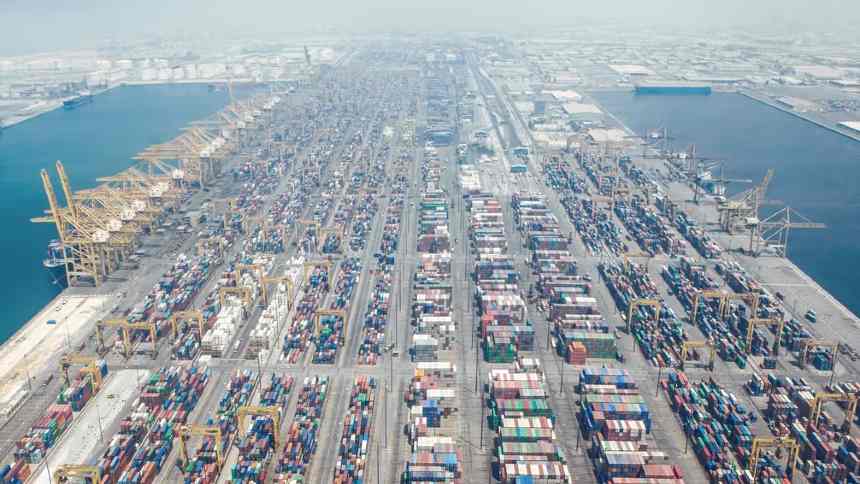
The multi-billion dollar project also aims to reduce Dubai's dependence on the Jebel Ali hub. Considered the "crown jewel" of DP World, which in two decades has become one of the world's largest port operators, it is a cornerstone of Dubai and the UAE's strategy to diversify the economy and reduce its reliance on oil and gas revenues.
Dubai, in particular, has relatively modest oil reserves compared to Abu Dhabi. Therefore, it has invested heavily in logistics, trade, and services, with Jebel Ali as a central figure in this strategy.
The hub integrates the port, free zone, multimodal infrastructure, and connections to the emirate's airports into a single ecosystem, helping to consolidate Dubai and the UAE as one of the world's leading trade centers.
However, it is located on the coast of the Persian Gulf , about 150 kilometers southwest of the Strait of Hormuz, remaining dependent on free navigation through the passage. Every ship leaving the main ports of the Gulf — including Jebel Ali — needs to cross the strait to reach international markets.
The conflict between the United States and Iran has reignited fears about the safety of navigation in the region and reinforced the need to develop alternative routes for foreign trade.
During the period of heightened tension, maritime traffic through the strait decreased significantly due to increased risks to vessels and insurance costs. Before the conflict, approximately 135 ships crossed the passage daily, but this number has barely exceeded 40 since the United States and Iran signed a brief ceasefire in mid-June.
Activities at the Jebel Ai hub, meanwhile, fell between 90% and 95%. The new project would expand Dubai's state-owned company's presence in the Gulf of Oman and would be a safe option in times of war.