


There is something wrong with the Brazilian electricity sector, and it's not a recent problem. Last month, Atlas Renewable Energy – a global giant in the sector, with solar and wind projects in the Americas and Europe – revealed that it had stopped investing US$1 billion in new power plants in Brazil over the past two years, with a planned capacity of 1.5 gigawatts (GW), and that it is unlikely to revise this strategy before 2028.
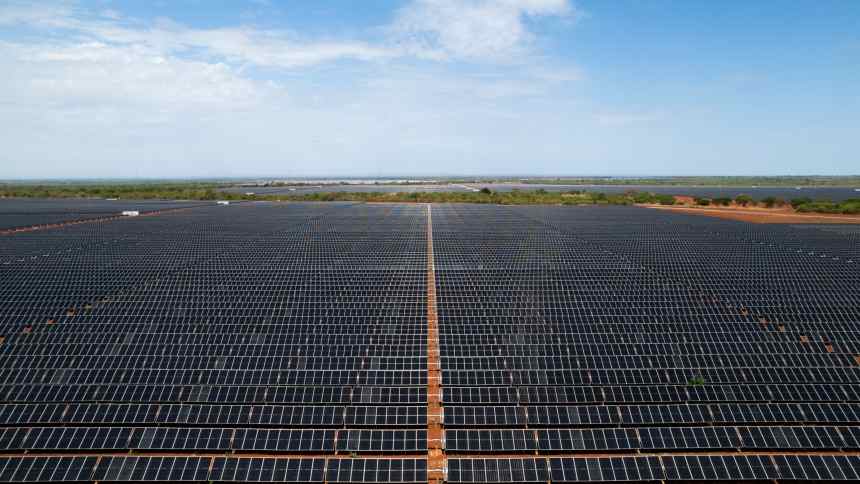
Controlled by the asset manager BlackRock , the company operates in the region, in Chile, Mexico, Colombia and, in Brazil, operates six large-scale solar power plants – five in Minas Gerais and one in Bahia – with a capacity of 3 GW.
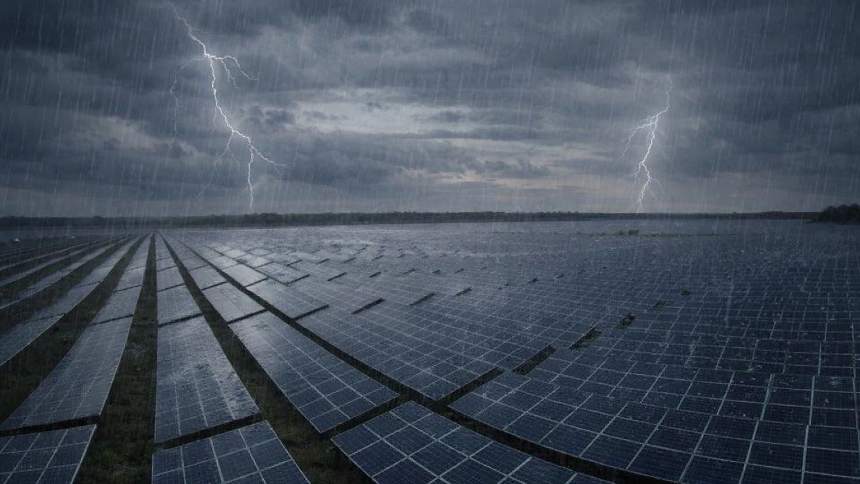
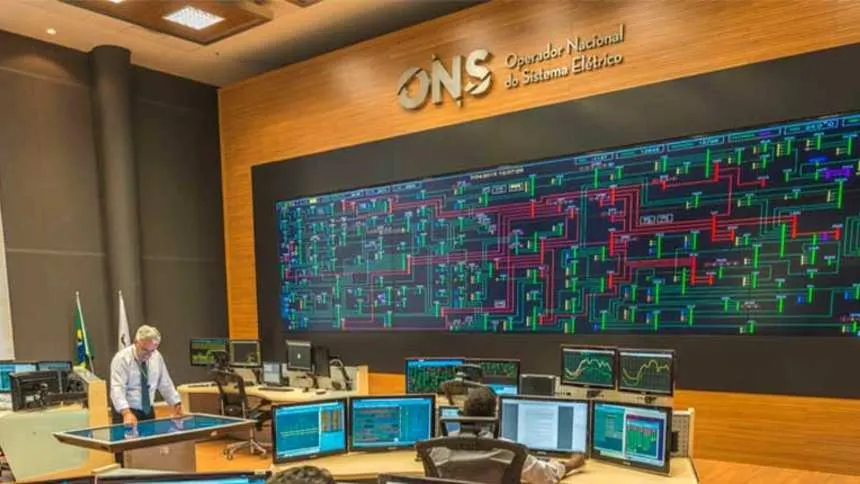
The reasons cited by Atlas Renewable are the cuts in renewable energy generation made by the National Electric System Operator (ONS) to avoid overloading the grid. Known as curtailment , these cuts reached 25% of the company's power plants' generation in the quarter ending in June. In other words, a quarter of the production was wasted.
"Only with rapid regulatory progress can we resume investments before that deadline," says Fábio Bortoluzo, president of Atlas Renewable Energy in Brazil, to NeoFeed .
To compensate for this wasted energy, Atlas ends up having to buy additional - and more expensive - energy on the free market to honor its contracts.
Other major companies in the sector had already announced investment cuts in recent months, such as Casa dos Ventos, Auren, Engie, and Voltalia, among others. Shell, for example, drew attention last year when it announced that it would simply discontinue all of its solar and wind energy projects in Brazil.
In May, the Fitch Ratings agency warned that generation cuts are expected to continue putting pressure on the cash flow and liquidity of Brazilian renewable energy projects until 2030.
Although curtailment punishes companies operating in the solar and wind sectors, the impact on the photovoltaic segment is greater – there is more oversupply of energy precisely in the period from morning to mid-afternoon, when there is greater solar production, leading the ONS (National System Operator) to determine generation cuts.
In a demonstration of the contradiction surrounding the Brazilian electricity sector, solar energy accounted for approximately 75% of all renewable capacity added worldwide in 2025, according to the International Renewable Energy Agency (IRENA). Even so, Brazil fell from fourth to fifth place in the global ranking of new photovoltaic markets, behind China, India, the United States, and Germany.
In 2025, after years of accelerated double-digit growth, the country lost momentum in the expansion of solar energy. New installed capacity in Brazil was 14.5 gigawatt-peak (GWp), a 23% drop compared to the 18.9 GWp added in 2024.
Two factors are driving this portfolio readjustment by companies: the lack of measures and the delay in addressing curtailment , such as controlling the accelerated and disorderly expansion, fueled by subsidies, of Micro and Mini Distributed Generation (MMGD).
A production model that is predominantly photovoltaic, installed near or at the point of consumption, such as on the rooftops of homes or smaller businesses – with generation capacities ranging from 75 kilowatts (kW) to 5 megawatts (MW) – known as Distributed Generation (DG), indirectly drives generation cuts.
Since the installation of solar panels and farms is subject to the control of state energy distributors, distributed generation (DG) injects increasing volumes of energy into the grid without any coordination with the National System Operator (ONS), which is responsible for balancing generation and transmission.
As a result, the ONS (National System Operator) is forced to shut down the power plants it can control, the larger, centralized wind and solar plants. By 2025, the accumulated losses from 1,500 centralized power plants reached R$ 6.5 billion.
Groundhog Day
In addition to the delay in addressing the problem of distributed generation to reduce curtailment , which has been growing since 2023, business leaders in the sector are tired of suggesting solutions without receiving any response from the government. In practice, the sector seems stuck in a regulatory "Groundhog Day," repeating diagnoses without moving towards real solutions.
Donato Filho, CEO of Volt Robotics , warns that curtailment has accelerated this year. In solar power plants, the average cuts in June were 25.3%, compared to 12.4% in the same month of 2025. The consultancy identified, from January to June, five days with cuts above 80% in centralized plants – compared to one day in the same period last year.
“No company can get an investment approved with this level of curtailment ,” he says, noting that, at the end of 2025, the ONS revoked 509 permits for new projects at the request of the companies, which abandoned the investment.
"There is no coherent plan from regulatory bodies to reduce cuts, nor a clear rule for compensating companies," he laments. According to him, announced measures end up being neutralized by delays in implementation.
The executive cites Law 15.269/2025, enacted in November, which updates regulations to reduce consumer costs and increase reliability. The law creates incentives for battery storage and service (BESS) and provides for compensation for generation cuts due to reliability issues, including retroactive payments.
Volt estimates that around R$ 3.8 billion in reimbursements could be returned to companies. "The law was enacted eight months ago and hasn't been regulated; business owners are already losing hope," he says. "Reimbursements from the past haven't been regulated, and the rules for the future don't yet exist."
He sees a lack of political will from the ministry. "By not acting, each segment starts to create its own makeshift solution, seeking more benefits for distributed generation or lobbying to install thermal power plants," he states.
When contacted, the Ministry of Mines and Energy (MME) told NeoFeed that, regarding the generation cuts, measures were taken to reinforce the grid, store energy, and shift load based on price signals. It highlighted Normative Ordinance No. 136/GM/MME/2026, which provides guidelines for the first two Capacity Reserve Auctions in the form of energy storage via batteries.
The ministry states that Law 15.269/2025 allows for compensation for costs due to external unavailability, conditional upon the signing of a commitment agreement. This compensation, it warns, depends on the generator signing a commitment agreement, waiving the right on which the action is based and withdrawing any ongoing legal action – many companies seek reimbursement through the courts.
Regarding the delay in regulating the law, the ministry clarifies that "the draft of the commitment agreement was discussed in Public Consultation 210/2025 and, after intense discussion with generators and sector institutions, is in the final stages of preparation at the Ministry of Mines and Energy (MME)."
Bernardo Bezerra, Director of Regulation and Institutional Affairs at Serena Energia – another giant in the sector, with a portfolio of 17 wind and solar power plants distributed between Brazil and the United States, totaling 2.8 GW of installed capacity – states that the delay in regulating Law 15.269 reinforces the governance problem.
“There is a lack of personnel at Aneel and, mainly, an absence of clear leadership and a plan of priorities on the part of the government,” he says. He emphasizes that the cuts come not only from the excess of centralized solar and wind power, but also from the uncontrolled expansion of distributed generation.
“There are approximately 14 GW identified by the ONS operating without compliance, a kind of 'reverse loophole' without control,” he states. “This creates distortion where centralized generation is unfairly penalized.”
According to Bezerra, inaction could generate three waves of crisis: “A wave of bankruptcies of renewable energy companies; then a collapse of the system due to the overload of distributed generation; and finally, expensive thermoelectric plants creating a 'tariff bomb' for the consumer.” Serena has also stopped investing in Brazil. “The regulatory environment makes new projects unfeasible,” he laments.
Bortoluzo, from Atlas Renewable Energy, admits that the delay in regulating Law 15.269/25 is bad, but sees progress. "Compensation for reliability cuts, incentives for storage, and hourly price signaling are positive measures," he says.
He highlights Aneel's regulation on batteries and the capacity auction. "These movements are positive, but insufficient in isolation," he continues. According to the executive, combining batteries in existing projects with the auction can mitigate cuts and make renewables more flexible and reliable.
Atlas has experience with batteries in Chile and is studying Brazil, but faces barriers such as strict national content requirements and high taxation. Regarding new investments, Bortoluzo states that a recovery could occur as early as 2027 with regulatory advancements.
Rodrigo Sauaia, president of Absolar – an organization that brings together companies in the photovoltaic segment – makes several points about the bottlenecks in the electricity sector, such as curtailment . The boom in solar and wind power was not accompanied by planning and infrastructure, he states: "Transmission lines take four to seven years, while renewable projects become operational in just two years."
Sauaia states that the sector is awaiting feedback on the terms of Public Consultation 210, which will define reimbursements and treatment of oversupply as foreseen by Law 15.269/25. "Without reimbursement, with cuts equivalent to a quarter of solar production in 2026, the situation is unsustainable," he affirms.
The executive advocates updating the operation to have renewables as a base, hydroelectric power and batteries as a flexible buffer and reinforcement of the grids. Regarding distributed generation, he says that the segment should not be vilified. He assures that access to distributed generation, which was previously considered only for the elite, has become more popular with the drop in the price of solar panels: "About 70% of new subscriptions come from classes C and D," he reveals.
To address the impact of distributed generation (DG) on curtailment , Sauaia proposes an independent operator in distribution, "an ONS for distribution, to control DG autonomously, without conflicts of interest with the distributors."
The growth of distributed generation (DG) amidst the solar crisis, while contradictory, makes sense given how the sector is attracting new business. Bruno Poljokan, partner at Liora – an energy trading company focused on the DG segment – argues that, despite the crisis in the solar sector due to curtailment and the volatility of energy prices, a transition is underway.
According to him, investments historically concentrated in generation have created imbalances. Now, they are migrating to other areas of the chain, such as demand management, distribution, technology platforms, data intelligence, and storage, through batteries.
Liora operates in the retail sector, primarily serving low-voltage consumers (residential and small businesses) through Distributed Generation. "The electricity sector, traditionally concession-based, has never treated the consumer as a client – they are treated as a 'consumer unit' – nor has it actively managed demand; with high supply, the focus shifts, requiring investments in technology to reduce acquisition costs and customer service, especially in the retail sector," he asserts.
Founded two years ago, the company has grown by over 400%, initially focusing on the Northeast and São Paulo regions of Brazil. To acquire customers efficiently, Liora also establishes partnerships with major distribution channels, such as TotalPass and iFood , developing specific and integrated energy products for these audiences.
"This approach reduces the cost of acquisition in retail and allows for intelligent scaling," says the businessman.
The strategy seems to be working. With 1,500 clients, 25% of whom are residential subscribers (offering discounts to homeowners who switch from distributor to marketer), Liora has annualized contracted revenue of R$15 million. In other words, concerns such as curtailment are not a priority for the business focused on distributed generation.