

The slowdown in activity, inflation, and interest rates is the keynote of economic scenarios drawn up by banks and consultancies for 2026, with a collective warning about uncertainties regarding the evolution of the exchange rate – a variable that, among all others, requires the most attention in the coming months because it is the most exposed to the electoral calendar. But not only to it.
Election polls, a heavy agenda in Congress focusing on Banco Master , the INSS (Brazilian National Social Security Institute), and public security, and the shaping of the international landscape, which includes everything from geopolitical tensions in Iran to Donald Trump's attack on the Federal Reserve (Fed) – even though there is no risk of Jerome Powell being fired as it makes no sense four months before the end of his term – are gaining relevance in the short term.
However, the Fed is weighed down by the fact that it has entered a "triple" predicament due to the investigation of Jerome Powell in the American courts regarding the renovation of the institution's headquarters, the resistance to an accelerated interest rate cut, and the limitation of the interest rate charged by credit cards to a maximum of 10%, starting on Tuesday the 20th, by order and announcement made by Trump himself, who also celebrates the first year of his current term on the 20th.
The first year began with a barrage of trade tariffs against the entire world, but mainly against China, and culminated, from 2025 to 2026, with the invasion of Venezuela and the capture of dictator Nicolás Maduro. And it enters January with Trump flirting with military action against Iran, shaken by popular demonstrations against the established economic crisis – a threat to the ayatollahs' regime that has already produced hundreds of deaths.
Alongside geopolitics, fueled by Trump's covetousness for Greenland, the investigation that led Jerome Powell to issue an unprecedented warning about potential White House interference in monetary decisions, calling into question the institution's independence – this, indeed, being the market's main concern – triggered a wave of support from central banks for the Fed and affected the pricing of Treasuries, the dollar , and gold.
Although brief, the price correction was perceived as a clear demonstration of the risks to which financial assets in general are subject, risks that could be exacerbated in May with the replacement of Powell by an exponent more aligned with Trump's policies.
In this context, the Fed's decision on its benchmark interest rate at the meeting scheduled for January 27 and 28 – coinciding with the Copom meeting in Brazil – is crucial because it could trigger another "uprising" by Trump if the market's prediction, based on the CME, is confirmed, indicating a 95% probability of maintaining interest rates in the 3.50% to 3.75% range, achieved after three consecutive cuts last year, when the Fed strictly adhered to its flight plan.
However, a refinement of the projections may occur, based on the second estimate of the US Gross Domestic Product (GDP) in the third quarter. For now, this data, scheduled for release on Thursday, January 22nd, is the most relevant on the external agenda in the coming days.
"Fall" in interest rates dispels pessimism
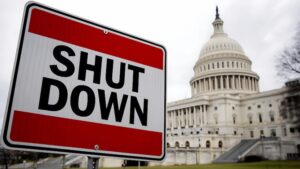
The first GDP estimate, published after the end of the shutdown, showed vigorous growth of 4.3% from July to September, on an annualized basis, compared to international analysts' projections of 3.3%. This result became quite an "invitation" for the Fed to remain inactive at the start of the year.
In Brazil, IBGE has already released the November performance figures for industry, services, and retail. Industry and services fell. Retail grew more than expected. Meanwhile, the IBC-Br for November, released on Friday the 16th by the Central Bank, showed strong growth. However, it is unlikely that this will reverse expectations of a gradual slowdown in activity this year.
December data released by S&P Global via the Purchasing Managers' Index (PMI) indicated expansion in services and a substantial contraction in manufacturing due to falling demand compromising production and orders.
On a positive note, S&P identified cost reductions in energy, food, freight, plastics, and resin among companies – a factor that led to a drop in product prices for the fourth consecutive month and at the fastest pace since mid-2023. And despite the overall weak scenario – with poor industrial performance – S&P reports that a pessimistic mood for the year has not yet set in, thanks to the prospect of falling interest rates.
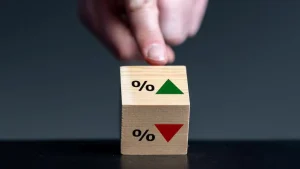
Considering scenarios constructed by six institutions (Banco do Brasil, Itaú Unibanco, Bradesco, Santander, BTG Pactual, and XP), the Central Bank's interest rate cutting cycle is indeed knocking on the door. The Selic rate, at 15% since mid-June of last year, the highest level in almost twenty years, will fall by 0.25 percentage points in January or March, with some chance of a 0.50 percentage point decline if the dismantling of the rate hike cycle begins in March. By the end of 2026, estimates for the basic rate range from 12% to 12.75% per year.
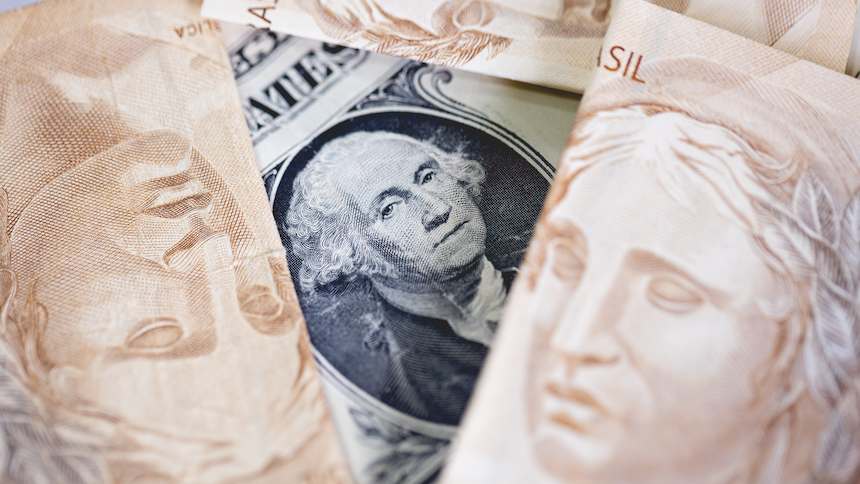
The Selic rate will fall without collapsing, much to the chagrin of the government itself, which, in this case, has the support of the private sector in assessing that monetary restriction is excessive. According to Focus, the nominal rate will fall to single digits in 2028. The real interest rate, which ended 2025 above 10%, will be declining, but will only be below 6% in 2029. Despite warnings from institutions about the risk of the exchange rate being affected by the election campaign , especially in the second half of the year, estimates for the year range from R$ 5.35 to R$ 5.90, with Santander Brasil at the higher end.
Regarding inflation, projections remain far from the 3% target, but are moving away from the ceiling, fluctuating between 3.8% and 4.2% in calculations for 2026, when GDP is expected to decelerate from around 2.2% in 2025 to an expansion of 1.5% to 1.7%, amidst persistent frustration with fiscal policy . Institutions, without exception, project consecutive primary deficits and maintain the optimistic expectation that the country will undergo fiscal reform in 2027. Discredited, the fiscal framework has long since disappeared from the scene.