


BEIJING AND SHANGHAI - The Caldeira Institute , an innovation hub in Porto Alegre, and Invest RS, the Development Agency of Rio Grande do Sul, signed memoranda of understanding (MOUs) with TusHoldings, the holding company of TusPark, one of the main local innovation ecosystems, and with two other Chinese hubs, HICOOL and Bund FTC – the latter in an arrangement that also involves SPD Bank.
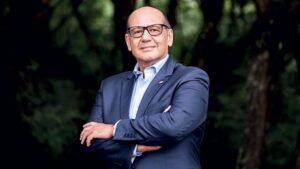
“We are placing a 'pin' on China with four major institutions that can be our interlocutors here,” says Pedro Valério, CEO of the Caldeira Institute. “Brazil needs to connect. We are off the board, and if we don't build these global networks, we will fall even further out of the game.”
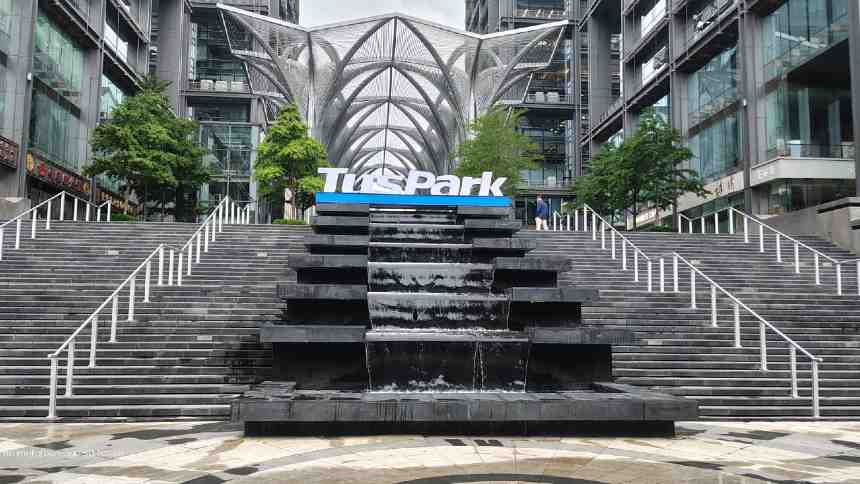
The memorandum with TusHoldings gives a good indication of the pieces on the table in this approach. The group's model is centered on TusPark, created in partnership with Tsinghua University, China's leading university, where Xi Jinping, the country's current president, and Hu Jintao, his predecessor, studied.
Based in Beijing, this ecosystem connects startups, large companies, universities, investors, and government, including venture capital arms. It boasts over 100 listed companies and a base of more than 40 unicorns, as well as partnerships with over 300 parks and incubators in 80 cities across 50 countries.
The meeting that sealed the MOU brings other positive developments to this situation. Held at TusHoldings headquarters, the meeting had already lasted about half an hour when Wang Jiwu, chairman of the group, handed Valério a piece of paper with the following phrase: “We are ready to sign the Memorandum of Understanding.”
Valério's positive response was preceded by a long period of rapprochement, which began in October 2025 when Caldeira made his first visit to the institution. Since then, contact had been mostly limited to emails – with delayed replies, creating a feeling that there would be no progress.
This scenario, however, is not at all uncommon for the Chinese in conversations of this nature. Just as the speed with which this relationship evolved the very next day, when Caldeira and Investe RS were invited to meet with the holding company, is unusual.
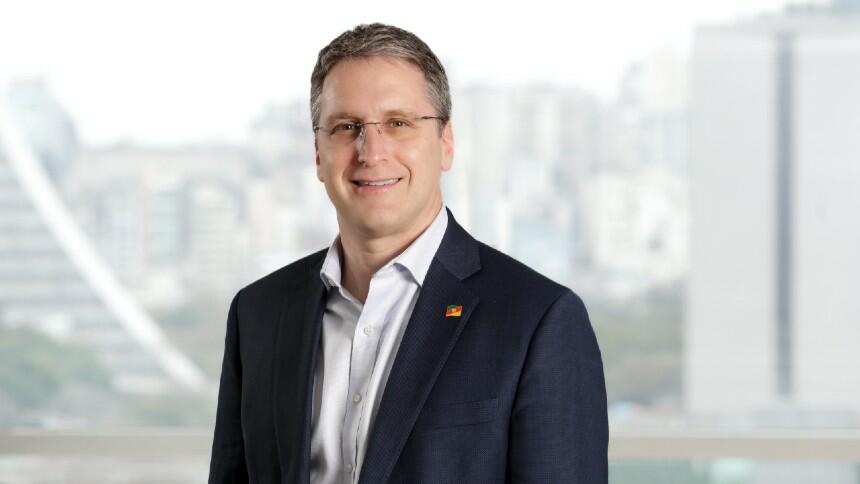
“The relationship has completely changed, as has the way they present everything to us,” says Rafael Priklandnicki, president of Invest RS. “This opens doors and increases trust.”
The other two MOUs involved two of the major hubs located in China's two largest metropolises: HICOOL in Beijing, which, among other things, holds competitions between startups from around the world; and the Bund FTC, an ecosystem of financial institutions located in Shanghai.
Now, the plan is to intensify dialogue and create recurring agendas with the three hubs. This is either to attract Chinese companies and investments to Rio Grande do Sul, or, in a two-way street, to create better conditions for Brazilian startups and companies to enter the Chinese market.
In addition to the new memoranda, the Caldeira Institute already has a very close relationship with other innovation hubs around the world. Among them are the Parque de Innovacón in Buenos Aires, the Unicorn Factory in Lisbon, and Mana Tech in Miami.
While Caldeira expands its network, Invest RS is packing its bags to land abroad, first by creating a representative office. And the place to begin this international expansion is precisely China, initially starting in June.
“Our first point of reference is China. The whole world is trying to understand what’s happening here,” says Priklandnicki. “We’ll test the model for about six months and evaluate the next steps afterward, and in the future, we can evolve to a fixed office model.”
As part of this strategy, the next planned stops should be the United States and Europe. The focus now, however, is entirely on the Chinese market.
“We started with China because of its current global importance and because it is one of the major powers strongly eyeing the Brazilian market,” says the president of Invest RS. “And automobiles, agriculture, innovation, technology, and energy transition are the sectors we will try to explore in this relationship.”