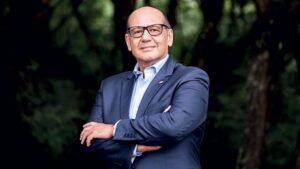


Since last week, Carlos Eduardo Mazzei has been on a busy schedule abroad. His first stop was Stanford University. Later in May, he will participate in a meeting with CIOs from around the world, also in the United States. At the beginning of June, his destinations will be China and Singapore.
On this journey, the technology director of Itaú Unibanco is carrying the badge and plans for another area of the bank , still recent, but which is beginning to gain relevance in the operation, including in the products offered to clients: the Itaú Institute of Science and Technology (ICTi).
Officially created in April 2025, exactly one year after its inception as a pilot project, ICTi established its footing in the Brazilian market. And now, in a new phase of this journey, it aims to gain greater international scale.
“Nowadays, science is very interconnected, and increasingly, border barriers are falling away,” says Mazzei, in an interview with NeoFeed . “So, these connections abroad allow us to catch up in areas where Brazil has, in fact, fallen a little behind.”
The institute is not starting from scratch on this journey. ICTi already has international research partnerships with Stanford University and MIT. But it wants to extend this dialogue to other institutions. And, to that end, a first step was the opening of a hub in Palo Alto, California, at the end of 2025.
“It’s still something small. It’s literally an office. The focus isn’t necessarily on creating a local team,” says Mazzei. “But it’s important to be there. To facilitate dialogue with universities and companies, to create these links and make these exchanges. And a next step is to go beyond the United States.”
From discourse to practice, at the start of this strategy, ICTi is already holding talks, still in the initial stages, with about ten universities outside of Brazil, and not only in the United States. In Europe, this dialogue includes, for example, a university in Switzerland.
In this plan, one of the next and main ambitions, however, is to explore opportunities in China, a country where Mazzei will visit four cities in two weeks. And with which Itaú already maintains a dialogue, but as a bank, and not through ICTi.
“China has a very different dynamic from the US, 99% open source, with companies that effectively open their models to the public, such as Alibaba, DeepSeek and Huawei,” he says. He notes that the idea is to find lines of collaboration with universities in the country, just as already happens in Brazil and the US.
“Today, more than 50% of artificial intelligence (AI) researchers in leading laboratories worldwide are Chinese,” says Mazzei. “I am impressed by the country’s ability to look at the entire chain and by the discipline of execution. And on a surreal scale. It’s a machine.”
While focusing on these mechanisms, ICTi already maintains ties with 11 Brazilian universities, including the Polytechnic School of USP and the Federal University of Goiás. Its team includes approximately 90 professionals, most of them data scientists, in addition to 195 researchers and fellows allocated to partner institutions.
Targeted for an investment of approximately R$ 100 million from Itaú in 2025, the institute has around 70 ongoing research projects, mainly focused on five major themes: AI, quantum computing , robotics, neuroscience, and extended reality.
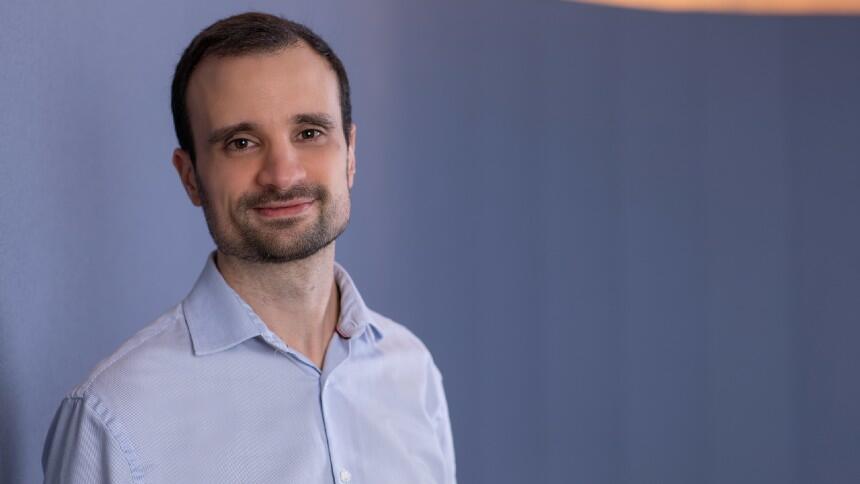
“ICTi was the perfect instrument in Itaú’s ecosystem,” says Mazzei. “The bank already had Cubo, which connected with startups and companies. What was missing was this channel of exchange with academia as well.”
From academia to clients
In building this bridge, the institute has two well-defined roles. The first is to collaborate with the Brazilian scientific ecosystem, producing intellectual property for the country as a whole. And the second, of course, is to incorporate what is being developed into the bank's portfolio and operations.
At the first level, ICTi has already accumulated 21 patent applications – the goal is to reach a range of 40 to 50 by the end of 2026. And, in April, when it completed one year, it had its first patent granted. To give an idea of the achievement, until then, Itaú had only two patent grants in 102 years of operation.
The patent that inaugurated this new phase involves the Biaser, which identifies implicit biases and creates guardrails in recommendation systems and artificial intelligence models. It originated from the Itaú Intelligence project, a proprietary generative AI platform launched at the end of 2024.
“We started to see that the models, which are trained with public data, had several biases that were not aligned with our vision. Of race, gender, region,” says Mazzei. “Today, our generative AI is in different areas, impacting millions of customers. And this solution is already embedded in all of them.”
Launched in mid-2025, one of these offerings is Itaú Investment Intelligence, an investment agent based on generative AI. This helps illustrate another line of research that, alongside this technology, now accounts for about 90% of ICTi's research: quantum computing.
To enable more scalable and accessible investment advisory services, ICTi created a model inspired by quantum algorithms that, when faced with the challenge of matching a portfolio of thousands of assets with the profiles of millions of clients, requires less computing power.
“Before, we had customer clusters and we would create a recommended portfolio for those profiles,” explains Mazzei. “Now, we look at each item in a universe of thousands of products and recommend a portfolio that is effectively personalized for each customer.”
He highlights another point beyond this path to hyper-personalization. "Today, we can do this process in one and a half to two seconds per customer," he says. "What used to take us hours to do for a cluster."