

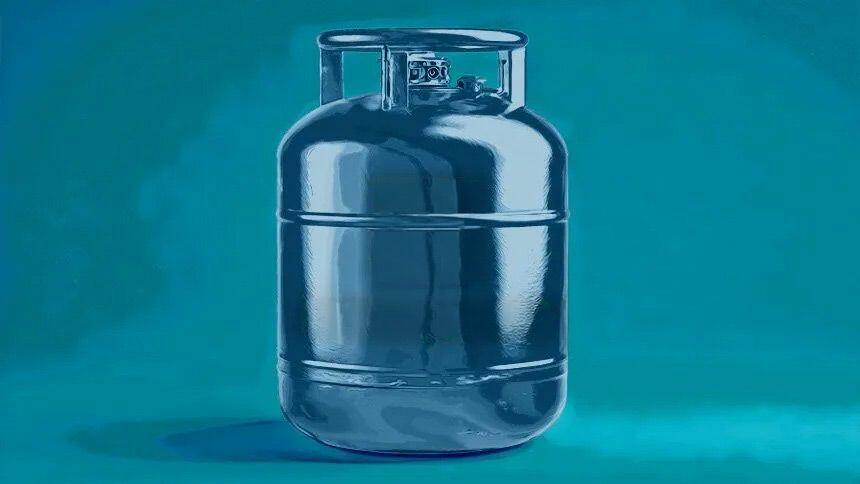
Under pressure and unable to find a solution to reduce criticism from the federal government and major distributors, the directors of the National Agency of Petroleum, Natural Gas and Biofuels (ANP) decided to halt the process that, if approved, would allow the filling of gas cylinders at remote bases, to "fill the tank".
The measure had been the target of protests from the Ministry of Mines and Energy, which recently sent a letter to ANP officials stating that, if the changes were approved, the "People's Gas" social program, which subsidizes LPG refills for low-income populations, would be completely compromised.
The regulatory changes also included ending the exclusivity of gas cylinders, which would jeopardize the safety and warranty of the containers, since, with this new model, no one would be responsible for their maintenance.
Companies in the sector have stated that if the initiatives went ahead, investments in purchasing new gas cylinders, precisely to sustain the demand for the "People's Gas" program, would be halted. The projected investment was expected to exceed R$ 2 billion.
Officially, the main justification presented during Friday's meeting for halting the processing of the procedure, now without a set date, is that the war between the United States and Iran, stemming from the conflict led by Donald Trump, has forced ANP officials to focus on the impacts of the energy crisis on the national market.
Therefore, the regulatory agency would not have sufficient resources to proceed with yet another significant change to LPG, in a segment that is also under the agency's oversight.
The director-general, Artur Watt, who proposed the suspension, also indicated that the agency should conduct a study to understand the need for reallocation of staff to the most urgent initiatives.
But NeoFeed learned behind the scenes that the real reason was different. What significantly influenced the ANP's retreat was the difficulty in presenting a consistent response that guaranteed legal security for the companies.
The regulatory sandbox format, which was being prepared hastily, was not well received, precisely because it did not answer all the questions about how these tests would be conducted and for how long it would operate.
Public pressure from the federal government was also taken into account, especially after the Ministry of Mines and Energy sent an official letter openly requesting that the directors not proceed with the changes.
Last week, members of the ANP board held several meetings with representatives of the federal government, executives from the main companies in the sector, and leaders of entities that defend the companies. And the directors only heard criticism.
The fact that the five directors were unsure about moving forward with the issue, even though they had been insisting on the topic in recent months, is evident because the item on the agenda regarding the postponement of changes to the LPG market only made it onto the official agenda on Friday morning, minutes before the start of the session. Officially, the agenda was made available on Tuesday, three days before the meeting.
The director-general himself hinted that the entire board was focused on finding a solution to lower the temperature in the sector and stated, in his speech explaining the change in direction at ANP, that the solution "was built by the five of them".
At the meeting, director Pietro Mendes stated that "ANP will have a challenging year to guarantee supply, given external factors such as the conflict in Iran and climate change," and that now it is "necessary to have focus and caution."
Director Fernando Moura, in turn, began his speech by trying to downplay the ANP's new decision. "We're not talking about cancellation, nor that they will be terminated. But now they will not proceed at the same pace that we were proposing before," he explained.
"Geopolitical issues demand a redoubled effort from the ANP to fulfill its functional responsibilities. The regulatory agenda is important, but I believe it should have a degree of flexibility, with adjustments along the way," he added.
In an interview with NeoFeed , the National Union of Liquefied Petroleum Gas Distribution Companies (Sindigás), which has always opposed these changes, says that the ANP's decision not to move forward, at this time, with the proposals for advanced bottling and the relaxation of brand exclusivity is "a demonstration of prudence and regulatory responsibility."
"In our assessment, the debate on these changes still requires further study, especially in light of other urgent issues that are currently driving the agency's work."
He added that "some of the proposals under discussion could create vulnerabilities capable of compromising the safety of millions of consumers, expanding opportunities for tax evasion, and facilitating the actions of organized crime in a sector that supplies more than 66 million Brazilian households."
The LPG market today generates R$ 60 billion annually, with R$ 44 billion from distributors and R$ 16 billion from retailers. The companies Copa Energia (owner of Liquigás and Copagaz), Ultragaz, Supergasbras, and Nacional Gás account for approximately 90% of the bottled gas market in Brazil.