

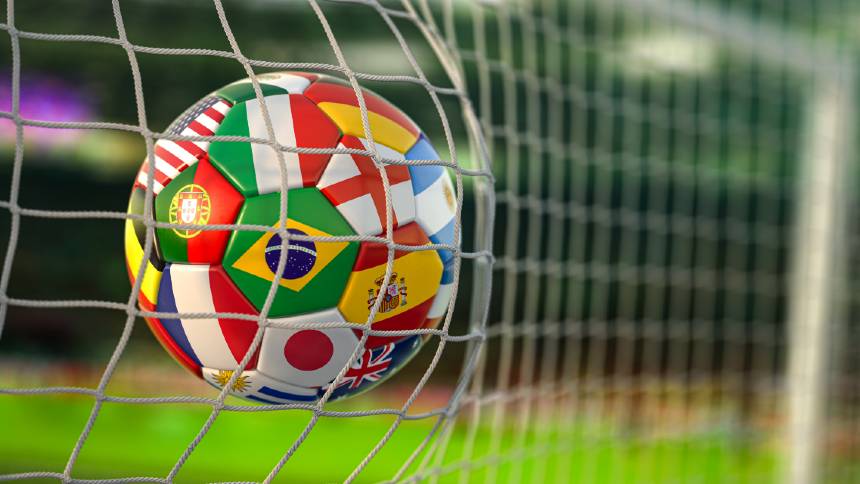
With 83 days to go until the start of the 2026 World Cup , which will be hosted by the United States, Canada and Mexico, Brazil is divided between those who support and those who reject Neymar's call-up to the Brazilian national team led by Italian coach Carlo Ancelotti .
The winners of this "contest" will only be known on May 18th, the date of the Brazilian national team 's announcement for the tournament. However, in another area, also related to the competition, BTG Pactual has already chosen who should be the winners and losers.
In its report, the bank provides an analysis of which retail segments and players are expected to benefit the most and, conversely, which will be most negatively impacted when the Brazilian national team kicks off its tournament on June 13 against Morocco.
"The World Cup creates a clear dispersion in Brazilian retail trade," write the analysts at BTG Pactual in one section of the report.
They add that, “ultimately, the tournament has less to do with aggregate retail growth and more to do with redistribution – rewarding exposure to football-driven consumption and penalizing categories of discretionary consumer goods with shorter shelf lives.”
In this scenario, the bank points out that Grupo SBF , owner of Centauro and in charge of Nike 's local operation, is one of the favorites, benefiting from both volume expansion and a favorable mix, with categories linked to soccer presenting structurally higher margins and lower discounts.
"Products related to football, particularly Nike products and licensed jerseys, typically generate strong consumer interest during tournament cycles," write analysts Luiz Guanais, Yan Cesquim, and Beatriz Cendon.
The trio also highlights Grupo SBF's expectation of reaching a sales volume of approximately 850,000 shirts during the competition, with pricing strategies designed to preserve healthy margins.
The optimistic outlook for the retailer is reinforced by the analysis of data compiled during the last three editions of the World Cup, which show an average growth in sales of sporting goods of 23% during the tournament – in the case of football-related items, the rate is 48%.
The bank emphasizes, however, that this acceleration should be analyzed by triangulating a set of data, rather than a single isolated number. As an example, it cites that in 2014, this category grew by approximately 18% to 25% in July and July, compared to single-digit growth in previous months.
"It is important to emphasize that this growth is concentrated in a period of 6 to 8 weeks, which implies a temporary, yet highly profitable, increase in demand," another excerpt from the report points out.
Beyond sporting goods, BTG Pactual ranks food retailers and beverage companies as "relative winners," benefiting from the dynamics of domestic consumption on days when Brazil plays.
“On the other hand, fashion retailers ( Renner , C&A ) and shopping malls face short-term disruptions, especially if Brazil advances in the tournament and increases the number of games during the week,” the bank notes.
In the first phase of the tournament, in addition to the opening match against Morocco, which will take place on a Saturday, Brazil will face the national teams of Haiti, on June 19th, a Friday, and Scotland, on June 24th, a Wednesday.
BTG also sought data from the last three editions of the tournament to assess the impact on retailers on days when the national team plays. The average loss in sales hours is 37%. The decline in retail sales, on average, was 12%. Other figures complicate this picture.
"Data from Abrasce on pedestrian traffic in shopping malls indicated intraday drops of up to 40% during game times, with partial recovery before and after the matches," the bank notes.
Analysts also outline a scenario considering that Brazil advances through the stages and plays 5 to 7 matches – in this edition, unlike previous ones, whoever reaches the final will play eight games. This would imply a path to the final, on July 19th, with 4 to 5 matches during the week and 3 to 4 matches on the weekend.
According to the bank, with a schedule that suggests a slightly higher concentration of games during the week, and considering that each match reduces effective sales hours by about 30 to 40% each day, this would translate into a 1% to 2% reduction in total retail sales.
BTG points out, however, that this effect is asymmetrical. While sporting goods benefit from pre-event demand, most non-essential product categories face a net loss of sales time.
"This creates distortions in high-frequency data, often requiring analysts to normalize trends to avoid misinterpretations of underlying demand conditions," the report concludes.