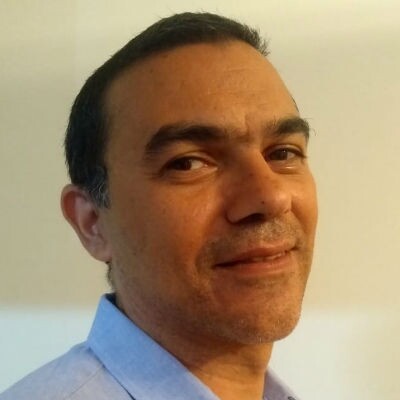


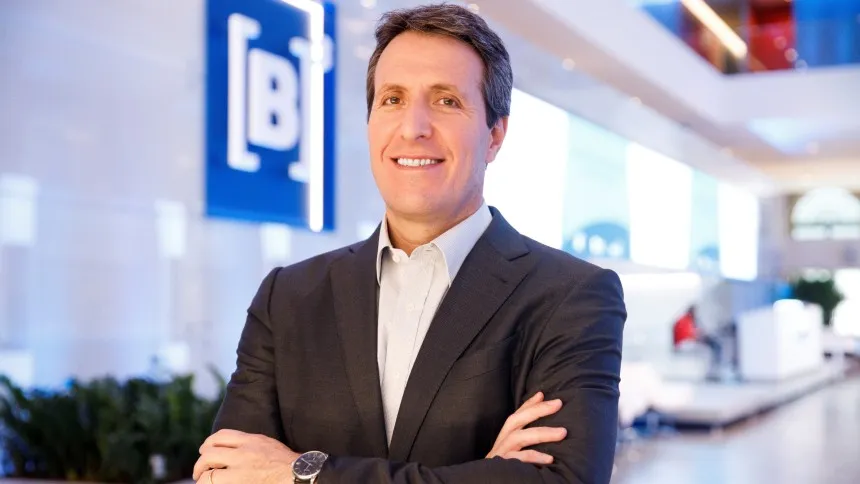
A game of musical chairs involving two major players in the financial market – and, consequently, two influential executives in that sector in the country – came to light on the evening of Thursday, March 19.
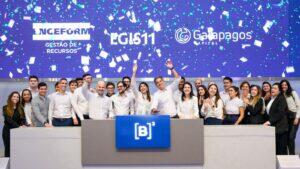
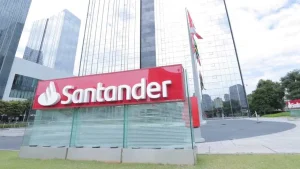
One of the leading private banks in the Brazilian market, Santander, announced that Mario Leão , president of its Brazilian operations, is leaving his post. His chosen successor will be Gilson Finkelsztain , who currently holds the position of president of B3 (the Brazilian stock exchange).
According to Santander, Leão's decision to leave the operation was communicated to the bank's corporate governance bodies earlier this year, allowing for an orderly succession. The handover is expected to be completed by the end of July.
Until then, Leão will continue to lead the bank and will have a direct role in this transition process. Finkelsztain, in turn, will also remain at the helm of B3 during this period, a decision reached by mutual agreement between the operation's executive board and the executive.
In a relevant fact statement announcing the end of Finkelsztain's cycle, B3 emphasized that it will inform the market in due course of the name of his successor, once this transition process in command is completed.
Finkelsztain's appointment marks his return to Santander, where he worked between 2011 and 2013. More recently, in September 2025, he even considered a return to his old home when he was nominated to join the bank's board, which, three months later, ended up not materializing.
“I am very happy to return to Santander Brazil to assume the leadership of the bank at this time,” Finkelsztain said in a statement. “Brazil is a market of great opportunities and I am excited about the potential we can build in the coming years.”
Santander's CEO, Ana Botín, also spoke about this return. "We are pleased to welcome Gilson back to Santander. His experience and recognition in the Brazilian financial sector make him well-qualified to lead the next phase of growth in this highly relevant market."
At the same time, Botín highlighted the important role of Leão, who joined the bank in 2015 and had been in charge of the local operation since January 2022, in the transformation of the Spanish bank and in strengthening its position in Brazil.
At the helm of operations, after some challenging quarters, Leão had been leading a gradual recovery in the bank's indicators. Even without meeting all of his targets, this strategy gained more traction in last year's results.
Among other data from the period, Santander reported a net profit of R$ 4.08 billion in the fourth quarter of 2025, a 6% increase compared to the same period in 2024 and the highest quarterly figure reported by the bank in this line of the balance sheet in four years.
“I am very happy with the time I spent here, with everything we have evolved and achieved, and with what lies ahead. I wish Gilson much success and I am sure he will do an excellent job leading the Bank, continuing what we have built over the years,” said Leão.
A source familiar with the bank said that this move was "highly expected." "Gilson's name had been mentioned since he was nominated to the board and then couldn't join," the source said.
In addition to that, Mário Leão had been losing favor with the Spanish. On one hand, because of the situation in Brazil. On the other, because Santander has been trying to position itself as a bank focused on hard currency.
Recently, in this context, Santander bought the British bank TSB from Banco Sabadell for £2.65 billion (approximately €3.1 billion), in addition to the American bank Webster Bank, in a transaction worth US$12.2 billion.
“They are increasingly centralizing decisions in Spain, and this became clear at the last Investor Day when they said they intend to stop being a group of banks and become a banking group,” says another financial market professional. “Brazil is being diluted in terms of importance within the structure.”
It is worth noting that, as a backdrop to this scenario, the bank's executive committee has suffered many losses recently. This included, for example, the recent departure, in December 2025, of Renato Enjisman, head of the investment banking area.
The list also includes names such as Maitê Leite, executive vice president; Carlos André, vice president of wealth management; Franco Rizza, chief risk officer; and Gustavo Alejo, CFO, who will be leaving his position this April.
In this complex scenario, Finkelsztain brings, in addition to Santander itself, other credentials upon his return to the bank. Among them are his stints at institutions such as JP Morgan and Citibank, as well as his work leading B3, an operation he has headed since May 2017.
Since then, among other things, the executive has led a strategy to diversify B3's businesses, which has helped the company weather the most challenging times in its main source of revenue.
This strategy of reducing dependence on trading volumes on the stock exchange included, for example, the acquisitions of Neurotech and Neoway, and a strong focus on businesses related to technology and data.
Shares of B3 closed today's trading session down 1.17%, quoted at R$ 16.92. In 2026, the company's shares, valued at R$ 84.8 billion, are projected to rise 21.8%.
Meanwhile, Santander's units closed the trading day up 1.15%, at R$ 29.99. However, the accumulated devaluation for the year is 11.9%. The bank is valued at R$ 141.5 billion.