

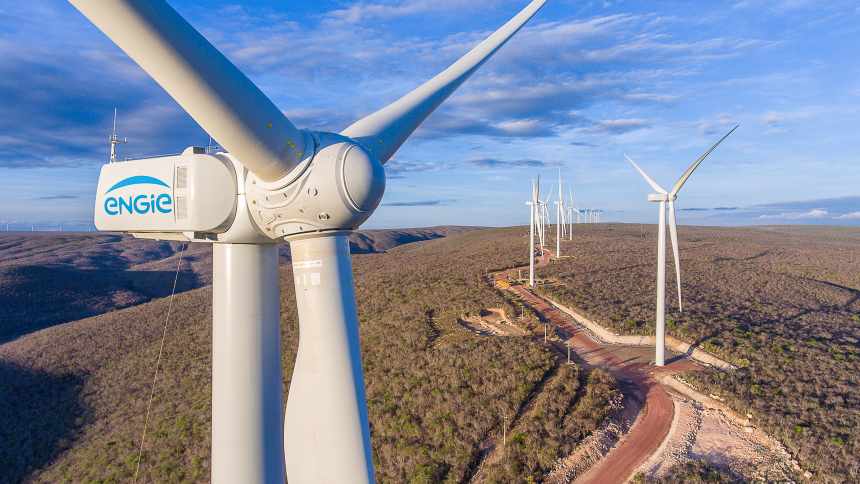
The crisis in the electricity sector caused by the oversupply of renewable energy, with wind and solar power plants suffering production cuts to avoid overloading the system, among other problems, is leading Engie to reposition its portfolio.
A leader in clean energy in Brazil, with approximately 13 gigawatts (GW) of installed capacity, representing about 6% of the national capacity, Engie has grown tired of waiting for technical and regulatory solutions to reduce curtailment – the cuts in renewable generation by the National Electric System Operator ( ONS ) – which forces the company to discard about 17% of the energy produced in its wind and solar plants.
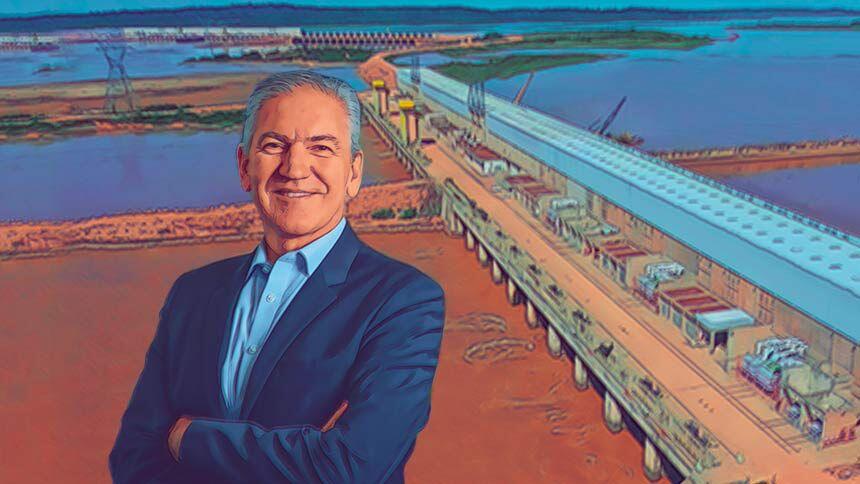
“Engie shouldn’t invest in new intermittent capacity until we have visibility that the system needs that energy,” says Eduardo Sattamini , CEO of Engie, in an interview with NeoFeed , making no secret of his dissatisfaction with the lack of clear price signals in the energy market and public policies that take advantage of surplus renewable generation.
Therefore, Sattamini states that the company decided to reinforce investments in hydroelectric plants (which account for about 70% of the energy generated by the company) and in transmission lines, which total 3,205 km.
In addition to guaranteeing returns, these two segments have always been prominent in Engie's portfolio, which comprises 145 power plants, of which 13 are hydroelectric and 132 are complementary: one biomass plant, 88 wind farms, two Small Hydroelectric Plants (PCHs), and 41 solar plants. Furthermore, Engie operates TAG, the largest natural gas transportation network in the country, spanning 4,500 km.
Recent developments confirm this strategy. In the case of hydroelectric plants, Engie was one of the winners of the Reserve Capacity Auction (LRCAP), held in March, to contract thermal power plants using natural gas, coal, fuel oil, and biodiesel, in addition to hydroelectric plants, to be activated during peak hours, between 6 pm and 7 pm, when solar generation drops, requiring firm and immediate power from the system, mainly from dispatchable sources.
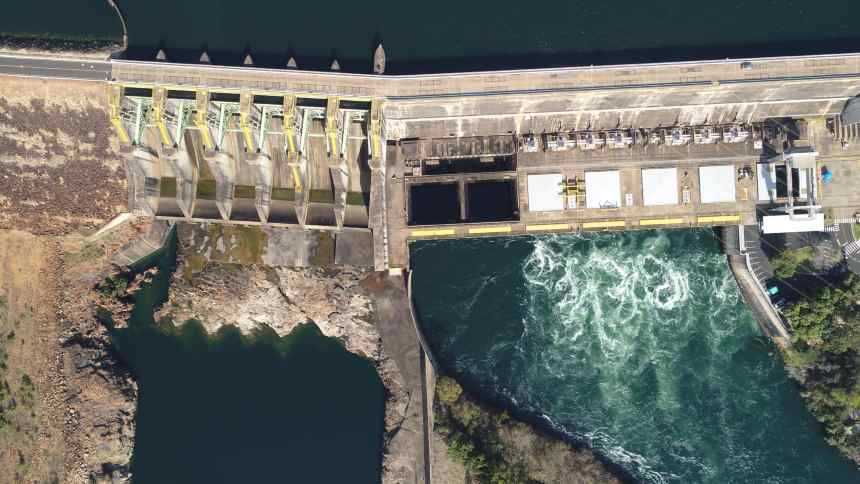
Engie won the right in the bidding process to make available 195.78 megawatts (MW) of power from the Jaguara Hydroelectric Plant, located on the border between Minas Gerais and São Paulo. Two units will be installed, each with a capacity of 116 MW. The plant currently has 424 MW of power and, with the expansion, will have 656 MW. The investment will be R$ 1.2 billion, and the start of operation of the two new turbines is scheduled for August 2030.
On another front, Sattamini confirmed that the company plans to incorporate the Jirau Hydroelectric Plant , in which Engie Participações (the group's holding company) holds 40% of the shares – the other partners include Axia (40%) and Mitsui (20%).
“The advantage for us is that transferring 40% of the Jirau plant to Engie Brasil would increase the hydroelectric share in the company's portfolio from 62% to 75%, making the results more resilient,” says Sattamini. “Jirau adds significant value because the concession extends until 2047, extending the useful life of this asset.”
Sattamini states that the form of the transaction is still under discussion. However, market sources claim that Engie Brasil is working with Itaú BBA and Santander Brasil to carry out a share offering of up to R$ 10 billion to make the deal viable.
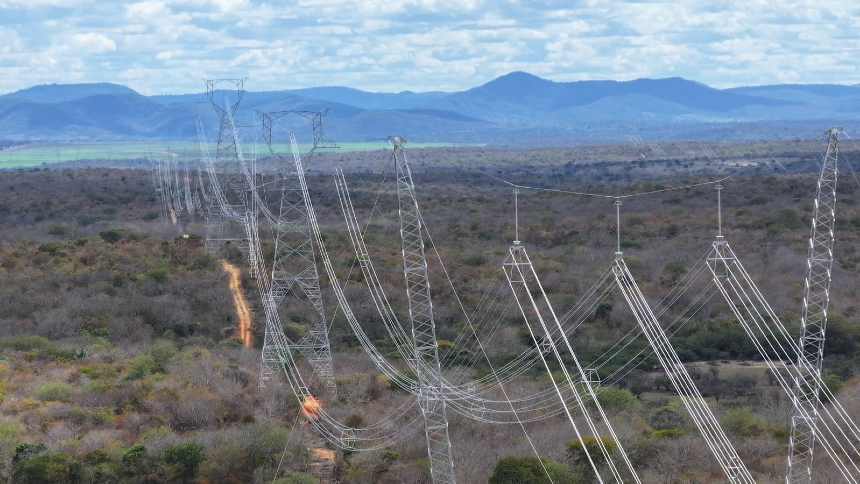
In the transmission line segment, the company won lots 2 and 3 in the last Aneel Transmission Auction, for the implementation of transmission lines and synchronous compensators in the states of Paraná, Santa Catarina, Rio Grande do Norte and Ceará. The projected investment will be R$ 1.5 billion.
The Asa Branca project, a network of power lines connecting the states of Bahia, Minas Gerais, and Espírito Santo, received an installation license from IBAMA (Brazilian Institute of Environment and Renewable Natural Resources) for the construction and operation of its four transmission lines, including the Medeiros Neto II Substation. Meanwhile, the Graúna transmission project has progressed in its main implementation milestones, with advancements in environmental licensing and land release.
The strategy is yielding results. Engie ended the first quarter of 2026 with net operating revenue of R$ 3.4 billion, a 13.1% increase compared to the first quarter of 2025. Adjusted EBITDA totaled R$ 2.2 billion, a 10.0% increase on the same basis of comparison. The numbers reflect the progress of Engie's projects under implementation in the country – the company put 1.4 GW of power plants into operation between the first quarter of 2025 and the first three months of 2026.
Energy market distortions
Sattamini, however, maintains a critical stance on the problems in the electricity sector. According to him, curtailment is a result of prolonged subsidies for renewables combined with the uncontrolled growth of distributed generation (DG).
"We have extremely high curtailment because no action was taken to reduce subsidies or favoritism towards certain segments of the generation industry that ended up growing more than the demand," says the CEO of Engie.
This oversupply of energy, he continues, would not occur in a market where there is a balance of supply and demand achieved through price, where there is no distorting factor.
"The worst part is that we have an oversupply of poor quality energy, at the wrong times and in the wrong geographical locations, caused by a distributed generation subsidy that promoted social injustice, allowing more sophisticated consumers to install solar panels on their roofs, avoiding paying the distributors' charges and passing the cost on to the lower-income population," he says.
The executive suggests adopting mechanisms to take advantage of this poor-quality energy supply in order to shift the supply from one time slot to another, citing battery storage as an alternative to make this shift.
“The battery would provide power because it can absorb energy during sunrise and provide power when sunset. Therefore, we could offer the same complementary power to thermal and hydroelectric power, specifically in places where quick and closer access to loads is needed,” he adds, admitting that Engie is analyzing the potential battery auction that will be organized by the ONS (National System Operator).
According to the executive, this distortion ended up generating another problem – an imbalance in energy market prices. Sattamini argues that the price crisis in the energy market has been fueled by a dispute over the risk aversion factor used in the models that determine short-term prices.
Some trading companies—currently exposed, with low liquidity and at risk of insolvency—are pushing to reduce this factor, which would artificially lower the spot market price and alleviate their financial positions. On the other hand, generators and more solid agents advocate maintaining the current parameter, calibrated to avoid distortions and ensure that the operator does not need to dispatch plants out of merit order, which disrupts price formation.
“Furthermore, the poor hydrological environment and the financial fragility of some buyers are causing companies with available energy to hold back supply, so as not to run the risk of going ‘short’ and having to buy back expensive energy on the market,” he says.
The result is a battle of narratives and lobbying: on one side, agents trying to lower prices to solve their own problems; on the other, companies arguing that artificial changes to the model would end up passing costs on to the consumer and distorting the market balance.
Sattamini warns that all these crises end up generating legal uncertainty in the sector. He cites the uncertainty surrounding the capacity auction (LRCAP) – there are lawsuits seeking to suspend the approval of the auction results – as an example.
“The legal uncertainty surrounding the approval of the auction is preventing irreversible actions in the Jaguara hydroelectric plant expansion project, for which we have a R$ 1.2 billion investment plan ready,” he laments. “We are awaiting legal certainty to begin contracting and avoid severe penalties for delays.”