


In less than six months, Rhodia, the Brazilian division of the Belgian chemical company Solvay, is rethinking its R$ 100 million investment plan for improvements to its manufacturing plant in Santo André, in the Greater ABC region.
The company has already invested R$ 30 million in a plan that was supposed to last until 2028. However, in the third quarter of this year, the company will conduct a concrete reassessment. And the trend is that the remaining resources will be frozen.
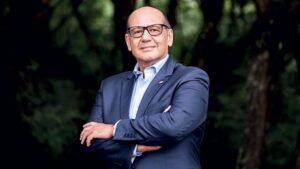
The reason lies in the significant increase in the presence of chemical products imported from Asia at a much lower cost than domestic production. And without the federal government taking action to stop what is called an "unfair avenue" of competition, according to Daniela Manique, CEO of Solvay-Rhodia for Latin America.
“Our sector is unprotected. There is a lack of a clearer industrial policy in Brazil, and what has been done so far is very little,” Manique tells NeoFeed . “That’s why we are going to evaluate the possibility of halting investments. It’s impossible to compete without having the same conditions.”
In any case, the executive emphasizes that the sector has been in talks with the federal government to demonstrate the need for more effective action to mitigate the impact of the entry of Chinese chemicals into Brazil.
“The sector views the guidelines of the New Industry Brazil and the PresiQ program, starting in 2027, with optimism. Our warning is for the current moment. Until then, the industry still faces very significant immediate challenges and needs clearer policies so as not to be left unprotected during this transition phase,” says the CEO.
Rhodia is an example of something that impacts the entire Brazilian chemical sector. Data from the Brazilian Chemical Industry Association (Abiquim) shows that, between 2022 and 2024, imports grew by 75%. In the case of items coming from China, the increase in the same period was 153%.
According to the association, of which Rhodia's CEO is the board president, the Brazilian chemical sector generates US$167.8 billion annually and creates approximately two million direct and indirect jobs. Currently, 47% of the national demand for chemical products is met by imports. The sector's trade deficit reaches US$55 billion per year.
In 2024, Rhodia had already announced the closure of a unit in its manufacturing park in Paulínia, in the interior of São Paulo, which was the only one in Latin America that produced bisphenol, used in the manufacture of polycarbonate and in armored car windows, for example.
The reason was exactly the same as now: the unchecked access of imported chemical products. Currently, the only option is foreign products.
“These are absurd dumping rates,” says Manique. “We had to shut down because the Chinese onslaught was too great and we couldn’t withstand it. We have clients calling to ask if it’s possible to resume production, and we tell them no.”
The company produced around 20,000 tons of bisphenol per year, representing about 1% of its annual revenue. According to the executive, there is currently a very high volume of "predatory" exports coming from China.
According to Manique, Chinese products benefit from incentives from the Chinese government that, in some cases, reach up to 36% for exported products.
In the first quarter of this year, Solvay reported net revenue of €997 million globally (R$5.8 billion). Of this amount, approximately 15%, equivalent to about €150 million (R$880 million), comes from the Brazilian market. Latin America accounts for 22% of global revenue.
However, due to this competition, which the CEO considers unfair, Rhodia currently operates with approximately 30% idle capacity, which, according to Manique, is very high for the sector. A healthy level would be around 10%.
The chemical sector is not the only one suffering from the "invasion" of imported products, mainly from China, in a situation of competition considered unfair by Brazilian companies. Steel is one of the most representative examples.
In recent quarters, since 2025, Gerdau's CEO, Gustavo Werneck , has been an active and critical voice against the lack of more effective action on the part of the Ministry of Development, Industry and Foreign Trade (MDIC).
In the view of the Gerdau executive, the segment in which he operates also needs "defense" and not simply "protection." "Every day we think about competitiveness. What I want is a level playing field," the CEO stated in February of last year.
Rhodia's CEO shares Werneck's reasoning. According to her, all things being equal, the chemical sector sees no problem in competing with imported products. The issue, she says, is that the rules are not the same, since the Chinese enter the Brazilian market with a significant competitive advantage.
“Our complaint is similar. Tax collection from industry in general is much higher than from agriculture, for example. And I don't believe there will be any changes this year, especially during the election period. The government needs to understand the importance of this. Furthermore, our production costs are much higher than those of other countries,” says Manique.

According to her, in the case of natural gas, for example, Rhodia currently pays US$14 per million BTU, which is a global thermal unit. "The United States pays US$2, Europe, at war, pays US$7, and China pays between US$2 and US$3. In other words, I pay a value that is seven times higher than the American," she says.
The Rhodia executive says that the tax burden in Brazil is the highest among all Solvay units worldwide. “The burden is very high. And the important product pays much less than we pay, even though we generate jobs in the country. It's impossible to compete without having the same conditions.”
What the executive is saying is that, in addition to failing to defend the foreign competitor, the Brazilian government also doesn't see the impact of the "Brazil cost" on the sector, and its reflection on the Brazilian economy itself.
Interestingly, with the start of the Iran war and the closure of the Strait of Hormuz, the importance of local industry became evident, according to Rhodia's CEO, as the company began to gain some market share, albeit superficially.
“Having no production in the country is very alarming. And demand has increased precisely because China has somewhat held back exports, so as not to have a shortage there. We are going to have a shortage of sulfur and fertilizers because there is no production here. This is very worrying,” says Manique.
Blouse tax on the radar
In any case, Rhodia intends to proceed with a €40 million investment, using resources from its parent company, to reduce its dependence on Petrobras' product and increase the company's productivity through the use of biomass in its factory boilers. The cycle ends in 2027.
“From 2028 onwards, my demand for natural gas will drop significantly. And today we are the second largest consumer in the state of São Paulo. But I need to improve my competitiveness,” he says. That is why, even with the lack of government support, these investments do not stop.
At the Paulínia plant, Solvay's second largest in the world, annual production today is around 1.2 million tons, taking into account all the chemical products that leave the factory for various industries, including phenol (used as resins in plywood) and solvents.
The factory in Santo André, which accounts for about 3% of the company's revenue in Brazil, operates primarily in the textile industry, producing polyamide, used in the manufacture of t-shirts and other clothing items.
And that is precisely why Rhodia foresees the impact of another problem on the horizon, one that is currently among the main concerns of the fashion retail industry: the end of the "blouse tax," which exempted Asian platforms from import tax on items purchased up to US$50.
Since this issue indirectly affects Rhodia's main textile clients, the concern lies precisely in a possible reduction in demand resulting from the decision of Luiz Inácio Lula da Silva's government.
"The imported product arrives with 97% dumping . And the competition is really very unequal. If my client can't produce it, they won't buy my polyamide."
Rhodia, which originated in France, began operating in Brazil in 1919, and in 2011 was acquired by Solvay for US$4.8 billion. The Belgian group was founded in 1863.
In the year to date, Solvay's shares on the Brussels Stock Exchange have fallen by 4.75%. The company, which owns Rhodia, has a market value of €2.76 billion.