

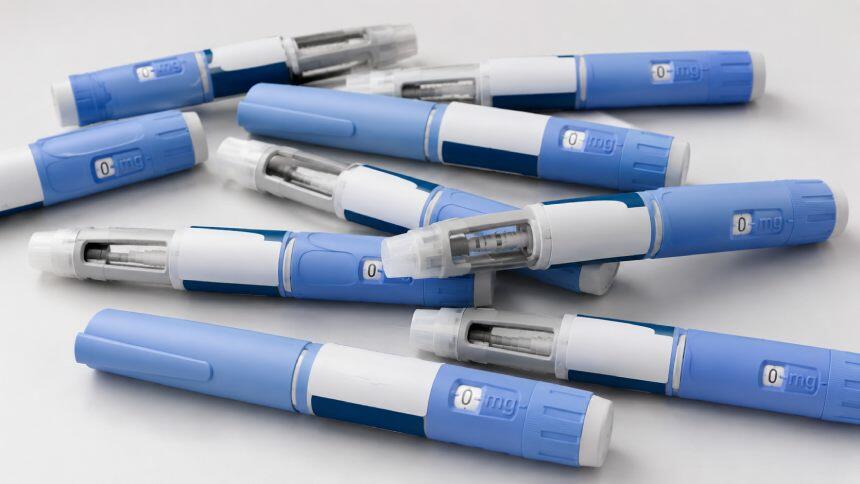
The Brazilian National Health Surveillance Agency (Anvisa) has approved the factory where the pharmaceutical company Cristália will produce its version of the slimming pen based on semaglutide .
Technicians from the agency were in the Chinese province of Guangdong to authorize the manufacturing plant of the pharmaceutical company Livzon, a company that has already obtained registration in China and has also submitted an application for analysis in the European community.
Cristália's plan is that, following the issuance of the Good Manufacturing Practices (GMP) certificate for active pharmaceutical ingredients (APIs), Anvisa will be able to approve its copy of Ozempic within 60 days, which would mean obtaining the license by mid-August.
“Our application is being processed by Anvisa and we have responded to all requests. The technicians approved the factory in China without reservations, which is an important step for us to enter this market,” says Rogério Almeida, vice president of research and development at Cristália, in an interview with NeoFeed .
According to Almeida, if the process continues without any setbacks, the expectation is that Cristália's slimming pen will reach pharmacies in the fourth quarter of this year. Even though it is produced in China, the Brazilian pharmaceutical company's brand will be on the semaglutide packaging.
The vice president explained that the company submitted the request to Anvisa last year, when the regulatory agency published a notice for priority analysis of the pen registrations, "jumping the queue" for requests for other medications.
The plan announced at the time by Anvisa (Brazilian Health Regulatory Agency) was precisely to guarantee the expansion of this market, democratize access, and prevent shortages of these products in retail chains.
The patent for semaglutide expired in Brazil on March 20th, when the exclusivity of the Danish company Novo Nordisk , owner of Ozempic and Wegovy , expired. Since then, the race to approve new versions has accelerated.
With the potential entry of Cristália's pen into the market later this year, the goal is that, through the partnership with the Chinese pharmaceutical company, the Brazilian company will transfer the technology for the production of semaglutide in Brazil.
But this is only expected to happen from 2028 onwards, when the company completes the extension of a biotechnology annex to its main factory in Itapira, in the interior of São Paulo. The works are already underway and will be finished by the end of next year.
In total, the investments will amount to approximately R$ 450 million, and will involve various medications. The semaglutide production line alone will represent an investment of around R$ 80 million.
“We sought a partner who had already started development abroad. If we were to begin development in Brazil, we would miss the deadline for submitting the registration to Anvisa,” explains the VP of Cristália.
In China, Livzon is expected to begin producing its local version of semaglutide in 2027. This means that, depending on the pace of Anvisa's approval process and confirmation this year, Cristália could be the first company in the world to distribute the product from the Asian factory.
Almeida states that the company has decided to review the strategic plan for volume and pricing of Cristália's slimming pen, which should be finalized in the coming weeks.
According to information obtained by NeoFeed from sources in the pharmaceutical market, the industries, even though they expected a strong move from EMS in its entry into the semaglutide market, were surprised by the aggressive pricing that the Sanchez family's company initially adopted, with the price per box below R$ 500, reaching less than R$ 300 in the three-month plan.
“The logic of the market has changed. What we intend is to enter the Brazilian market in a competitive way, in terms of price and quantity available in pharmacies. The company wants a significant share of the market,” says Almeida.
Ozivy, from EMS, arrived in pharmacies this Monday, June 15th. Anvisa approved the pharmaceutical company's registration at the end of May. The trend now is that the next one will be from Àvita Care, which will bring the pen from the European company Adalvo and transfer its commercialization in Brazil to Sandoz.
In any case, the market viewed EMS's rapid entry into the market and Anvisa's first-place approval as natural, given that the company had already anticipated its investment cycle in manufacturing this product line, even before the patent expired.
In August, the pharmaceutical company led by Carlos Sanchez launched the slimming pen based on liraglutide, Olire and Lirux. The patent for Saxenda and Victoza, also from Novo Nordisk, expired at the end of 2024.
With the new players, the trend is for the slimming pen market to expand in Brazil. The forecast is for 50% growth this year compared to 2025, reaching a volume of R$ 15.6 billion in 2026, including all pens, such as liraglutide, semaglutide, and tirrizepatide, the active ingredient in Mounjaro, from the American company Eli Lilly, whose patent only expires in Brazil in 2032.