


After competing in the rocket and robotaxis markets, Jeff Bezos wants to challenge Elon Musk in the telecommunications satellite field.
Amazon announced on Tuesday, April 14, that it has reached an agreement to acquire Globalstar, a company that offers high-speed broadband internet connection via space and is one of Starlink 's main competitors. The negotiations had been anticipated earlier in the month by the Financial Times (FT) .
The deal was valued at US$11.6 billion. Globalstar shareholders will be able to choose to receive, for each share they own, US$90 in cash or 0.32 Amazon shares, with a maximum value of US$90 per share.
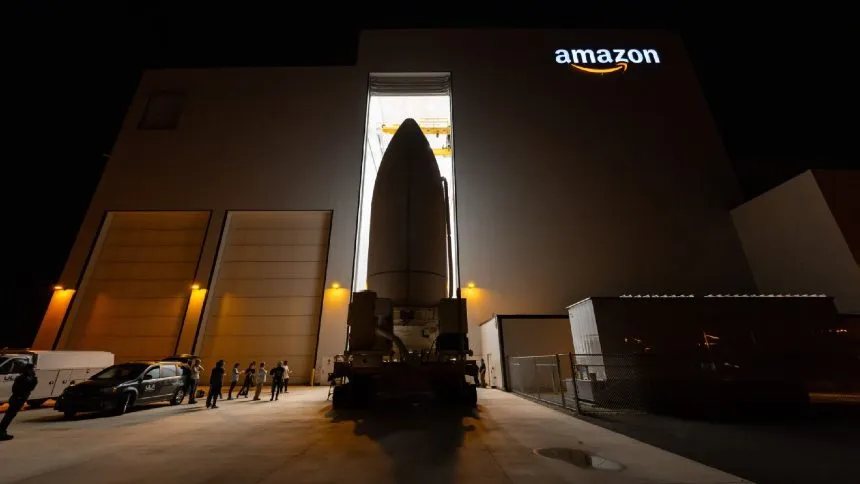
Amazon has decided to acquire Globalstar to add the direct-to-device (D2D) service component to Amazon Leo's low-Earth orbit satellite constellation, expanding cellular coverage beyond the reach of terrestrial networks. Currently, the service is offered via fixed antennas.
The expectation is that Amazon Leo will begin offering the service broadly in 2028, after obtaining the necessary regulatory approvals. Until then, Amazon will offer the service to those who own Apple devices, as Apple was an investor with a 20% stake, and to Globalstar customers, using the technology to provide emergency calls.
"These new features are part of Amazon's long-term vision for space connectivity, and Amazon plans to work with mobile network operators (MNOs) and other partners to realize this vision and extend reliable, high-speed connectivity to customers, no matter where they are in the world," reads part of Amazon's press release.
The acquisition is likely to accelerate Amazon's entry into this market, whose main player is Starlink, which has around 10,000 satellites and operates in 150 countries, while Amazon Leo has around 200 in orbit but plans to reach 3,200, according to TechCrunch data.
Starlink has won over clients such as United Airlines and John Deere. Meanwhile, Amazon, whose operations are still in their early stages, recently announced an agreement to provide internet access on Delta Air Lines and JetBlue flights starting next year.
The purchase of Globalstar is one of the largest ever made by Amazon, second only to its acquisition of the Whole Foods supermarket chain in 2017 for US$13.7 billion.
Amazon CEO Andy Jassy told investors in February that Amazon Leo was part of a set of "incremental opportunities" that the $2.2 trillion e-commerce giant was focusing on.
In Leo's case, the idea is to cater to an increasingly interconnected world, requiring internet signal availability in more regions than the physical infrastructure is capable of providing.
One market that shows particular promise is the airline industry. Companies are seeking alternatives to the current, rather unstable, in-flight Wi-Fi networks. A good internet signal is seen as a key differentiator in selling more expensive seats to passengers.