

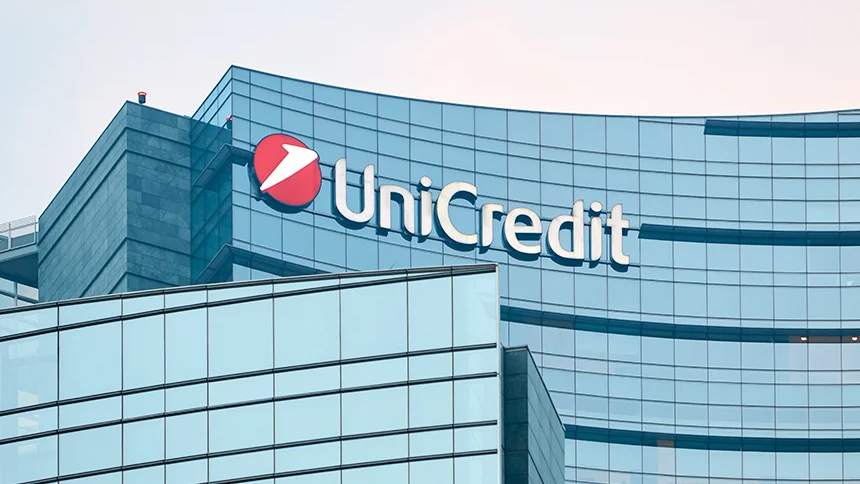
The European Union (EU) is about to witness the birth of one of the bloc's largest banks, with Italy's UniCredit taking control of Germany's Commerzbank.
UniCredit now owns approximately 42% of Commerzbank's shares, which launched a public offering for the Frankfurt-based bank's stock earlier this year, according to The Wall Street Journal (WSJ) .
This percentage should be sufficient to guarantee the Italian bank control over the board of directors and management of its German rival, despite opposition from the German government, which owns 12% of Commerzbank's capital.
The offer, conducted entirely in shares, currently values Commerzbank at approximately US$50 billion, which would make the operation the largest banking transaction in Europe since the 2008 financial crisis.
The merger marks the realization of a plan initiated two years ago by UniCredit CEO Andrea Orcel. A former investment banker known for brokering deals between some of the world's largest financial institutions, the Italian executive resorted to the strategies he used in the investment market.
The Italian bank used derivatives to discreetly build its shareholding, ignoring repeated rejections of the proposal by German bankers and authorities.
UniCredit began approaching Commerzbank in 2024, when it revealed a 9% stake in September of that year. It then acquired finance contracts linked to the German bank's shares and continued to expand its position.
In March of this year, it launched a public offer to buy the remaining shares, arguing that the time had come for the two banks to begin constructive talks.
UniCredit's proposal — and its claims that the operation could strengthen the German banking system — has struck at the corporate pride of Germany, a country that has traditionally wielded greater financial power than its smaller European neighbor.
So far, the German government has rejected UniCredit's offers, stating that the premium offered is too low. In March, the Italian bank offered 0.485 shares per Commerzbank share, implying a price of €30.80 per share of the German institution, or a 4% premium over the closing price on March 13, 2026.
Berlin does not have special powers to prevent the transaction, but it can maintain its shareholding and seek ways to block the Italian bank's moves.
Commerzbank CEO Bettina Orlopp stated on Monday, June 15th, that negotiations for a potential acquisition could take place. For this to happen, UniCredit would need to offer, at a minimum, a higher premium over the market price of the shares.
UniCredit, in turn, argues that its initial investment has already boosted Commerzbank's share price, thus reducing the premium that should be offered.
The strategy used by Orcel to incorporate Commerzbank, based on derivatives, is another point that bothers the Germans.
Executives at the German bank claim that the level of participation in UniCredit's offering is misleading, as it includes shares submitted by financial institutions with ties to the Italian bank, and not just by long-term shareholders. For this reason, they have asked the German financial regulator to investigate the transactions.
UniCredit responded by saying that "offered shares are offered shares" and accused Commerzbank of constructing a misleading narrative. The Italian bank also requested an investigation.
In addition to the dispute between the parties, the operation may face setbacks. These range from the inherent difficulties of integrating two large banks with distinct corporate cultures to the complex set of regulatory and accounting rules in Europe .
One specific issue involves the scenario where UniCredit gains control of Commerzbank without acquiring all of its shares. European banking rules stipulate that UniCredit must incorporate Commerzbank's assets into its balance sheet, but prevent it from fully accounting for the German bank's regulatory capital.
This would reduce UniCredit's capital, a reserve intended to absorb losses, subject to minimum regulatory requirements and closely monitored by investors.
The final result of the public offering is not expected to be released before the beginning of July, and the definitive conclusion of the operation could extend until 2027.