

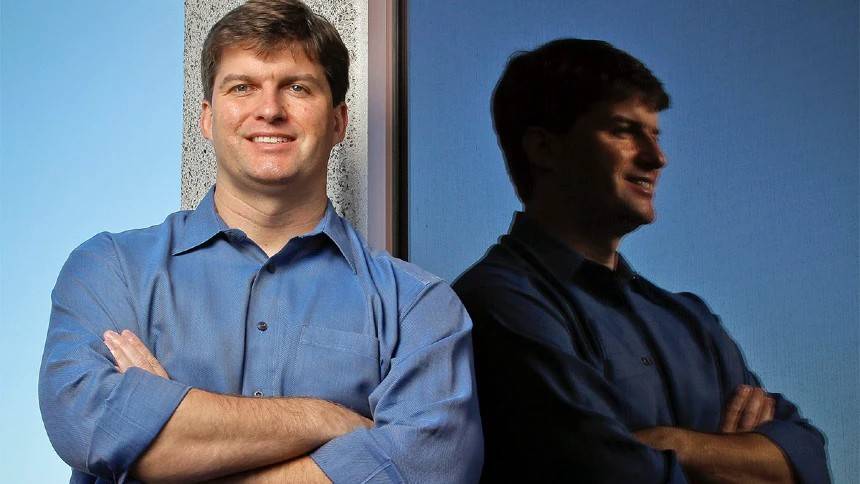
Michael Burry has increased his bet against artificial intelligence (AI) and the companies that are riding the wave of this technology.
Known for his contrarian bets and idiosyncratic vision, which led him to predict the American housing market bubble in 2008, the investor recently took short positions against names like Tesla , Caterpillar, and the semiconductor manufacturer Applied Materials.
He also went short on the SOXX exchange-traded fund (ETF) , which tracks chip industry stocks, according to a report in The Wall Street Journal ( WSJ ).
In a post on the Substack platform, the acclaimed investor, who inspired the book and film "The Big Short," once again warned about the high amounts of money invested in technology.
The post was prompted by the plan of Samsung and SK Hynix, two of South Korea's largest technology companies, to invest over US$520 billion to build a semiconductor hub. According to Burry, these investments reinforce concerns about when, if ever, these investments will yield returns.
The decision, announced earlier in the week, fueled the Nasdaq 's rise, worrying investors. The index accumulated gains of almost 4% on Monday and Tuesday, June 29th and 30th.
“The immediate cause of today’s surge is the massive spending announced by Korea,” he wrote on Tuesday. “Well, I see this as the beginning of the end.”
Burry has long warned about the dangers of excessive optimism regarding AI and the unbridled spending of big tech companies to avoid "falling behind" in this race. According to him, investors are rushing into inflating the price of some companies, ignoring the risks, in a similar attitude to that seen in the dot-com bubble at the beginning of the 21st century.
What was curious about Burry's call was the inclusion of Caterpillar, which, at first glance, wouldn't seem to be among the companies most benefited by the AI-driven surge. But the demand for generators for data centers and for equipment to build these structures has been driving the shares of this "old economy" company.
A survey conducted by the Financial Times ( FT ) shows that, in the 12 months ending June 9, the company's shares accumulated a 151% increase , adding US$247.7 billion to its market value during that period. By 2026, Caterpillar's shares are projected to appreciate by 66.1%, bringing the company's market value to US$458 billion.
In the case of shorting the SOXX, Burry wrote that the ETF "is a pure form of overvaluation in an index, a form that is rarely seen and never so easily recognized as such."
The short selling of Tesla is nothing new. The investor did the same in 2021, stating at the time that the stock was ridiculously priced, around US$900. This time, he did not specify the reasons for his short position against the company, which is racing to mass-produce autonomous vehicles.
Burry also increased his short position in Nvidia stock, which he had held for months, according to the WSJ . In November, he predicted that Nvidia and Palantir stocks would fall drastically by 2027.
To justify the short position against Nvidia, he cited the company's use of circular funding to finance some of its largest clients. The company invests large sums of capital in startups and cloud providers that, in turn, use these resources to purchase its products.
In the case of Palantir , he stated that the company is too dependent on government contracts and could be replaced by competitors.
The short selling of the positions drew harsh criticism at the time, with Nvidia denying any problems with its funding mechanism and Palantir CEO Alex Karp calling Burry "completely crazy" in an interview with CNBC .