

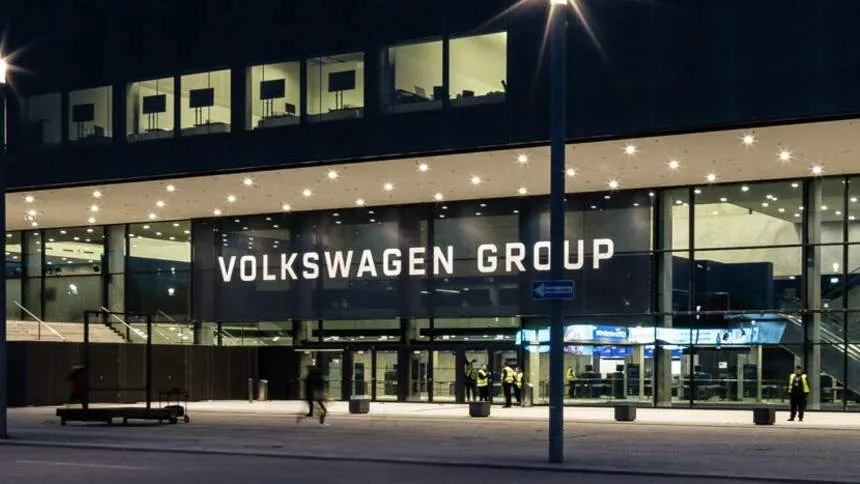
Life is anything but easy for Oliver Blume , the CEO of Volkswagen . Three days after the automaker confirmed plans to lay off 100,000 employees and shut down production at four factories in Germany, the executive faces a challenge of a magnitude proportional to that move.
In navigating this dilemma, he will have to find alternatives to cover the substantial costs of these layoffs, which, in themselves, would already constitute one of the largest redundancy programs in history, surpassing the significant cuts made by GM and IBM in the 1990s.
As an aggravating factor, Blumer will have to balance these tasks with the additional challenges of reducing Volkswagen's debt while simultaneously ensuring the company makes the necessary investments to develop its next generation of vehicles.
Another recent initiative gives a measure of how critical the situation is for the German automaker, which, since Blume's appointment as CEO in September 2022, has seen its share price fall by almost half, under strong competition from Chinese brands, amid the transition to electric cars.
Two days before the confirmation of the layoff plan, the company sold its 51% stake in Everllence, a marine engine company, to Bain Capital. Volkswagen did not disclose the value of the deal and only stated that the agreement generated €7.4 billion in proceeds, including debt.
According to the Financial Times (FT), which cites sources close to the company, Volkswagen may need a larger sum to finance its restructuring , which has the potential to negate any profits from this divestment.
“There is a very high probability that we will see additional restructuring costs emerging in the second half of the year, which could reach billions of euros. All the enthusiasm surrounding the Everllence transaction has practically disappeared from the shareholders' point of view,” Patrick Hummel, an analyst at UBS, told the FT.
The result of this equation was increased questioning among investors and analysts regarding Volkswagen's need to pursue new asset sales, as well as the intended uses of the funds obtained from any such transactions.
Doubts about new M&As arise at a time when investors seeking protection against the wave of transactions driven by artificial intelligence in sectors such as software are showing renewed interest in industrial assets.
In this scenario, Volkswagen indicated that it may divest more non-core assets, which would include stakes in its PowerCo battery unit and ADMT, its autonomous driving division. The automaker has already reduced its stake in truck manufacturer Traton.
The optimistic view is that the company will use the proceeds from any deals for investments. The more skeptical view, however, projects that the funds will simply continue to finance ongoing inefficiencies, according to a source close to the company.
From the investors' perspective, the expectation is that any new sales will be as profitable as the divestment in Everllence. In this process, which lasted almost ten months, Bain outbid rival asset managers such as CVC Capital Partners and EQT.
People familiar with the deal said the auction generated lucrative returns for Volkswagen and will be remembered as one of the most memorable recent auctions in Germany. At the end of the process, all bids valued Everllence at close to €10 billion.
However, Bain's proposal was considered the best based on the proposed price, the shareholders' agreement, the purchase and sale agreement, and the value creation plan, according to the sources.
Following the successful sale, analysts expect that recent proposals for Volkswagen to sell its crown jewels, including the Ducati motorcycle brand, or to take Lamborghini public, will be met with renewed interest.
Some consultants, however, said that the likelihood of the German automaker selling these brands was low and warned that divesting loss-making assets, such as PowerCo, would probably not be as profitable as selling Everllence.
Meanwhile, another option on the table would be an IPO of Scout, Volkswagen's pickup truck brand in the United States. At the same time, the company is reportedly conducting a feasibility study to attract external investors to this operation.
“The best thing to do would be to simply stop investing and accept the fact that what you’ve spent so far are sunk costs. I think that would be the best financial outcome,” said Hummel of UBS.
Volkswagen, for its part, declined to comment on the possible sale of other assets in its portfolio. The company also stated that a decision on how to use the proceeds from the sale of Everllence will be made at a later date.
Volkswagen shares closed today's trading session on the Frankfurt Stock Exchange down 4.34%, valuing the company at €36.4 billion. By 2026, the shares are projected to have depreciated by 30.3%.