

Riachuelo intends to adopt a radical measure if the government does not reverse its decision and reinstate the "blouse tax," a 20% import tax on international purchases of up to US$50, which had been instituted in August 2024.
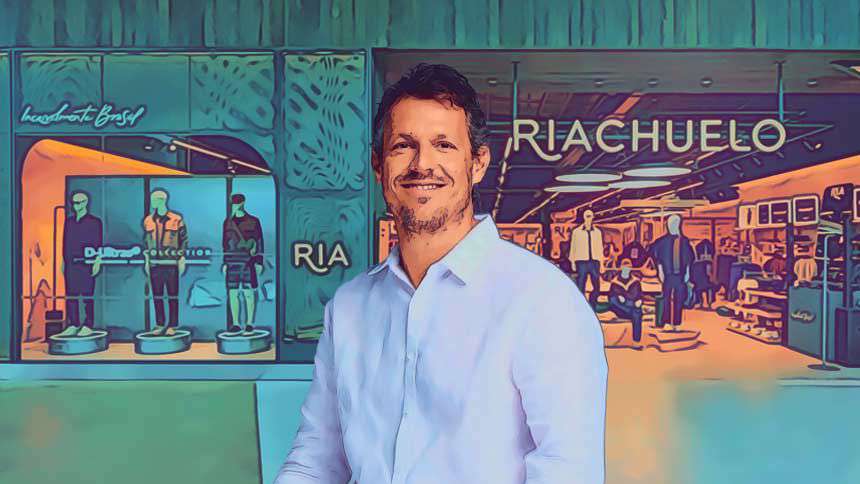
“If we come to the conclusion that this decision to eliminate the tax on blouses will be maintained, we will have to start laying people off. There are no miracles,” says André Farber, CEO of Riachuelo, in an exclusive interview with NeoFeed .
The company currently has 450 stores in Brazil and employs approximately 33,000 workers, placing it among the leading retail employers in the country. In the first quarter, net revenue was R$ 2.3 billion, a 6.7% increase over the same period of the previous year.
Retailers had been warning about the risks to the economy from the end of the tax, a move that began to gain traction in recent weeks in Brasília. But the sector was caught off guard by the signing of the provisional measure by President Luiz Inácio Lula da Silva on the evening of Tuesday, May 12, which revoked the measure.
Around 50 organizations recently released a manifesto stating that the potential repeal would jeopardize approximately R$ 100 billion in investments in Brazil.
Another option, according to the Riachuelo executive, is to use the same "weapon" as Asian competitors like Shein, Shopee, Temu, and AliExpress, and start using the cross-border format, bringing products directly from abroad into the country at a lower cost.
“Nothing prevents us from doing cross-border trade . I set up a company there (in Asia), start bringing in and sending goods in small packages, which pay much less tax. Nothing is ruled out,” says the CEO.
According to Farber, the argument used by the federal government to justify repealing the tax—that it would democratize access to products and expand purchasing options at lower prices—is unsustainable. In his assessment, for this argument to work, tax balance would be essential.
“If the government champions this cause, I’m in. But then it should lower our taxes. If it wants to provide more access, it has to reduce the tax burden. I think it’s important and I’m open to this conversation, but only as long as the government does it fairly,” says the executive.
The day after the repeal of the blouse tax, Riachuelo, Renner, and C&A saw their shares decline on the B3 stock exchange. According to a report by BTG Pactual , the end of the tax will result in an increase in the price difference between major national retailers and foreign websites.
In the first 2026, Riachuelo's shares on the B3 stock exchange registered an 11% drop. The company has a market value of R$ 4.2 billion.
Below are the main excerpts from the interview with the CEO of Riachuelo:
What is your assessment of the government's decision to eliminate the blouse tax through a provisional measure?
It was very bad. A measure taken completely without dialogue. We weren't heard. An arbitrary decision by the government. With the "Remessa Conforme" [tax on blouses], which I call the Chinese incentive, companies were already operating in Brazil paying more taxes than platforms that import via cross-border . A Riachuelo jacket, for example, which costs R$ 100, ends up with an 80% to 90% tax impact, including 35% import tax, plus PIS/COFINS, which brings it up to R$ 150, and the state ICMS, an average of 20%. We pay this because we import via container. That's why it's unequal.
And how much do the platforms pay?
Before, they paid nothing. With the tax on blouses, they had to pay a 20% import tax, and the ICMS (state sales tax), which is the same for everyone. When this tax is reduced, the 20% becomes zero. And we continue paying the full 80% to 90%. We are living in a crazy situation. There was a tax asymmetry, which was 40%, and now it has reached 60%. It was already very asymmetrical. And they created a narrative that it was about protecting national industry, which is not true. There are serious ethical issues behind this narrative.
"We are living through a crazy situation. There was a tax asymmetry, which was 40%, and now it has reached 60%."
How did you view the government's argument that eliminating the tax would lead to greater democratization of consumption and give consumers more purchasing options?
If the government champions this cause, I'm in. But then it should lower our taxes. If it wants to provide more access, it has to reduce the tax burden. Lower taxes on jobs, which are extremely high, on payroll. I think it's important and I'm open to this discussion, but only if the government does it fairly. What's not reasonable is giving to one group and not another. As it was presented, this argument is invalid, shallow. It doesn't hold up. It can't be unequal. Shouldn't the government treat everyone the same way? And why is only one side benefiting?
So, does this argument used by the government end up harming the national economy?
It's very damaging. What they're doing is precisely the opposite, which is to encourage industries located outside of Brazil. The Brazilian tax system is very complex. But to make the national industry somewhat competitive, over the years the government created the import tariff. This provided a certain balance. And it made the price and cost in Brazil somewhat similar to those abroad. The moment the country eliminates this tax, it creates a problem for those who import via containers from abroad and for those who produce locally. And this affects several sectors. This will mean that nobody will produce here anymore.
Is the decision, made within the context of a package of benefits that also included the end of the 6x1 work schedule and the Desenrola program, connected to the election period?
This is as clear as water is H2O.
"Nothing prevents us from doing cross-border trade . I set up a company there (in Asia), start bringing in and sending goods in small packages, which pay much less in taxes."
So Riachuelo wasn't consulted or at least informed about the end of the charge?
No. Neither the Brazilian Textile Retail Association (Abvtex), of which we are part of the advisory board, nor the Institute for Retail Development (IDV). As far as I know, none of the other large companies were consulted either.
And is it already possible for the company to measure the impact of removing the tax on blouses?
We are outraged because this is a very bad public policy for Brazil in the short, medium, and long term. A company like Riachuelo is among those with the most power to fight against this. We are large, we have a robust physical distribution network, a well-known brand. The main victims are small businesses. We have a well-structured organization. But that doesn't lessen my indignation.
Still, will it affect Riachuelo's operations?
Okay. For now, let's try to have a dialogue and reverse this. If we conclude that this decision to eliminate the blouse tax will be maintained, we'll have to start laying people off. There's no miracle cure.
Are there other actions being considered to minimize this impact?
Nothing prevents us from doing cross-border trade . I'll set up a company there (in Asia), start bringing in and sending goods in small packages, which pay much less tax. But the moment I do that, I'll be shutting down operations in Brazil. And that will generate even more layoffs. Nothing is ruled out. We are a Brazilian company, which will be 79 years old in 2026, and we have a commitment to Brazil. But if it becomes clear that this is the rule of the game, we will need to survive.
Will Riachuelo approach the federal government to present its arguments and try to overturn this decision?
We are always open to conversations. What impresses me is that we haven't been contacted by the government, considering the enormous economic impact we've generated. We've also been communicating through associations. From our side, the path is open and we are willing to talk.