


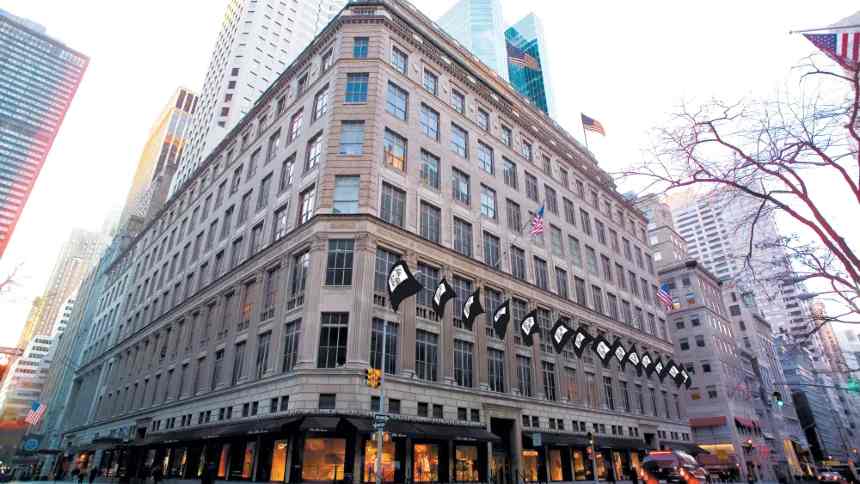
Saks Global, the holding company of major luxury department stores in the U.S., filed for Chapter 11 bankruptcy protection on Wednesday, January 14, just over a year after consolidating the Saks Fifth Avenue, Neiman Marcus, and Bergdorf Goodman brands into a single structure.
The crisis stems from the slowdown in the luxury market since 2023, which became a liquidity problem when the group acquired Neiman Marcus for approximately US$2.7 billion in 2024, depleting its cash reserves and straining relationships with suppliers.
In its petition to the court, Saks Global estimated assets and liabilities in a wide range, between US$1 billion and US$10 billion, and said it had between 10,001 and 25,000 creditors. Among the unsecured creditors are some of the world's largest luxury houses, such as Chanel (US$136 million), Kering (US$60 million) and LVMH (US$26 million).
The company is trying to prevent the process from turning into an immediate dismantling. To continue operating during the restructuring, it announced a financing package of US$1.75 billion, with a US$1 billion debtor-in-possession (DIP) loan, in addition to additional lines of credit and commitments linked to secured creditors and structures. The idea is to continue operating while attempting to reorganize its financial structure.
The promise to the market is to use this liquidity to stabilize working capital — and, mainly, to reopen the supply channel with suppliers, after a period in which payment delays became an operational problem, not just an accounting one.
With the Chapter 11 filing also came a change in leadership. Geoffroy van Raemdonck, an associate executive at Neiman Marcus brought in to lead the process, takes over as CEO at a time when the company needs to convince three audiences simultaneously: the judge and creditors (that the structure is viable), luxury brands (that it's worthwhile to resume delivering merchandise), and the consumer (that the in-store experience still has relevance in a world where luxury accelerates direct-to-consumer sales).
This case clearly illustrates the current state of the luxury market, where betting on scale doesn't pay off when sales slow down. The problem began with the ambition to create scale at the top of retail, bringing together two historically rival chains (Saks and Neiman) under the same umbrella, resulting in a significant debt burden. According to Reuters, the deal was backed by investors such as Amazon and Salesforce.
However, the luxury cycle has reversed, and demand hasn't materialized. Since 2023, the sector has been slowing down, with consumers becoming more selective and showing less drive for aspirational purchases. As a result, the group's numbers have lost momentum before the promised synergies could materialize.
On the balance sheet side, the short circuit became explicit at the end of 2025. Saks Global missed a payment of around US$100 million in December. From then on, what could have been a refinancing negotiation turned into a race to maintain the basics: inventory, deadlines, and cash.
In retail, working capital is often the first indicator of a problem—and also the first amplifier. When suppliers reduce shipments or shorten payment terms, the store feels it at the point of sale: less variety, fewer new releases, less turnover. That's what happened to Saks Global.
The company delayed payments to suppliers and began receiving products almost a month later than its rivals, reducing its chances of selling at full price. Over the past year, suppliers have been reducing orders, and by January, more than 100 brands had already stopped shipping products to the company.
According to Reuters , in its Chapter 11 filing, Saks Global says it "struggled to pay suppliers," who began withholding inventory, and attributes the emptier shelves to lost sales to competitors.
Judicial reorganization opens up space to renegotiate this architecture: debt, contracts, store structure, and costs. The market expects the company, with a portfolio that includes dozens of units of its main brands and outlets, to shrink and try to become more profitable. The case should be followed by the luxury market as the future of the segment.