

Four years after entering the distributed generation (DG) market, riding the wave of excitement surrounding this sector, Ultragaz is ceasing operations in this segment.
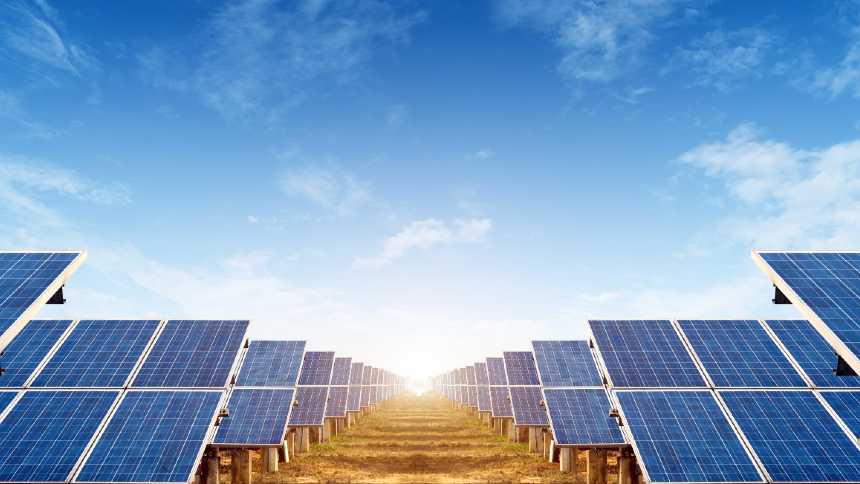
The Ultra Group 's energy company has reached an agreement with Veo Energia to divest its distributed generation (DG) arm, which includes two distributed generation photovoltaic plants located in the municipality of Ibirapuã, Bahia. The terms of the transaction, currently under review by the Administrative Council for Economic Defense (CADE), were not disclosed.
Veo Energia belongs to the JEM Group, owned by businessman José Eduardo Muffato, who also owns one of the main supermarket and wholesale chains in Paraná.
Speaking to NeoFeed , Ultragaz's director of electricity, Lucas Witzler, says the decision was made in light of the opportunities the company sees in the free energy market, while distributed generation (DG) no longer presents good prospects for growth.
“Distributed generation is something that is difficult to scale; you are always dependent on an asset tied to a distributor,” says Witzler. “We understand that the best strategy is to focus on the free market, which is scalable and is a business model that provides a very positive experience for our customers.”
Distributed generation (DG) was Ultragaz's entry point into the electricity market, part of a strategy to expand its offering of energy solutions to customers. In 2022, the company acquired Stella GD Intermediação de Geração Distribuída de Energia for R$ 63 million. Since 2021, Stella had been part of UVC, Ultrapar's venture capital fund.
The perception that distributed generation (DG) cannot achieve national scale and requires too many assets hinders the company's intentions to bring new solutions to its customers, spread across the country. Ultragaz's plan is to start offering electricity to its gas product customers.
It also doesn't help that the rules for the sector are changing. Last year, the Ministry of Finance proposed bringing forward the end of benefits granted to micro and mini-distributed energy generation.
The sector was also impacted by the decision of the National Electric Energy Agency (Aneel) to initiate power cut protocols in larger distributed generation (DG) plants to mitigate the impact on grid stability, threatened by curtailment – generation cuts in centralized wind and solar plants due to oversupply.
“GD is going through a period of rebalancing, there are a series of discussions about the model, and it is logical that these uncertainties regarding the future of the model were part of our decision to focus on a growth vector that is more certain,” says Witzler.
This scenario led Ultragaz to decide to dedicate its electricity operations to the commercialization of electricity via the free market. In addition to its gas operations, where it began and from which it derives a significant portion of its profits, the company also has a biomethane distribution division.
The company has been operating in the free market since 2024 using a retail model, buying from third parties, after the government expanded the possibilities for consumers to migrate from the regulated market to the free market. In the ranking of the Chamber of Electric Energy Commercialization (CCEE), Ultragaz appears in first place in terms of the number of consumer units (CUs), with 2,700.
“We decided to focus on this segment because it will experience significant growth in the short term. By 2027, all business consumers will be able to purchase energy on the free market, and from November 2028, all consumers will be eligible for the free market,” says Witzler.
It is estimated that, in two years, the market could have almost 90 million consumers. And Ultragaz wants to leverage its extensive network to offer a complete solution, combining gas and electricity. "With the expansion of the market, we will be able to utilize the full potential of Ultragaz to serve the residential market," says Witzler.
Ultragaz has 53,000 business customers who consume bulk gas, and 2,000 of them also purchase electricity. The company does not disclose the figures for its business units. Last year, Ultragaz's recurring adjusted EBITDA totaled R$1.7 billion, a 5% increase, with revenue rising 9% to R$12.3 billion.
Without providing guidance , Witzler says the company wants to grow this group, supported by the increased flexibility of the free market. "The electricity sector is in a very favorable moment, with the market expanding and opening up. We are very well positioned and we strongly believe that there will be very rapid growth, and that Ultragaz will be one of the leading players in this sector," he states.