

After several weeks of waiting, Heineken announced its new CEO . And, in this move, the Dutch brewery broke a long tradition by appointing, for the first time, an executive from outside the company's operations.
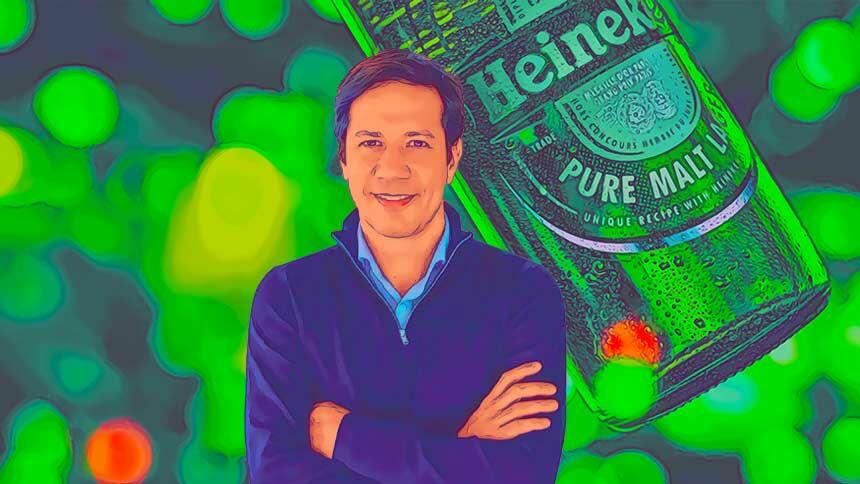
The chosen candidate to fill this position is Brazilian. The company announced that Rafael Oliveira will join the company for a four-year term, beginning on October 1st.
The executive's most recent experience was in the beverage sector. But initially, it was a very different area from Heineken beers . Since November 2024, he had been the CEO of JDE Peet's, a coffee and tea company acquired in August 2025 by Keurig Dr Pepper for US$18.4 billion.
The agreement resulted in the creation of one of the world's largest coffee groups, with brands such as Pilão, Café Pelé, and Caboclo in its portfolio and revenue of approximately US$16 billion. Following the transaction, Oliveira was appointed to lead Global Coffee Co., a publicly traded company that will consolidate these operations.
Other passages from his resume reinforce what Heineken described in its announcement as the Brazilian executive's "proven ability" to "lead complex global companies."
With over two decades of experience, Oliveira spent a decade at Kraft Heinz , where, among other positions, he served as president of international markets, overseeing a portfolio of over US$7 billion. He also had stints at Goldman Sachs, BBA, and Banco Icatu.
“My family and I are very pleased with the rigorous global selection process that led to Rafael’s appointment as CEO,” said Charlene de Carvalho, chair of the Heineken board and representative of the clan that controls the operation and holds five of the eight seats on the board, in a statement released on Tuesday, June 23.
She reinforced her belief that the Brazilian's proven ability to translate strategy into disciplined execution, his strong leadership, and his clear strategic vision are the necessary attributes for him to become an "excellent CEO" for the company.
“As a long-time admirer of Heineken’s history and global impact, I am thrilled with the opportunity to lead this great company into its next chapter,” added Oliveira, who holds dual Brazilian and British nationality and is also only the second non-Dutch CEO to assume this position.
The pressure to choose a market executive was precisely one of the most recent episodes in this saga. And the backdrop to this scenario is a context in which the brewery has been facing a decline in consumer interest in its beer.
As a result, Heineken reported a 4.7% drop in revenue in 2025, to €34.2 billion. During this period, beer sales volume fell by 1.2%, while in Europe, its main market, the decline was 3.4%.
In this scenario, some shareholders believed that an outsider could revitalize the company and bring a different perspective to these challenges, which, in addition to the decline in consumption in the category, include issues such as the impacts of inflation and unfavorable weather conditions.
However, there were those who disagreed with this view and advocated for choosing someone from within the company, which would represent a more predictable and well-known path in the group's history.
According to the Financial Times , in this process, two internal candidates emerged as strong contenders to succeed CEO Dolf van den Brink, who left the company in May, ahead of schedule. However, the board decided they were not ready for the role.
According to analysts interviewed by the British newspaper, Oliveira's appointment ends the uncertainties that had been hanging over the company. "We expect Rafael to continue with the current strategy rather than reformulate it," stated Ed Mundy, an analyst at Jefferies.
He highlighted, however, the expectation that the new CEO will bring a more rigorous execution discipline, a new perspective on portfolio choices and return on capital, as well as a more active engagement with the capital markets. He also emphasized that, at JDE Peet's, Oliveira boosted profits and revitalized the group.
As part of a strategy already underway, Heineken plans to cut 7% of its global workforce over the next two years and has been reducing costs through the consolidation of its breweries in Europe, as well as the merger of back-office operations in smaller markets.
Heineken shares were trading 2.48% higher on the Amsterdam Stock Exchange at around 4:40 PM (local time), valuing the company at €40.4 billion. Year-to-date, the shares are up 4.3%.